
How a Japanese brewer’s purchase of a Kenyan institution tests whether foreign investor confidence can be turned into domestic economic participation, with Kenya at the core and Uganda and Tanzania treated in the same depth.
The argument in brief
The price Asahi pays for an asset is not the most important value the asset creates, and the measure of this deal is what the regional economy builds after the buyer arrives and not what the seller receives. Asahi’s own documents show where that outcome will be decided, because each lever the company names for earning a return on its price is also a lever that can widen or narrow participation in Kenya, Uganda and Tanzania.
- The headline money goes to the seller. About KSh387 billion goes to Diageo, the reported KSh42 billion capital gains tax is a one-off estimate, and no reinvestment figure has been announced.
- Asahi paid for growth it still has to deliver. It states a multiple of about 17 times FY2025 EBITDA and about 14 times FY2026, and one of its own directors described the multiple as relatively high.
- The premium thesis runs ahead of the Kenyan trend and is closer to the Ugandan and Tanzanian ones. Discount and mainstream beer grew fastest in Kenya between 2019 and 2025, whereas the top tiers grew fastest in Uganda and Tanzania.
- The balance sheet and the baseline set the tempo. Asahi expects leverage of about 4.0 times at closing, and EABL’s own capital expenditure of KSh6.6 billion in FY2026 sat below its depreciation of KSh9.0 billion, so large local investment would be a change of course and is more likely to follow deleveraging than to lead it.
- Participation lives in the supply web. EABL has a workforce of about 1,600 against 45,000 smallholder farmers and more than 2,000 direct suppliers, so farm income, supplier contracts and distribution matter more than payroll.
- Three markets answer three different questions. Kenya supplies about 60 percent of sales and about 71 percent of the tax and is the core participation test, Uganda offers a documented farm commitment and the earliest premium test, and Tanzania offers the fastest growth with the thinnest farmer base, and only Kenya attached regulatory conditions, so capital is likely to follow growth while tax keeps following Kenyan earnings.
The investment question
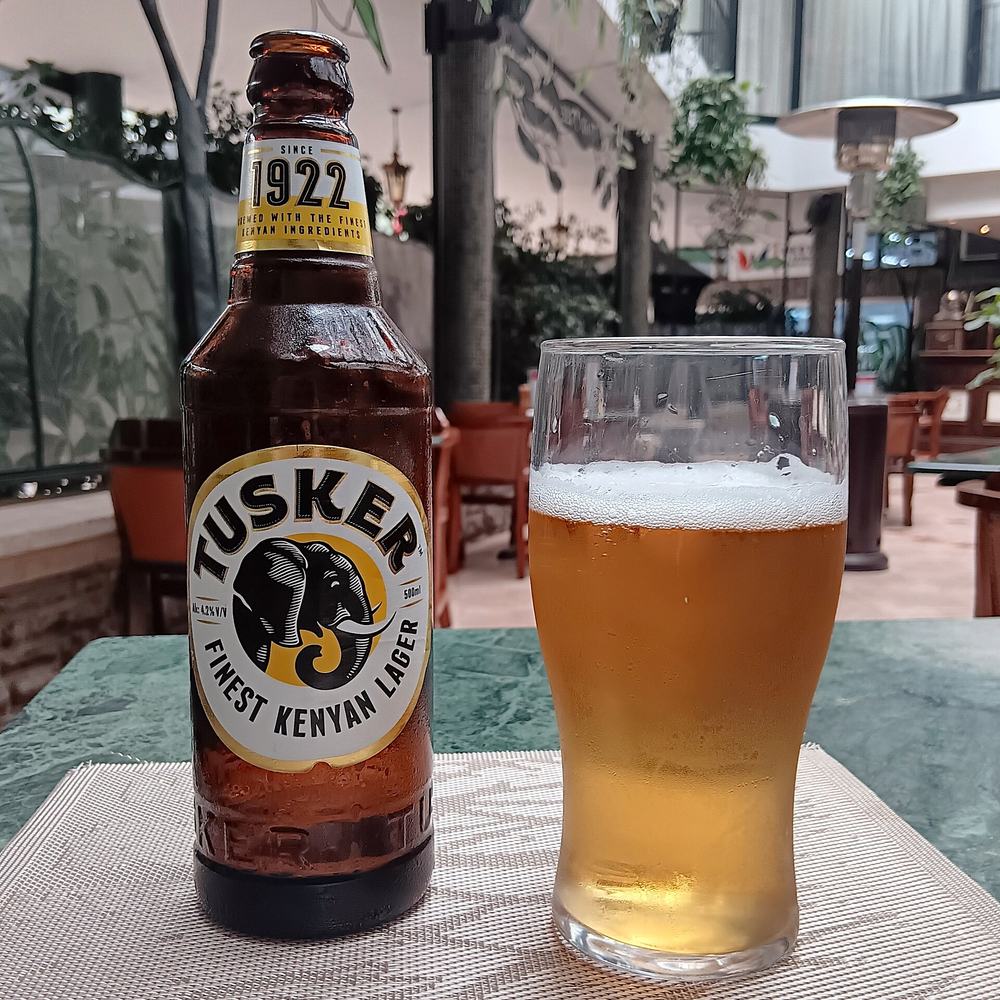
A brewery that opened in Ruaraka in 1922 is preparing to change owners, and the people who feel the consequences first are the customer choosing between a Tusker and a Guinness at a bar in Kisumu, the farmer deciding whether to plant sorghum for the coming season, the distributor waiting to learn whether his territory survives and the Treasury counting what the transaction leaves behind in tax, whereas the shareholders feel it last. The same is true in Kampala, where Uganda Breweries buys grain from farmers across the country, and in Moshi, Mwanza and Dar es Salaam, where Serengeti Breweries does the same on a smaller scale.
Japan’s Asahi Group Holdings, the maker of Super Dry, has agreed to acquire Diageo’s 65 percent holding in East African Breweries PLC, together with Diageo’s 53.68 percent stake in UDV Kenya, for approximately US$3 billion, or about KSh387 billion. The real subject of this paper is bigger than a brewery or its buyer. Kenya has become an important destination for large cross-border equity transactions, which signals confidence in its markets, regulators and consumers, but confidence is only the first half of a development story and is worth most when it is converted into jobs, farm incomes, local suppliers, tax revenue and local firms that grow alongside their new owners.
The central question is therefore whether Asahi’s ownership will create more economic participation for businesses in Kenya, Uganda and Tanzania and not only whether it will bring more money into the region. Kenya remains the core of the deal because it supplies about 60 percent of EABL’s sales, but the transaction is a three-market purchase and the analysis treats Uganda and Tanzania in the same depth. It draws on Asahi’s own announcement of 17 December 2025 and its Integrated Report 2026, alongside EABL’s 2026 integrated annual report and its statement of 17 June 2026, regulatory decisions and press reporting, and it follows the transaction from ownership and fiscal flows through to manufacturing, agriculture, distribution, retail and the consumer. Evidence grades, sources and the working behind every derived figure sit in Annexes A and B at the end, so that the argument can be read without interruption.
The deal and the three records
Asahi’s announcement sets out the structure precisely. Asahi is acquiring 100 percent of Diageo Kenya Limited, a holding company with no employees that holds 65 percent of EABL, and 53.68 percent of UDV Kenya, the spirits manufacturer in which EABL holds the other 46.32 percent. The considerations are US$2.354 billion and US$646 million on an equity value basis, together about US$3.0 billion or JPY465.4 billion. The two agreements are inter-conditional and must close together, and closing requires merger approval in Kenya, Uganda and Tanzania.
| Term | Position |
|---|---|
| Seller and buyer | Diageo plc through two subsidiaries, and Asahi Group Holdings of Tokyo, with Asahi Europe and International Ltd as a party |
| Price | US$2.354 billion for Diageo Kenya Limited and US$646 million for UDV Kenya, about US$3.0 billion in total |
| Stated valuation | About 17 times FY2025 EBITDA and about 14 times FY2026 EBITDA, as stated by Asahi |
| Announced | 17 December 2025 |
| Mandatory offer | Regulators in Kenya, Tanzania and Uganda exempted Asahi in May 2026, and EABL stays listed in all three countries |
| Competition approvals | Uganda and Tanzania granted full and unconditional approvals, according to EABL’s statement of 17 June 2026 and its directors’ report of 5 August 2026, and Kenya approved on 10 September 2026 with conditions |
| Financing | Borrowings from financial institutions or cash on hand, with no new Asahi shares planned |
| Closing | Asahi anticipated the second half of 2026, Diageo anticipates within its year ending June 2027, and no closing had been confirmed on 17 November 2026 |
Three records are worth separating because they are often blurred together. The first is the largest acquisition involving an NSE-listed company, which is the EABL stake of about KSh303.5 billion. The second is the largest overall corporate transaction in Kenya’s capital market, which is the combined EABL and UDV Kenya acquisition of about KSh387 billion and which is almost twice the KSh204.3 billion that Vodacom paid for 15 percent of Safaricom. The third is the largest transaction executed through the NSE trading platform, and that depends on whether and how the deal is formally processed through the exchange’s block-trade mechanism.
| Record | Value | Basis |
|---|---|---|
| Largest acquisition involving an NSE-listed company | About KSh303.5 billion | EABL stake at US$2.354 billion |
| Largest overall corporate transaction in Kenya’s capital market | About KSh387 billion | Combined US$3.0 billion, against KSh204.3 billion for Safaricom |
| Largest transaction through the NSE trading platform | Not yet determined | Depends on block-trade processing |
The catch is that the acquisition is negotiated as a change of ownership and not as a conventional public share offering, and EABL is expected to remain listed in Nairobi, Kampala and Dar es Salaam. Asahi has said it has no intention of acquiring public shares beyond a 65 percent holding.
Three numbers that are often confused
Coverage of the deal mixes three figures that describe very different things, and separating them is the first step in judging what the region gains.
| Measure | Approximate size | What it represents |
|---|---|---|
| Gross transaction value | About KSh387 billion | The price Asahi pays Diageo for equity, which goes to the seller and is not new investment in EABL |
| Capital gains tax | About KSh42 billion | A one-off return to the Treasury, reported by one outlet, with the method unpublished |
| Domestic reinvestment | No figure announced | Fresh money into plants, brands, suppliers or people, depending on Asahi’s later decisions |
None of the roughly KSh387 billion flows into EABL’s factories, payrolls or marketing budgets. Reporting indicates that Diageo will use the proceeds to reduce debt and fund a share buyback. Guinness, Johnnie Walker and Smirnoff Ice are expected to continue under long-term licences, which means a royalty stream tied to those brands continues to flow to Diageo after the equity has moved to Asahi. Dividends paid to the new controlling shareholder will form a further flow out of the listed business, and EABL’s FY2026 dividend of KSh10.06 billion means that about KSh6.5 billion a year flows to the 65 percent holder at that payout.
The structure is telling when set beside the other large transactions. When Vodacom paid KSh204.3 billion for 15 percent of Safaricom, the seller was the Kenyan Government and the proceeds went to the Treasury. When Nedbank bought 66 percent of NCBA, Kenyan shareholders were among the principal sellers. Here the seller is a foreign multinational, so the main direct fiscal return to the region comes through tax and not through sale proceeds.
The reinvestment baseline
EABL’s own accounts give a baseline for reinvestment before Asahi arrives. Capital expenditure was KSh6.6 billion in FY2026, 4 percent of net sales and about the same as the KSh6.5 billion of FY2025, and the report says it went mainly into glass and returnable bottles and into maintenance and efficiency, because the capacity expansion phase ended after FY2023. Depreciation and amortisation was KSh9.0 billion, so capital expenditure covered only about 73 percent of it, and property, plant and equipment fell from KSh82.4 billion to KSh79.9 billion. The pattern differs by country, with Kenyan capital expenditure rising from KSh2.4 billion to KSh3.4 billion whereas Ugandan spending fell from KSh2.5 billion to KSh1.8 billion and Tanzanian spending from KSh1.6 billion to KSh1.3 billion.
| Country | Capex FY2026 | Capex FY2025 | Depreciation FY2026 | Capex as share of depreciation |
|---|---|---|---|---|
| Kenya | KSh3.4 billion | KSh2.4 billion | KSh3.9 billion | About 89 percent |
| Uganda | KSh1.8 billion | KSh2.5 billion | KSh2.9 billion | About 62 percent |
| Tanzania | KSh1.3 billion | KSh1.6 billion | KSh2.2 billion | About 58 percent |
| Group | KSh6.6 billion | KSh6.5 billion | KSh9.0 billion | About 73 percent |
Spending above depreciation, and above all spending on capacity and not on bottles and maintenance, would be the first real evidence of reinvestment, and the scorecard therefore starts from these numbers.
The tax lens
The reported KSh42 billion in capital gains tax is about 48 percent of the KSh88 billion that EABL paid in Kenyan taxes, excise, VAT and PAYE in the year to June 2026, and EABL paid KSh124 billion across the three countries, which is KSh88 billion in Kenya, KSh21 billion in Uganda and KSh15 billion in Tanzania. Indirect taxes took about KSh107 billion, or 42 percent, of gross sales of KSh253 billion in FY2026. The one-off receipt is therefore large next to a normal year, but the recurrent contribution from beer and spirits matters far more over the long term.
Beer is now reported to be taxed at KSh22.50 per centilitre of pure alcohol, which means the tax follows the alcohol in the glass and not the label on the bottle. At that rate a litre of 4.2 percent lager carries about KSh94.50 in excise and a litre of 5 percent lager about KSh112.50. The Alcoholic Beverages Association of Kenya estimates that about 60 percent of alcohol consumed in Kenya is illicit and that roughly KSh120 billion in taxes is forgone each year, an industry estimate that should be treated as such. Excise on extra neutral alcohol, the main input for spirits, fell from KSh964 per litre to KSh500 under the Finance Act 2025 and to KSh80 under the Finance Act 2026, so predictable excise has become an investment variable.
Asahi’s report adds a point that the public debate has largely missed. It describes how excise increases from the 1990s to the early 2000s shrank the legal market and enlarged the illicit and home-brewed market, how EABL and the Government launched Senator in 2004 as an affordable beer made from local ingredients, and how a 2006 tax incentive required the use of locally sourced ingredients. Kenya has therefore already used its tax code to tie a mass-market product to local farms, and that precedent is the strongest evidence that policy can shape participation as well as revenue.
Why Asahi wants it, and what it must deliver
Asahi explains the purchase in its own report. Beer markets in Japan, Europe and Oceania are maturing, the company has had its eye on East Africa for about a decade, and its chief executive acknowledges that the region is more politically and economically volatile than Japan or Europe while arguing that population growth, urbanisation and rising incomes support long-term beer demand. Asahi’s data put per capita beer consumption at 10.6 litres a year in Kenya, 9.0 in Tanzania and 8.2 in Uganda, against 39.7 in Japan, 63.6 in Australia and 143.8 in the Czech Republic, and put the median age at 21 in Kenya, 19 in Tanzania and 18 in Uganda.
The business Asahi is buying has performed strongly. In the year to June 2026 EABL grew net sales by 13 percent to KSh146 billion, lifted operating profit by 27 percent to KSh32.1 billion and grew profit after tax by 49 percent to KSh18.2 billion, which puts the operating margin at about 22 percent. The timing matters, however, because Asahi priced the deal in December 2025 against FY2025 numbers, when operating profit of KSh25.2 billion was only 4 percent above the KSh24.2 billion of FY2023. The step change came after the price was set, which is why Asahi’s stated multiple falls from about 17 times on FY2025 EBITDA to about 14 times on FY2026.
Asahi’s chief financial officer calls the multiple slightly higher than its past acquisitions but not unusual for high-growth consumer goods, and an outside director said the board recognised the multiple as relatively high and debated whether future growth could justify it. A buyer that accepts a high multiple has to raise EBITDA, and the levers Asahi has named are specific. The table below sets each lever beside the fork it creates for participation, because that fork is where the development outcome is decided.
| Asahi lever | Widening outcome | Narrowing outcome | Indicator to watch |
|---|---|---|---|
| Premium lager rollout, including Super Dry and Peroni Nastro Azzurro | Brewed and packed in the region with local glass, cartons and haulage | Imported finished goods or imported inputs | Share of premium volume made in Kenya or Uganda |
| Manufacturing, quality control and value engineering | Plant upgrades, supplier standards raised and skills transferred | Cost reduction through supplier consolidation or offshoring | Capital expenditure and local supplier share |
| Revenue growth management | Mix and pricing discipline that funds reinvestment | Price rises that push drinkers toward illicit alcohol | Price gap between licensed and illicit products |
| Group procurement, with about 85 percent of Asahi spend under central management | Local suppliers qualify into a larger buying platform | Buying moves to group contracts and imports | Local share of procurement spend |
| Regional network and the site for Super Dry | Nairobi, Kampala or another regional site becomes the brewing hub | The region is served from plants elsewhere | Location of the first Super Dry brew |
Whether EABL’s procurement will be brought under the group model is not stated in the sources reviewed and remains an open question.
The balance sheet adds a tempo constraint. Asahi’s net debt to EBITDA rose from 2.49 times in 2024 to 3.70 times in 2025, is expected to reach about 4.0 times at closing, and is expected to return to about 3.0 times within one to two years against a guideline of 2.5 to 3 times. Asahi has also said that a planned buyback of about 150 million shares will take about a year longer than first expected, and its chief financial officer has said that returns in a growth market arrive on a longer timeline than in a mature one. EABL’s own capital expenditure was already below its depreciation in FY2026, so large local capital expenditure is more likely to follow the deleveraging than to precede it, the absence of an investment announcement in the first year says little about Asahi’s intentions, and the scorecard proposed below judges direction at twelve to eighteen months and not at six.
The premium bet and the regional evidence
Asahi’s chief executive says East African beer is dominated by low-price and mainstream categories, that Guinness holds a solid premium position, and that pilsners and global premium lagers have a limited presence, which leaves room for Super Dry and Peroni Nastro Azzurro. That reading of today’s market structure is coherent. The same Asahi report, drawing on GlobalData, also shows how beer grew by segment between 2019 and 2025, and the pattern differs sharply between Kenya and Uganda.
| Beer segment | Kenya, growth a year | Uganda, growth a year | Tanzania, growth a year |
|---|---|---|---|
| Discount | About 7 percent | About 1 percent | About 4 percent |
| Mainstream | About 5 percent | About negative 2 percent | About 5 percent |
| Premium | About 1 percent | About 9 percent | About 10 percent |
| Super premium | About negative 1 percent | About 11 percent | About 14 percent |
| Total market | 5 percent | 3 percent | 6 percent |
In Kenya the growth engine has been affordability, with the discount segment where Senator and the sorghum chain sit growing fastest and the premium tiers close to flat. In Uganda and Tanzania the picture is reversed, because the top two tiers grew at 9 to 11 percent a year in Uganda, where mainstream beer actually shrank, and at 10 to 14 percent a year in Tanzania. The premium thesis therefore has far stronger support in Kampala and Dar es Salaam than in Nairobi. In Kenya the premium layer is a margin and mix thesis and not yet a volume trend, and if Asahi concentrates investment on a small premium layer while the mass segments receive less attention, farm and supplier participation could stall even as profits rise. If it applies its brewing expertise to the mainstream and discount tiers as well, participation widens. Asahi’s view is forward-looking, since it expects urbanisation to open the premium gate, and the chart is historical, so the evidence supports caution in Kenya and not rejection.
The same data tempers a claim that is often repeated. Spirits volumes at EABL rose about 30 percent in FY2026 against 9 percent for beer, yet Asahi shows beer at nearly 70 percent of EABL revenue, spirits at nearly 30 percent and ready-to-drink at about 5 percent. EABL is therefore still a beer company by revenue, and Asahi is buying into its strongest category as well as bringing its own.
What the regulators asked for
The Competition Authority of Kenya approved the deal on 10 September 2026 with conditions. At least 20 percent of the refrigeration space EABL provides to retail outlets must be reserved for products that carry neither EABL nor Asahi branding, and further conditions cover outstanding liabilities, continuity of supplies and the sustainability of small businesses. In Kenyan retail the cooler is the shelf, so a brand that cannot get cold space cannot get sold, and the 20 percent floor protects challengers, craft brewers and importers more directly than the headline approval does.
Kenya is the only one of the three markets where conditions were attached. EABL states that Uganda and Tanzania granted full and unconditional approvals, so the protections for competitors, small businesses and supply continuity exist as regulatory requirements in Kenya alone, whereas in Uganda and Tanzania any participation protection depends on company commitments, tax policy and public scrutiny.
The condition responds to a competition concern that Heineken raised, namely that Asahi owning EABL while holding long-term rights to Diageo’s global brands could create barriers for competing international brewers. The portfolio is unusual in that Tusker, Senator, Serengeti, Kenya Cane and Chrome are owned by EABL, whereas Guinness and the other Diageo brands are licensed, so Asahi acquires an operating platform without owning every brand that fills it. The size of the liability reserve was floated at up to KSh15 billion and the final amount was not found.
The deal also confirms Diageo’s retreat from African ownership toward an asset-light licensing model, a pattern that included the sale of Guinness Ghana to Castel, and it opens a more competitive field in which Asahi, Heineken and Castel are all active across the continent.
The deal is not done
Asahi’s announcement made closing conditional on merger approvals in Kenya, Uganda and Tanzania, and the approval track is now complete. EABL stated on 17 June 2026 that the transaction had received full and unconditional approvals in Uganda and Tanzania, its directors’ report of 5 August 2026 repeated that statement and added that the Capital Markets Authority in Kenya had also approved, and Kenya’s Competition Authority approved the deal on 10 September 2026 with conditions. What remains is the Kenyan court and Tribunal track. On 17 June the High Court declined conservatory orders sought by JILK Construction and others, a ruling that EABL welcomed while calling such disputes unrelated and historical, and a further order of 2 September 2026 requires EABL’s ownership and control to remain as they stood on 18 June 2026 until the Capital Markets Tribunal decides the minority shareholders’ appeal, with the order also referring to completion of the Competition Authority’s review, which has since approved the deal. Asahi’s Integrated Report of September 2026 still shows a tentative second half of 2026 for closing, whereas Diageo’s annual report anticipates completion within its year ending June 2027, and the gap between those two statements is itself a signal worth watching.
About 35 percent of EABL is held by public investors across the three exchanges. In 2023 Diageo raised its stake from 50.03 percent to 65 percent by paying about KSh22.7 billion for 14.97 percent of the company, or about KSh192 per share. Asahi’s price for the 65 percent implies roughly KSh580 to KSh590 per share, about three times the 2023 tender price and more than twice the KSh269 at which the stock stood at the end of June 2026. These are implied figures and not a published offer price.
Three outcomes are possible and none can be predicted from outside the proceedings. The Tribunal could uphold the exemption, in which case closing turns on the remaining conditions. It could set the exemption aside, in which case Asahi might have to extend an offer to public shareholders, which at the implied price would be of the order of KSh160 billion to KSh163 billion as an illustrative marker and not a forecast. It could also return the matter to the regulator, which would add time. A separate petitioner alleges that minorities were denied material information in the 2022 to 2023 tender offer, and those allegations remain to be tested.
Asahi has said that its shareholding structure, minorities included, will spread economic benefit across a range of stakeholders, and that statement sets a standard against which the outcome can be measured. The matter reaches beyond EABL because the regime that welcomes foreign acquirers also governs how ordinary investors are treated when control changes, and because Kenyan, Ugandan and Tanzanian regulators each had to grant the exemption, investor confidence has to run in both directions across all three markets if regional capital markets are to keep their attraction.
Where participation will be decided
EABL is better understood as the centre of a supply web than as a factory. Upstream sit the barley and sorghum growers, the grain aggregators and East African Maltings. Around the brewery sit packaging makers, haulage and logistics firms, and the advertising and creative agencies that carry its brands. Downstream sit distributors, retailers, and the bars, restaurants and hotels that depend on its products. Asahi’s report describes EABL as having built a value chain spanning agriculture, distribution and sales.
The scale of that web sets the terms of the test. EABL’s own report records a workforce of 1,608 people in FY2026 against 45,000 smallholder farmers who grow sorghum, barley and other inputs, more than 60,000 farmers engaged in total, more than 60,000 suppliers across the value chain, more than 250,000 retailers, distributors and agents, and more than 500,000 jobs created across the chain, so there are about 28 smallholders for every direct employee. The supplier count needs the same care, because the report’s procurement table records more than 2,000 suppliers, and the value chain figure of more than 60,000 appears to count farmers as suppliers, since the report defines its suppliers as including farmers. The two farmer figures appear in the same report and seem to reflect different definitions, since the 60,000 figure matches the milestone reached when the Kisumu brewery brought 15,000 new sorghum farmers into the network, so the count needs a definition before it is quoted. Under any of these figures the conclusion holds that participation lives in the supply web and not in the payroll.
The report also gives the first hard baselines for local participation. EABL spent more than KSh110 billion with local suppliers in FY2026 against more than KSh90 billion in FY2025, local suppliers account for about 85 percent of the total across more than 2,000 suppliers, and inclusive sourcing spend rose from KSh5 billion to KSh7 billion over two years. Yet the share of key raw materials sourced locally fell from 84 percent in FY2025 to 75 percent in FY2026, even though all grain is sourced locally, and the report does not explain the fall. It also records that Kenyan operations developed a Kenyan can supplier after long lead times for imported packaging, that flavours were sourced regionally from Tanzania and South Africa, and that more than 90 percent of sorghum growers depend on rainfed agriculture. The local sourcing share was therefore already falling before Asahi arrived, which makes the next reading more important than the last.
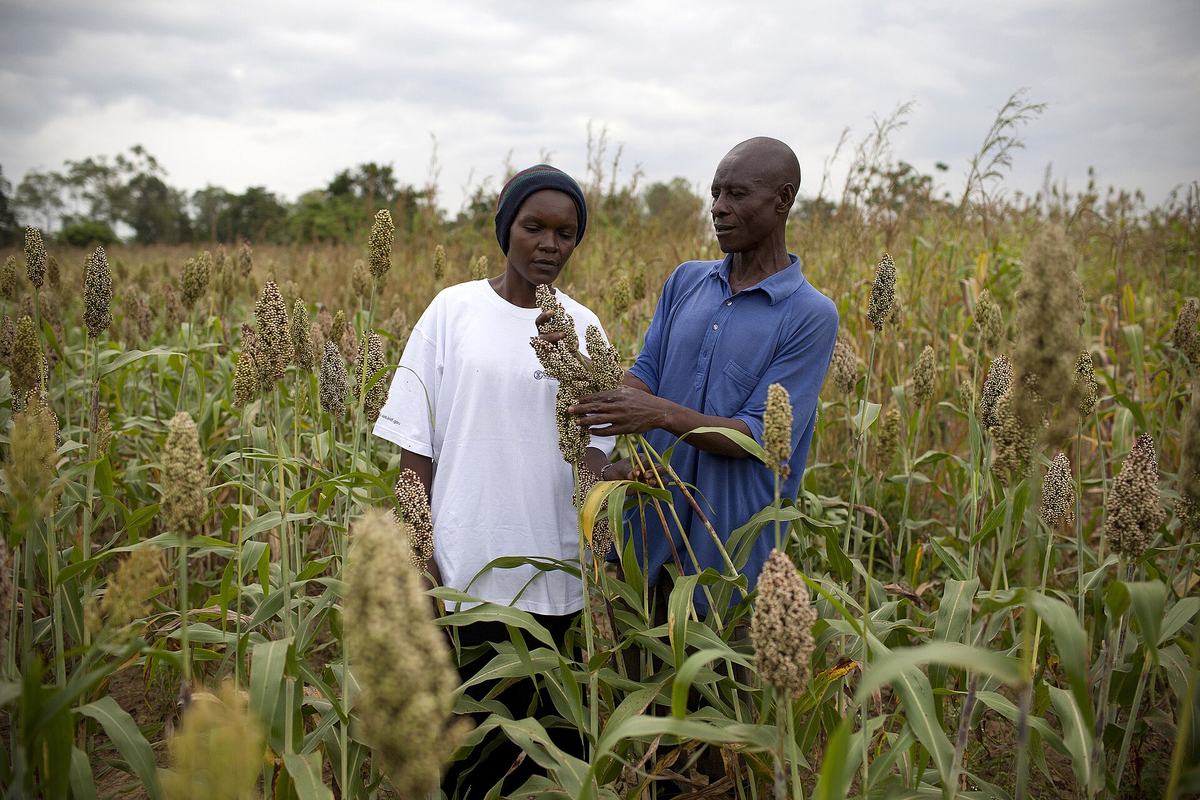
Three directions are plausible. Asahi could deepen local sourcing and processing as volumes grow, which would widen farmer incomes and anchor suppliers. It could lean on imported malt, glass and packaging for its premium brands, which would raise value for the group but narrow local participation. Or it could restructure the route to market, which is why the Competition Authority wrote continuity of supplies and small business sustainability into its conditions, and why the long-running dispute with distributor Bia Tosha is a useful warning about how fragile those relationships can be when ownership changes.
Uganda, the early read-across
Uganda is the smallest of EABL’s three markets by beer volume and the one with the clearest forward indicators. Asahi’s data put the Ugandan beer market at 4.2 million hectolitres, per capita consumption at 8.2 litres, the lowest of the three, the median age at 18, the youngest, and real GDP growth at 7.1 percent a year to 2030, the fastest. EABL’s Ugandan sales grew 16 percent in FY2026, and Uganda accounts for 22 percent of group sales and KSh21 billion of the tax paid. EABL reaches the market through Uganda Breweries Limited, in which it holds 98.2 percent, and International Distillers Uganda, which it owns outright. Asahi’s brand list names Tusker Lite, Bell and Uganda Waragi premium gin as the Ugandan brands.
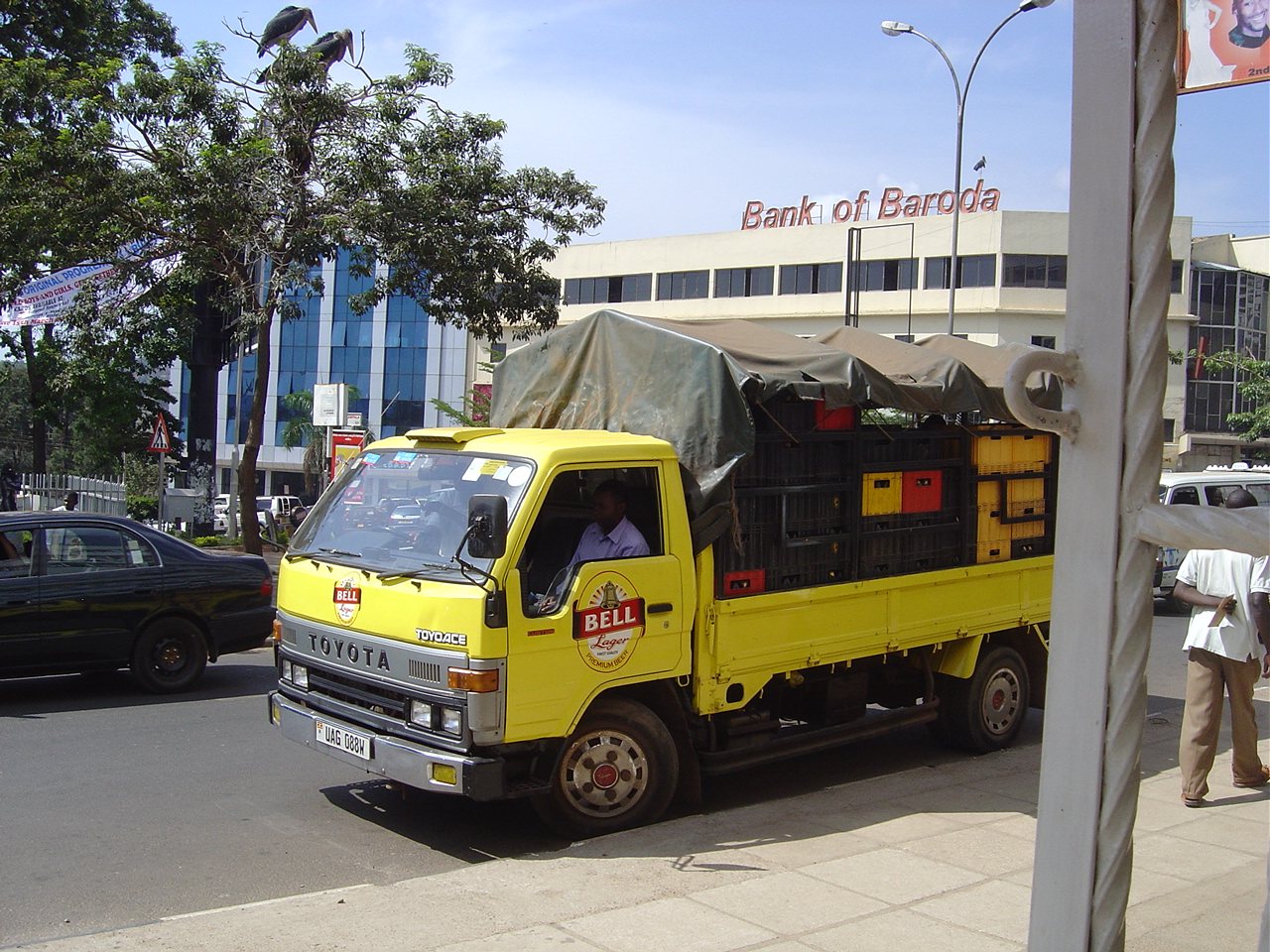
Uganda is also where the premium thesis already shows in the numbers, since its top two beer tiers grew at 9 to 11 percent a year while mainstream beer contracted. A Ugandan premium launch would therefore be the earliest commercial test of Asahi’s strategy, and it is likely to be the first place where Super Dry finds volume.
The Ugandan farm chain is better documented than the Kenyan one. Uganda Breweries reports a Farm for Success programme working with more than 35,000 farmers, buying over 8,000 tonnes of barley, 15,000 tonnes of sorghum, 18,000 tonnes of maize and 1,000 tonnes of cassava, and it has announced plans to expand to 50,000 farmers and to source all of its agricultural materials from Uganda by 2030. Its competitor Nile Breweries reports about 25,000 farmers and local sourcing above 95 percent of raw materials, so the Ugandan commitment is both a company target and a competitive benchmark. Two implications follow. Uganda offers a baseline and a stated target that Kenya lacks, which gives Kenyan stakeholders a precedent to cite. The 35,000 Ugandan farmers are also large against the 45,000 and 60,000 figures cited for EABL as a whole, which means the group figures need reconciling by country.
What Asahi does with the Ugandan programme is the earliest observable signal of how it will treat EABL’s farm chains elsewhere. If it keeps and funds the 50,000 farmer and 2030 sourcing targets, it signals continuity and gives Kenya a precedent to ask for. If it quietly softens them, it tells Kenya what to expect. The fiscal read-across points the same way, because EABL paid KSh21 billion in tax in Uganda and KSh15 billion in Tanzania, so any change in ownership economics reaches the Kampala and Dar es Salaam treasuries as well as Nairobi’s.
Uganda also differs on the regulatory side, because EABL states that Uganda granted full and unconditional approval, so no participation conditions attach to the deal there. The farm programme and the 2030 sourcing target are therefore company commitments that no regulator will enforce, which makes the public record of progress against them the main discipline and is why the scorecard tracks them directly.
Tanzania, the growth engine
Tanzania is the largest of EABL’s three markets by population and beer volume and was the fastest growing in the year to June 2026. Asahi’s data put the Tanzanian beer market at 6.4 million hectolitres, ahead of Kenya’s 6.1, with per capita consumption of 9.0 litres, a population of 70.5 million, a median age of 19, fertility of 4.6 births per woman, the highest of the three, and real GDP growth of 6.4 percent a year to 2030. EABL’s Tanzanian sales grew 44 percent in FY2026, or 39 percent on an organic basis, and Tanzania’s share of EABL sales rose from about 14 percent in FY2025 to 18 percent, yet that is still less than a third of Kenya’s 60 percent, and Tanzania paid KSh15 billion of the group’s tax. A market as large as Kenya’s in which EABL’s footprint is this much smaller is where the most room to grow sits.
EABL operates in Tanzania through Serengeti Breweries Limited, in which it bought a controlling 51 percent in 2010 and now holds 85 percent, and which runs breweries in Dar es Salaam, Mwanza and Moshi. Asahi’s brand list names Serengeti, Serengeti Premium Lite and Serengeti Apple. Press reporting describes Serengeti as the second largest brewer in Tanzania, so growth there means taking share from a larger and entrenched rival, Tanzania Breweries. The premium tiers are the fastest growing in the market, at about 10 to 14 percent a year, so Asahi’s premium thesis has real support in Tanzania, although the same data show mainstream and discount beer still growing at 4 to 5 percent a year.
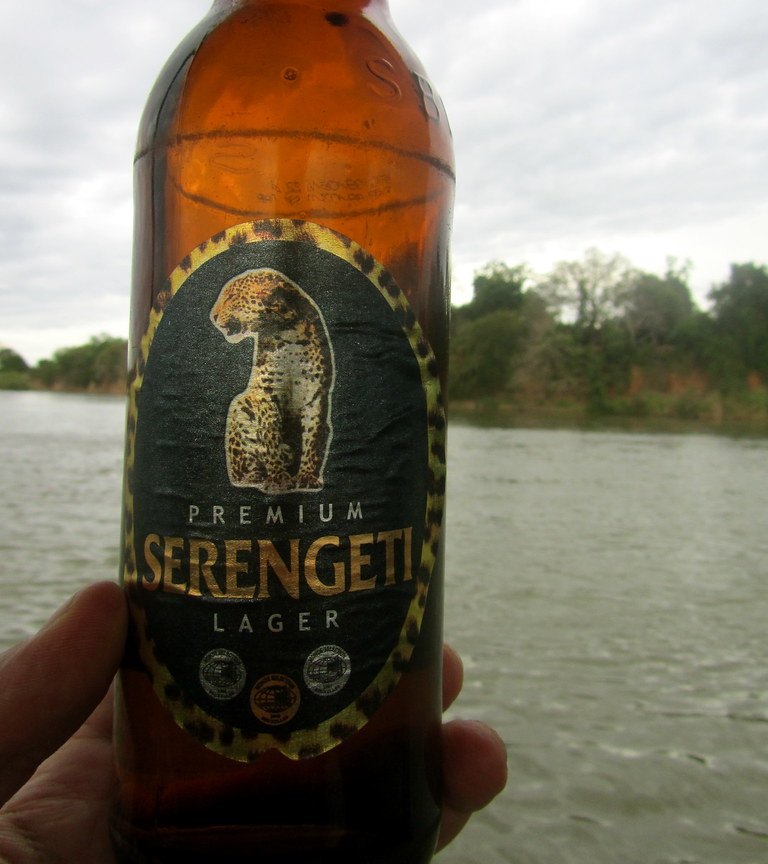
The Tanzanian farm base is much thinner than the Ugandan one but is growing from a low start. Serengeti Breweries launched its Shamba ni Mali programme in 2025 and reports working with more than 600 farmers growing barley, maize and sorghum, with an ambition to reach more than 4,000, against more than 35,000 at Uganda Breweries. It also reports buying more than 20,000 tonnes of grain a year from local farmers and contributing more than TSh12 billion a year to the agricultural value chain, and EABL reports that local sourcing initiatives in Tanzania raised raw material content from 15 percent to 50 percent. The fastest-growing market therefore has the least developed farmer participation but the fastest improving sourcing, so Asahi’s growth in Tanzania could be carried by volume without a proportionate rise in farm income unless sourcing keeps scaling with output, and the Tanzanian programme is the most obvious place for Asahi to show that growth and participation can move together.
Tanzania has already used its tax code to favour local inputs. Reporting describes an excise concession for beer made from local malt, with beer not made from local malt taxed at a rate reported as 32 percent higher, and Serengeti Breweries has argued that local sourcing is a more effective route to revenue growth than higher rates. The company reported around TSh180 billion in taxes and fees in 2023. Together with Kenya’s 2006 incentive, the Tanzanian concession shows that two of the three governments already hold a policy lever linking tax treatment to local sourcing, whereas in Uganda the sources reviewed show a company target and no equivalent tax rule.
Tanzania’s regulator has a record of attaching participation conditions and policing them. When the Fair Competition Commission approved EABL’s acquisition of Serengeti Breweries in 2010 it required EABL to sell its 20 percent stake in Tanzania Breweries, to maintain Serengeti’s corporate identity for five years and not to close existing plants without approval, and in 2016 it threatened to withdraw that approval over an alleged breach of conditions. EABL states that Tanzania has now granted full and unconditional approval to the Asahi deal, so none of those protections appear in this decision, and the Tanzanian farm programme, like the Ugandan one, rests on company commitments and tax policy.
What it truly means, market by market
Kenya remains the core of the deal because it supplies about 60 percent of EABL’s sales and about 71 percent of the tax it pays across the three countries, but the transaction is a three-market purchase and each market answers a different question about what the deal means.
| Dimension | Kenya | Uganda | Tanzania |
|---|---|---|---|
| Share of EABL sales | About 60 percent | About 22 percent | About 18 percent |
| Sales growth in FY2026 | 5 percent | 16 percent | 44 percent, or 39 percent organic |
| Tax paid in FY2026 | KSh88 billion, about 71 percent | KSh21 billion, about 17 percent | KSh15 billion, about 12 percent |
| Capital expenditure in FY2026 | KSh3.4 billion | KSh1.8 billion | KSh1.3 billion |
| Beer market and per capita | 6.1 mhL and 10.6 L | 4.2 mhL and 8.2 L | 6.4 mhL and 9.0 L |
| Median age and GDP growth to 2030 | 21 and 5.0 percent | 18 and 7.1 percent | 19 and 6.4 percent |
| Fastest beer segment, 2019 to 2025 | Discount, about 7 percent a year | Super premium, about 11 percent a year | Super premium, about 14 percent a year |
| EABL operating base | Kenya Breweries and UDV Kenya | Uganda Breweries at 98.2 percent and International Distillers Uganda | Serengeti Breweries at 85 percent |
| Farmer baseline | 45,000 or over 60,000 for the group, unreconciled | More than 35,000, with a plan for 50,000 | More than 600, with an ambition of more than 4,000 |
| Policy lever on record | 2006 local sourcing tax incentive | Company target of full local sourcing by 2030 | Excise concession for local malt |
| Regulatory position | Approved with conditions, with the Tribunal and High Court pending | Full and unconditional approval, according to EABL | Full and unconditional approval, according to EABL |
| What it tests | Whether the earnings anchor shares in the upside | Whether the premium launch and farm commitment hold | Whether growth brings farm income with it |
In Kenya the deal tests whether the earnings anchor shares in the upside. Asahi’s price rests on Kenyan earnings, and Kenya pays about 71 percent of the tax on about 60 percent of the sales, yet it grew 5 percent against 16 percent in Uganda and 44 percent in Tanzania. Kenya also has the largest direct payroll, the longest-established farm chain, the only regulatory conditions and the most litigation, so its participation outcome is the most consequential for the region and also the least certain.
Uganda tests whether the premium launch and the farm commitment hold. It has the clearest premium signal, the best documented farm baseline and a stated 2030 sourcing target, so it is the market where Asahi can most cheaply show good faith and where a retreat would be most visible. Tanzania tests whether growth brings farm income with it, because it has the most volume to win, the thinnest farmer base and a regulator with the longest record of conditions on EABL.
The three tests interact through capital allocation. Capital tends to follow growth whereas tax follows earnings, and with leverage peaking near 4.0 times at closing, Asahi will have to choose where its first reinvestment goes. If incremental capacity and the first Super Dry brew go to the fastest-growing markets, Kenya could remain the cash and tax anchor with the least new investment, which would leave the participation question in the core market unanswered even as the group’s regional numbers improve. EABL’s own FY2026 numbers show that the pattern is not yet fixed, because Kenyan capital expenditure rose by 44 percent while Ugandan and Tanzanian spending fell, although all three remain below depreciation. This need not be a contest, since a regional network can add capacity in all three, but the sequencing is a real choice, and the scorecard therefore carries a capital expenditure line for each country.
The participation scorecard
At Uratibu we propose a scorecard that gives visibility on domestic economic participation, starting with the farmers and extending to industrial capacity in bottle and carton manufacturing, employment, technology transfer and the local value that the region can capture even through advertising on an investment of this magnitude. Each indicator below carries a baseline, a signal of widening participation and a signal of narrowing participation, so that the reading is symmetrical and cannot be bent to suit a conclusion.
| Indicator | Baseline on record | Widening signal | Narrowing signal |
|---|---|---|---|
| Smallholder farmers, group | 45,000 smallholders and more than 60,000 farmers engaged in the same FY2026 report, definitions unreconciled | Rising farmer count and payments per farmer, on a stated definition | Falling count or volume concentrated among fewer growers |
| Uganda farmer programme | More than 35,000 farmers, with a stated plan for 50,000 and full local sourcing by 2030 | Targets kept and funded | Targets softened or dropped |
| Tanzania farmer programme | More than 600 farmers with an ambition of more than 4,000, and raw material content up from 15 to 50 percent | Programme scaled alongside volume growth | Volume growth without farmer growth |
| Local raw material sourcing, group | 75 percent of key raw materials in FY2026 against 84 percent in FY2025, with all grain sourced locally | Share stable or rising as premium brands launch | Share keeps falling and imported malt rises |
| Local supplier spend | More than KSh110 billion in FY2026 against more than KSh90 billion in FY2025, with local suppliers about 85 percent of the total | Rising spend and a stable or rising local share | Falling spend or local share |
| Glass, cartons and haulage | A Kenyan can supplier developed in FY2026 and capital expenditure mostly on glass and returnable bottles, with no baseline for cartons and haulage | Local contracts for new brands | Imports for new brands |
| Direct employment | 1,608 people in FY2026 against 1,674 in FY2025 | Rising local employment, training and technical skills | Headcount reduction under efficiency programmes |
| Distributors and retailers | Continuity condition in force and the Bia Tosha dispute in court | Compliance and orderly route to market transitions | Terminations and new disputes |
| Retail space for rival brands | At least 20 percent of cooler space reserved in Kenya | Independent verification in outlets | No verification or visible breaches |
| Advertising and creative spend | No reliable baseline found | Visible share placed with local agencies and talent | Work moved to group agencies abroad |
| Location of premium production | No commitment found, with Asahi saying it will consider brewing Super Dry in Africa | First Super Dry brew in Nairobi, Kampala or Dar es Salaam | Finished product imported |
| Domestic capital expenditure | KSh6.6 billion in FY2026, 4 percent of net sales and below depreciation of KSh9.0 billion, with Kenya at KSh3.4 billion, Uganda at KSh1.8 billion and Tanzania at KSh1.3 billion | Spending above depreciation, with a capacity plan in each country | Spending stays below depreciation or concentrates in one country |
| Recurrent fiscal contribution | KSh88 billion in Kenya, KSh21 billion in Uganda and KSh15 billion in Tanzania in FY2026 | Maintained or rising in each country | Falling against the FY2026 baseline |
Uratibu’s interest in this analysis is practical. The participation test needs a baseline and a regular reading, and public and private decision makers will want to know within a few quarters of completion whether ownership is widening or narrowing local economic participation. Measuring that kind of outcome is what a governance performance intelligence approach is built to do.
Nairobi, Kampala or Dar es Salaam
Asahi’s choice of the region makes sense once the reasons are laid side by side. Mature home markets limit growth, EABL brings plants, distribution, brands and profitability across three countries in a single transaction that a greenfield entrant would take years to assemble, demographics are favourable, the premium gap is real at today’s prices, and Asahi’s chief executive values EABL’s governance framework as a listed company and its strong community presence. Diageo has noted that this is the first time a major Japanese brewer has invested at this scale in an African alcohol business.
| Market | Beer market 2025 | Per capita | Median age | Real GDP growth 2026 to 2030 | Beer growth 2019 to 2025 |
|---|---|---|---|---|---|
| Kenya | 6.1 mhL | 10.6 L | 21 | 5.0 percent | 5 percent a year |
| Uganda | 4.2 mhL | 8.2 L | 18 | 7.1 percent | 3 percent a year |
| Tanzania | 6.4 mhL | 9.0 L | 19 | 6.4 percent | 6 percent a year |
The comparison is less flattering to Nairobi than the usual narrative. Tanzania is already the larger beer market with the highest fertility and fast premium growth, Uganda has the youngest population, the fastest economic growth, the most headroom in per capita consumption and the strongest premium momentum, and EABL’s sales rose 44 percent in Tanzania and 16 percent in Uganda in FY2026 against 5 percent in Kenya. Kenya has not won the platform argument on growth in any of these comparisons. Kenya supplied 66 percent of EABL sales in FY2025 and about 60 percent in FY2026, which shows the earnings anchor shrinking as the other two markets grow.
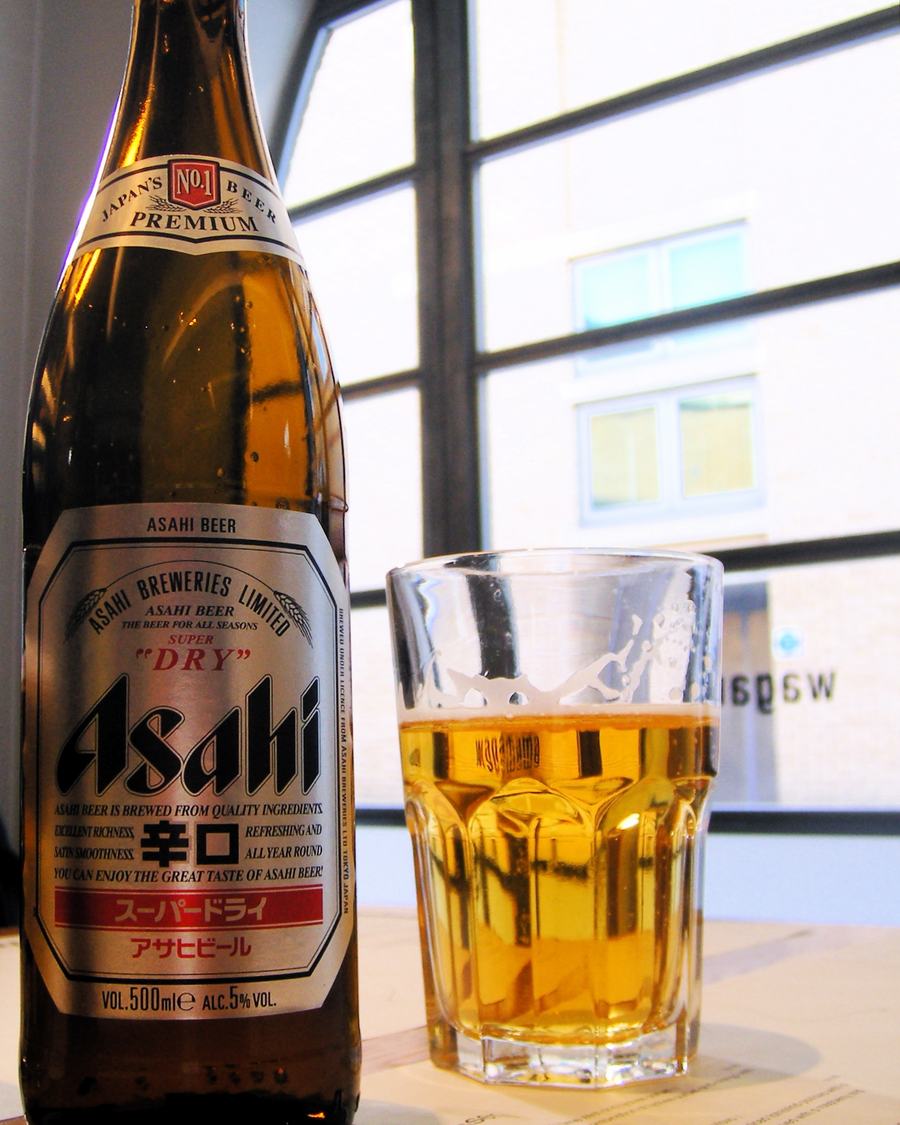
The case for Nairobi therefore rests on earnings depth, management capability and capital markets access, the case for Kampala rests on growth, premium demand and an established distilling base, and the case for Dar es Salaam rests on scale, speed and an existing three-brewery footprint backed by a local malt concession. The industry adds a tax argument, since EABL contends that lower ethanol duties in Tanzania and Uganda encourage smuggling into Kenya, and a provision in the Finance Bill 2026 on qualifying East African Community goods could influence cross-border manufacturing subject to the final wording of the Act.
Asahi has said it will consider brewing Super Dry in Africa, and where that brewing happens will show whether it sees East Africa as three markets served from three plants or as one market served from a regional network. Oversight of the business is expected to run through Asahi Europe and International, with Diageo providing transitional services after closing, so the siting decision may be taken inside a group network and not in the region. Each country’s case, Kenya’s above all, should therefore be made on evidence and not assumed.
What it means for the consumer
The first visible change will be on the shelf. Asahi has said it will keep EABL’s local brands while introducing Super Dry and Peroni Nastro Azzurro, so drinkers should expect more premium lager choice in supermarkets, bars and restaurants, sooner in Uganda and Tanzania than in Kenya if the segment trends hold. The second change concerns price, because a new premium tier adds choice at the top without lowering prices at the bottom, and affordability will still be set by excise and by the gap between licensed and illicit products and not by who owns the brewery. The third concerns safety, because licensed beer is brewed to standard, traced and taxed, whereas illicit alcohol carries real health risks, so any tax or price shock that pushes drinkers toward informal products does the opposite of what the consumer needs. The fourth concerns the people who sell the product, since the competition conditions protect the continuity and sustainability of the distributors and retailers who form EABL’s route to market.
Risks and open questions
- Execution. Asahi has not previously made an investment of this size in African alcohol. Its own directors flagged the need to understand local regulation, systems for protecting local employees and compliance risk, and the handover depends on Diageo’s transitional services. EABL’s own risk register ranks the Diageo and Asahi transition first among its strategic risks, as a new entry, and litigation second, and it has set up a transition steering committee and programme office to manage execution, integration and governance risk.
- Balance sheet and valuation. Goodwill and intangibles made up 40.0 percent and 20.7 percent of Asahi’s consolidated assets at the end of 2025, leverage is set to peak near 4.0 times, and the company expects the acquisition to dilute return on invested capital temporarily. Each new deal has to earn its keep, and the September 2025 ransomware attack and its delay to the group’s results add to management demands.
- Concentration. A single owner now stands behind a dominant share of the formal market, and compliance with the cooler-space rule will need credible monitoring if it is to protect competitors in practice.
- Capital allocation. Capital tends to follow growth whereas tax follows earnings, so incremental investment could favour Tanzania and Uganda while Kenya remains the cash and tax anchor, and Tanzania’s thin farmer base means growth there could outrun farm participation.
- Policy. Excise rates have moved repeatedly in recent budgets, and further volatility in any of the three markets would test the investment case Asahi has made to its own shareholders and the participation case the region hopes to make.
- Litigation and timing. Regulators in all three countries have approved the deal, so closing now turns on the Kenyan court and Tribunal track, and a delay there would hold up farmers and suppliers in all three markets that are waiting for certainty.
- Regional risk. Asahi’s chief executive describes the region as more volatile than its home markets, and any policy or currency shock would reach farmers and suppliers before it reached the group.
An agenda to capture the margin
The transaction creates an opportunity for governments, Asahi, EABL and local businesses to establish a measurable domestic participation framework. The sequence below is a proposed Uratibu agenda and not a statement of commitments made by the buyer or the company, although Asahi’s chief executive has said the group will pursue growth while contributing to the development of the local economies, and that statement is the natural reference point for the first reading.
Establish the baseline in the first six months after completion
- Define and confirm the number of active smallholder farmers by country, starting from the more than 35,000 reported in Uganda and the more than 600 in Tanzania, and reconcile the 45,000 smallholder and more than 60,000 farmers engaged figures within the same report.
- Track local supplier spend from the FY2026 baseline of more than KSh110 billion and the local share of key raw materials from 75 percent, and record domestic and imported sourcing shares for key inputs.
- Establish baselines for employment, wages, training and technical skills, and monitor compliance with the cooler-space and small business conditions.
- Document distributor and retailer continuity, and establish whether EABL procurement moves under group contracts.
Measure expansion and supplier development from six to twelve months
- Track farmer participation and payments per farmer in each country, including progress against the Ugandan target of 50,000 farmers and the Tanzanian ambition of more than 4,000.
- Track the local share of packaging, logistics and marketing suppliers, identify openings for local manufacturers to supply new brands, and publish a first domestic participation scorecard.
Assess long-term contribution from twelve to eighteen months
- Measure domestic capital expenditure and productive capacity once the deleveraging period has passed, and compare the recurrent fiscal contribution in each country with the FY2026 baseline.
- Track agricultural income and productivity, technology transfer and management capability, and assess whether the regional platform creates manufacturing and export opportunities and where they land.
Seven signals to watch
- The Capital Markets Tribunal ruling and the completion date.
- The first Asahi brand launch, and whether it comes in Uganda or Tanzania before Kenya.
- Where Super Dry is eventually brewed.
- What Asahi does with the Ugandan and Tanzanian farmer programmes and local sourcing targets.
- Compliance with the cooler-space rule.
- The first published figures on local sourcing and supplier spend after completion.
- The content of the next Finance Bill in Kenya and its Ugandan and Tanzanian equivalents.
Their sequence will tell us whether this deal is remembered as a change of ownership or as the start of a new chapter for East African beverages.
Closing thought
The sale of EABL says something important about how international capital views Kenya, Uganda, Tanzania and the wider region. A Japanese brewer is prepared to pay a substantial price for an established East African business because it sees the value of its brands, production facilities, distribution network and consumers.
We believe that the price paid for an asset is not the most important value it creates, and the more important question is what happens after the transaction. Do farmers receive more predictable demand and better incomes? Do local manufacturers secure a greater share of procurement? Does the company invest in production capacity and technical skills? Do distributors and retailers remain part of a sustainable route to market? Do the treasuries retain a strong recurring tax base?
The region does not need to discourage foreign capital to secure a greater domestic return from it, and what it needs are the institutions, data and measurement systems that make participation visible, identify where value is being created and establish whether the benefits are reaching the wider economy. The measure of the deal is what the economy builds after the buyer arrives and not what the seller receives.
Annex A. Evidence register
The evidence base combines company disclosures, regulatory decisions, reported statements, market reporting and author calculations, and each claim carries one of four grades. Verified means a fact supported by a primary corporate, regulatory or official document or by several independent sources. Quoted means a statement attributed to a named person, institution or industry body and reported as such. Derived means a calculation or reading made from disclosed or reported inputs, with the working shown in Annex B. Unresolved means sources conflict, the method is unavailable or confirmation was not found. The entries follow the order of the paper.
| Section | Claim or figure | Grade | Source |
|---|---|---|---|
| Deal | Consideration of US$2.354 billion and US$646 million on an equity value basis, about US$3.0 billion or JPY465.4 billion, with merger approvals required in Kenya, Uganda and Tanzania, financing from borrowings or cash, and no intention to exceed 65 percent | Verified | Asahi announcement of 17 December 2025 and Integrated Report 2026, page 28 |
| Deal | Multiple of about 17 times FY2025 EBITDA and about 14 times FY2026 EBITDA | Verified | Asahi Integrated Report 2026, pages 21 and 28 |
| Deal | Capital markets exemptions in Kenya, Tanzania and Uganda announced on 15 May 2026, with EABL remaining listed on all three exchanges | Verified | Capital FM, 15 May 2026, HapaKenya, 16 May 2026, and the Dar es Salaam Stock Exchange notice of 17 December 2025 |
| Deal | Kenya competition approval on 10 September 2026 with conditions on cooler space, liabilities, continuity of supplies and small business sustainability | Verified | Reuters, 11 September 2026, via Bizcommunity and People Daily |
| Deal | Business Daily description of the largest equity deal at the Nairobi bourse and Kenya at the top of Africa’s deal table | Quoted | Business Daily, January 2026 |
| Deal | Vodacom bought 15 percent of Safaricom from the Government for KSh204.3 billion, and Nedbank completed its acquisition of 66 percent of NCBA | Verified | The Star, 15 July 2026, and BusinessDay, 5 November 2026 |
| Deal | Third record, the largest transaction through the NSE trading platform | Unresolved | Depends on block-trade processing, not confirmed |
| Money | Diageo will use proceeds for debt reduction and a share buyback | Quoted | Billionaires Africa, 19 May 2026 |
| Money | Guinness, Johnnie Walker and Smirnoff Ice expected to continue under long-term licences | Verified | Asahi announcement of 17 December 2025 and Diageo Form 6-K, December 2025 |
| Money | Capital gains tax of about KSh42 billion | Unresolved | Business Daily, June 2026, citing a KSh340 billion sale value, repeated by Food Business Africa, 23 June 2026, with the method unpublished |
| Money | EABL paid KSh88 billion in Kenyan taxes and KSh124 billion across three countries in FY2026 | Verified | EABL 2026 integrated annual report |
| Money | Beer excise of KSh22.50 per centilitre of pure alcohol, and extra neutral alcohol excise cut from KSh964 to KSh500 to KSh80 per litre | Verified | EY tax alert on the Finance Bill 2026, KRA public notice of 2020, People Daily, 2025, and The Standard, 2026 |
| Money | About 60 percent of alcohol consumed in Kenya is illicit and KSh120 billion in taxes is forgone each year | Quoted | Alcoholic Beverages Association of Kenya, via The Standard, 2026, and People Daily, 2025 |
| Money | Excise history, Senator launched in 2004 and the 2006 local sourcing tax incentive | Verified as Asahi’s account | Asahi Integrated Report 2026, page 30 |
| Asahi | Asahi rationale, a decade of deliberation, volatility of the region and the premium gap described by the chief executive | Quoted | Asahi Integrated Report 2026, pages 16 and 28 |
| Asahi | Market data for Kenya, Uganda and Tanzania, including beer volumes, per capita consumption, median age, GDP growth and comparators | Verified | Asahi Integrated Report 2026, page 29, citing GlobalData, UN population estimates and the IMF |
| Asahi | FY2026 net sales of KSh145,958 million, EBIT of KSh32,070 million, profit after tax of KSh18.2 billion, dividend of KSh12.70 and net debt to EBITDA of 0.4 times | Verified | EABL FY2026 results release and Asahi Integrated Report 2026, page 30 |
| Asahi | EBIT of KSh24,194 million in FY2023 and KSh25,171 million in FY2025 | Verified | Asahi announcement of 17 December 2025 |
| Asahi | CFO view that the multiple is slightly higher than past deals, and a director’s view that the board saw it as relatively high | Quoted | Asahi Integrated Report 2026, pages 21 and 74 |
| Asahi | Net debt to EBITDA of 2.49 times in 2024, 3.70 times in 2025, about 4.0 times at closing and about 3.0 times within one to two years, with a delayed buyback | Verified | Asahi Integrated Report 2026, pages 17, 21, 22 and 24 |
| Asahi | Group procurement with about 85 percent of spend under management | Verified | Asahi Integrated Report 2026, page 21 |
| Asahi | Value creation levers of revenue growth management, manufacturing and quality control and value engineering | Verified | Asahi Integrated Report 2026, page 31 |
| Asahi | Whether EABL procurement will move under the group procurement model | Unresolved | Not stated in the sources reviewed |
| Premium | Beer segment growth rates for Kenya, Uganda and Tanzania, 2019 to 2025 | Derived | Asahi Integrated Report 2026, page 29, read from chart labels |
| Premium | Revenue mix of nearly 70 percent beer, nearly 30 percent spirits and about 5 percent ready-to-drink in 2025 | Verified | Asahi Integrated Report 2026, page 30 |
| Premium | Spirits volumes up about 30 percent and beer volumes up 9 percent in FY2026, with Tanzania up 44 percent, Uganda 16 percent and Kenya 5 percent | Verified | EABL FY2026 results release, cross-checked against Serrari Group and Food Business Africa |
| Regulators | Heineken argues that Asahi owning EABL with long-term rights to Diageo brands could create barriers for rival brewers | Quoted | Inside.beer, 2026 |
| Regulators | Tusker, Senator, Serengeti, Kenya Cane and Chrome owned by EABL, and Guinness and other Diageo brands licensed | Verified | Asahi announcement and Diageo Form 20-F for FY2026 |
| Regulators | Liability reserve floated at up to KSh15 billion, final amount not found | Unresolved | Business Daily, August 2026, and People Daily, September 2026 |
| Regulators | Diageo sold Guinness Ghana to Castel | Verified | Diageo Form 20-F for FY2026 |
| Closing | High Court order of 2 September 2026 holding ownership and control as at 18 June 2026 | Verified | Capital FM and Khusoko, 2 September 2026 |
| Closing | Asahi anticipated closing in the second half of 2026, and Diageo anticipates completion within its year ending June 2027 | Verified | Asahi announcement, Integrated Report 2026 page 28, and Diageo Form 20-F for FY2026 |
| Closing | Completion status and the Tribunal ruling at 17 November 2026 | Unresolved | No closing announcement or ruling found |
| Closing | Diageo raised its stake from 50.03 to 65 percent in March 2023 for KSh22,732 million | Verified | Diageo Form 20-F for FY2023 |
| Closing | EABL share price of about KSh269 at the end of June 2026 | Quoted | Serrari Group, August 2026 |
| Closing | Petitioner alleges minorities were denied material information in the 2022 to 2023 tender offer | Quoted | Food Business Africa, 23 June 2026, and Capital FM |
| Closing | Asahi’s statement that its shareholding structure will spread economic benefit across stakeholders | Verified | Asahi announcement of 17 December 2025 |
| Value chain | 1,540 average employees at EABL and 132 at UDV Kenya in the year to June 2025, on a different basis from the workforce of 1,608 in EABL’s own FY2026 report, and share capital of KSh1,582 million | Verified | Asahi announcement of 17 December 2025 |
| Value chain | 45,000 smallholder farmers on page 9, more than 60,000 farmers engaged on page 16, and 60,000 sorghum farmers after the Kisumu brewery recruited 15,000 more, all in the same report, with definitions not reconciled | Unresolved | EABL 2026 integrated annual report, pages 9, 10 and 16 |
| Value chain | Workforce of 1,608 in FY2026 and 1,674 in FY2025, against country figures of 1,347 for Kenya, 596 for Uganda and 787 for Tanzania on a basis not stated | Verified for the workforce, Unresolved for the country figures | EABL 2026 integrated annual report, pages 9, 18 and 19 |
| Value chain | More than 60,000 suppliers across the value chain, a count that appears to include farmers and differs from the more than 2,000 suppliers in the procurement table, more than 250,000 retailers, distributors and agents, more than 500,000 jobs across the value chain, and more than KSh110 billion spent with local suppliers against more than KSh90 billion in FY2025 | Quoted | EABL 2026 integrated annual report, page 16 |
| Value chain | 75 percent of key raw materials sourced locally in FY2026 against 84 percent in FY2025, local suppliers at about 85 percent of the total, more than 2,000 suppliers and inclusive sourcing spend of KSh5, 6 and 7 billion over three years | Verified | EABL 2026 integrated annual report, pages 70 and 71 |
| Value chain | Tanzanian raw material content raised from 15 to 50 percent, a Kenyan can supplier developed, flavours sourced from Tanzania and South Africa, and more than 90 percent of sorghum growers dependent on rainfed agriculture | Verified | EABL 2026 integrated annual report, pages 70 and 71 |
| Value chain | Cereal inputs of 87,000 tonnes in FY2026 against 179,000 tonnes in FY2025, with the basis of the change not explained | Unresolved | EABL 2026 integrated annual report, page 17 |
| Money | Capital expenditure of KSh6.6 billion, 4 percent of net sales, mainly on glass, returnable bottles and maintenance, with the expansion phase ended after FY2023 | Verified | EABL 2026 integrated annual report, pages 38 and 39 |
| Money | Segment capital expenditure of KSh3,449 million, KSh1,811 million and KSh1,305 million for Kenya, Uganda and Tanzania, depreciation of KSh9,018 million, and external sales by country | Verified | EABL 2026 integrated annual report, pages 146 and 147 |
| Money | Dividend of KSh12.70 per share, KSh10.06 billion in total, against KSh6.33 billion in FY2025 | Verified | EABL 2026 integrated annual report, pages 108 and 109 |
| Money | Gross sales of KSh253,169 million and indirect taxes of KSh107,211 million in FY2026 | Verified | EABL 2026 integrated annual report, pages 148 and 149 |
| Risks | EABL ranks the Diageo and Asahi transition first and litigation second among its top risks, with a transition steering committee and programme office | Verified | EABL 2026 integrated annual report, pages 82 and 83 |
| Value chain | Long-running dispute with distributor Bia Tosha | Quoted | Capital FM and Kenyan Wall Street, 2026 |
| Closing | EABL stated on 17 June 2026 that the transaction had received full and unconditional approvals in Uganda and Tanzania, and its directors’ report of 5 August 2026 repeated this and added approval by the Capital Markets Authority in Kenya, noting the transaction is strictly between shareholders | Verified | EABL press release of 17 June 2026 and EABL 2026 integrated annual report, pages 108 and 109 |
| Closing | The High Court declined conservatory orders sought by JILK Construction and others on 17 June 2026 | Verified | EABL press release of 17 June 2026 |
| Uganda | EABL holds 98.2 percent of Uganda Breweries, 100 percent of International Distillers Uganda, 85 percent of Serengeti Breweries and 46.3 percent of UDV Kenya | Verified | EABL 2026 integrated annual report, page 3 |
| Uganda | Uganda Breweries Farm for Success programme with over 35,000 farmers, purchases of 8,000 tonnes of barley, 15,000 of sorghum, 18,000 of maize and 1,000 of cassava, a plan for 50,000 farmers and full local sourcing by 2030 | Quoted | Business Focus Uganda, publication date not shown in the copy retrieved |
| Uganda | Nile Breweries reports about 25,000 farmers and local sourcing above 95 percent of raw materials | Quoted | allAfrica, 24 August and 13 October 2026 |
| Uganda | Kenya, Uganda and Tanzania at 60, 22 and 18 percent of total net sales, with KSh88, 21 and 15 billion of tax paid and organic group growth of 12 percent | Verified | EABL 2026 integrated annual report, page 9 |
| Uganda | Tusker Lite, Bell and Uganda Waragi premium gin as Ugandan brands | Verified | Asahi Integrated Report 2026, page 30 |
| Tanzania | Capital markets exemption granted by the Capital Markets and Securities Authority in May 2026 | Quoted | Asahi statement reported by Capital FM, 15 May 2026, and the Dar es Salaam Stock Exchange notice of 17 December 2025 |
| Tanzania | Reported sales growth of 44 percent and organic growth of 39 percent in FY2026 | Verified | EABL FY2026 results release, via Food Business Africa |
| Tanzania | EABL acquired a controlling 51 percent of Serengeti Breweries in 2010 and holds 85 percent, with breweries in Dar es Salaam, Mwanza and Moshi | Verified | EABL 2026 integrated annual report, pages 3 and 10, and Diageo careers listing, April 2026 |
| Tanzania | Serengeti the second largest brewer, with Tanzania Breweries the larger rival | Quoted | The Standard and How We Made It in Africa, reporting of 2010, and Food Business Africa |
| Tanzania | Shamba ni Mali programme launched in 2025, with more than 600 farmers and an ambition of more than 4,000 | Quoted | The Guardian, Tanzania, 12 June and 1 August 2025, and Daily News, date not shown in the copy retrieved |
| Tanzania | Purchases of more than 20,000 tonnes of grain a year and a contribution of more than TSh12 billion a year to the agricultural value chain | Quoted | The Citizen and Daily News, dates not shown in the copies retrieved |
| Tanzania | Excise concession for beer made from local malt, with other beer taxed at a rate reported as 32 percent higher, and TSh180 billion in taxes and fees paid by Serengeti Breweries in 2023 | Quoted | Daily News and The Guardian, Tanzania, December 2024, and Food Business Africa |
| Tanzania | Fair Competition Commission conditions of 2010 on the Tanzania Breweries stake, Serengeti identity and plant closures, and the 2016 threat to withdraw approval | Quoted | The Standard and Brauwelt reporting of 2010, and Cliffe Dekker Hofmeyr, February 2016 |
| Platform | Katsuki said Asahi will consider brewing Super Dry in Africa and that the African business could reach the scale of Asahi’s European operations | Quoted | Nikkei Asia interview, December 2025 |
| Platform | Oversight through Asahi Europe and International and transitional services from Diageo | Verified | Asahi Integrated Report 2026, pages 74 and 75, and Diageo Form 6-K, December 2025 |
| Platform | EABL argues lower ethanol duties in Tanzania and Uganda encourage smuggling into Kenya | Quoted | People Daily, 2025 |
| Platform | Final wording of the Finance Act 2026 on the East African Community origin proviso | Unresolved | Known only from the bill text and EY commentary |
| Risks | Goodwill at 40.0 percent and intangibles at 20.7 percent of consolidated assets at 31 December 2025, return on invested capital of 6.1 percent, and the cyberattack of 29 September 2025 | Verified | Asahi Integrated Report 2026, pages 7, 22 and 78 |
| Risks | This is Asahi’s first investment of this size in African alcohol | Verified | Diageo Form 6-K, December 2025 |
Annex B. Deductions and calculations
Each deduction below is built from the inputs named and should be recalculated if the underlying figures change. None is a published figure.
| Ref | Deduction | Inputs and method | Qualification |
|---|---|---|---|
| D1 | Shilling values of the deal | US$2.354 billion and US$3.0 billion at about KSh129 per dollar give about KSh303.5 billion and KSh387 billion | Exchange-rate dependent, with reported values ranging from KSh387 billion to KSh388.2 billion |
| D2 | The combined deal is almost twice the Safaricom stake | KSh387 billion divided by KSh204.3 billion is about 1.9 | Compares two different transaction structures |
| D3 | Capital gains tax against annual tax | KSh42 billion divided by KSh88 billion is about 48 percent, and by KSh387 billion about 11 percent | The tax figure is a reported estimate, and the two amounts cover different tax categories and periods |
| D4 | Tax paid outside Kenya | KSh124 billion across three countries less KSh88 billion in Kenya leaves about KSh36 billion, or 29 percent, for Uganda and Tanzania together | Accounting basis to be confirmed with EABL |
| D5 | Beer excise illustration | A litre at 4.2 percent holds 4.2 centilitres of pure alcohol, times KSh22.50, gives KSh94.50, and at 5 percent gives KSh112.50 | To be checked against the final Finance Act 2026 schedule |
| D6 | Profit step change and margin | EBIT of KSh25,171 million against KSh24,194 million in FY2023 is up 4 percent, KSh32,070 million against KSh25,171 million is up 27.4 percent, and KSh32,070 million over KSh145,958 million of sales is 22.0 percent | The multiple falling from 17 to 14 times is stated by Asahi and is consistent with this step change |
| D7 | Kenya share of sales by year | FY2025 external sales of KSh84,813 million out of KSh128,791 million is 65.9 percent, matching Asahi’s 66 percent, and FY2026 is KSh89,737 million out of KSh145,958 million, or 61.5 percent, against EABL’s stated 60 percent | Segment note and EABL’s stated share differ by about 1.5 points, basis not stated |
| D8 | Segment shares and growth | FY2026 external sales shares of 61.5, 20.7 and 17.8 percent for Kenya, Uganda and Tanzania, against EABL’s stated 60, 22 and 18, segment growth of 5.8, 15.8 and 45.4 percent against the reported 5, 16 and 44, and a Tanzanian share rising from 13.9 to 17.8 percent | Differences reflect basis, and EABL’s stated figures are used in the text |
| D9 | Implied price per EABL share | KSh297 billion to KSh303.6 billion divided by 65 percent of about 791 million shares gives about KSh580 to KSh590, against KSh192 in 2023 and KSh269 in June 2026 | Not a published offer price, and the price may include loans and other items |
| D10 | Share count check | Share capital of KSh1,582 million at a par value of KSh2 gives about 791 million shares, and 14.97 percent of that equals the 118.4 million shares implied by KSh22,732 million at KSh192 | Par value is assumed and should be confirmed |
| D11 | Illustrative offer for the other 35 percent | About 277 million shares at KSh580 to KSh590 is KSh160 billion to KSh163 billion | Illustrative only and not a forecast |
| D12 | Smallholders per direct employee | 45,000 divided by 1,608 is about 28 | Farmer figure and workforce are both FY2026 but definitions differ |
| D13 | Segment growth rates | Read from the vertical order of the labels beside each bar chart in the Asahi report, from super premium at the top to discount at the bottom | Chart reading, to be confirmed against the underlying GlobalData series |
| D14 | Premium thesis stronger in Uganda and Tanzania | Top two tiers growing 9 to 11 percent a year in Uganda and 10 to 14 percent in Tanzania, against about 1 percent and negative 1 percent in Kenya | Historical trend, and Asahi’s own expectation is forward-looking |
| D15 | Investment likely to follow deleveraging | Leverage of about 4.0 times at closing and about 3.0 times within one to two years, with a buyback delayed by about a year | Inference from the stated financial policy, and not a statement by Asahi about local investment |
| D16 | Group farmer figures cover different scopes | Uganda Breweries alone reports over 35,000 farmers, against 45,000 and over 60,000 cited for EABL as a whole | Inference, to be reconciled with EABL by country |
| D17 | Tanzanian footprint relative to Kenya | 18 percent divided by 60 percent is 0.30, so less than a third | Shares from press reporting and rounded |
| D18 | Share of tax paid by country | KSh88 billion, KSh21 billion and KSh15 billion divided by KSh124 billion is about 71, 17 and 12 percent | Accounting basis to be confirmed with EABL |
| D19 | Tanzanian farmer base against Uganda’s | More than 600 against more than 35,000 is roughly 1 to 58 | The programmes differ in age and scope, so the ratio is indicative |
| D20 | Capital follows growth whereas tax follows earnings | Growth of 5, 16 and 44 percent by country, Kenya at about 60 percent of sales and 71 percent of tax, and leverage near 4.0 times at closing | Inference from stated figures and not a statement by Asahi, and a regional network could add capacity in all three markets |
| D21 | Capital expenditure against depreciation | KSh6,566 million over KSh9,018 million is about 73 percent, Kenya 3,449 over 3,870 is 89 percent, Uganda 1,811 over 2,912 is 62 percent and Tanzania 1,305 over 2,236 is 58 percent, and year on year Kenya is up 44 percent, Uganda down 26 percent and Tanzania down 20 percent | Depreciation includes amortisation, and capital expenditure is as defined in the segment note |
| D22 | Dividend flow to the 65 percent holder | 65 percent of KSh10.06 billion is about KSh6.5 billion, against group capital expenditure of KSh6.6 billion | Assumes the FY2026 payout is repeated and that the holder receives its full share |
| D23 | Indirect tax wedge | KSh107,211 million divided by KSh253,169 million is about 42 percent | Gross sales basis |
| D24 | Local supplier spend growth and sourcing share | More than KSh110 billion over more than KSh90 billion is about 22 percent, whereas the key raw materials share fell by 9 points from 84 to 75 percent | Both spend figures are stated as more than, so the growth is indicative |