
A World Cup or an AFCON is not, at its core, a football tournament. It is a temporary operating system.
For several weeks, a country, or in the case of PAMOJA 2027 three countries, must coordinate transport, borders, identity, venues, security, healthcare, hospitality, tourism, entertainment, media, commerce and communications for millions of people, many of whom have never touched those systems before. The football is the visible layer. Underneath it is a coordination problem of extraordinary density, and coordination problems are, fundamentally, data problems.
Qatar 2022 showed this when the Hayya ecosystem pulled identity, ticketing and access into one experience. The 2026 FIFA World Cup across Canada, Mexico and the United States took the lesson considerably further, and exposed the tensions that surface when football becomes more commercialised and data becomes more valuable.
So the question for PAMOJA is larger than how to run AFCON 2027 efficiently. The better question is how the beautiful game wins from data: not by collecting more of it, but by using it to make football more valuable, more transparent, more inclusive, more commercially intelligent and more accountable to the people who sustain it.
The 2026 record, in figures
| Figure | What it was |
|---|---|
| 9M+ | People who attended FIFA Fan Festivals across the tournament |
| 13 | Host cities in the festival network, spanning nearly 4,000 km |
| 104 | Matches screened across the festival network |
| 39 | Days of tournament programming across 3 host countries |
| 873+ | Musical acts reported across the Fan Festival programme |
| 113 | Commercial partner activation spaces across the programme |
And the tensions it exposed. Hydration breaks, introduced for player welfare, created new advertising inventory. Fan villages became commercial ecosystems. Commercial rights became a governance question. Officiating remained a question of trust. And the reversal of the 2025 AFCON final months after it was played turned a sporting outcome into an institutional dispute.
The stadium is no longer the product
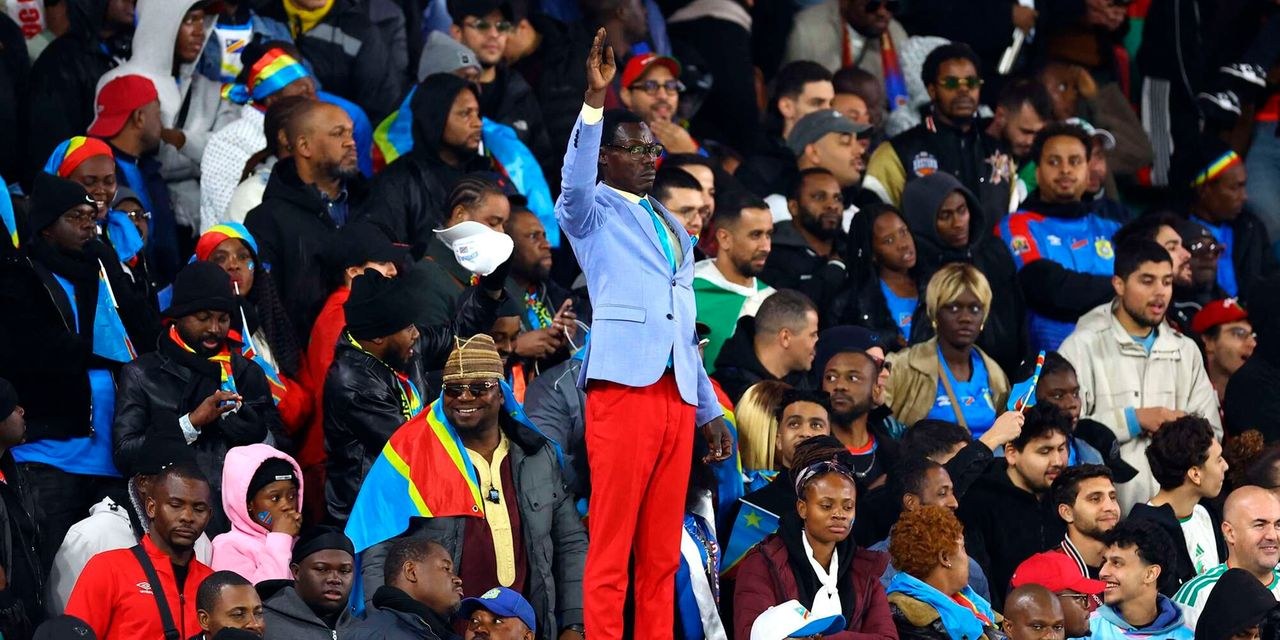
The first lesson from 2026 is the most commercially important: the match is the anchor, not the entire event. FIFA’s Fan Festival programme stretched across 13 cities and nearly 4,000 kilometres, turning public spaces into connected football destinations. Fans without match tickets could still participate through giant-screen screenings, music, local culture, food, gaming and sponsor activations, and more than nine million of them did.
For PAMOJA that should change how AFCON is conceptualised. Not stadium, match, ticket, exit. Instead: match, city, fan, culture, tourism, commerce, content, community, with official or locally integrated fan destinations across Nairobi, Mombasa, Kampala, Dar es Salaam, Arusha, Zanzibar, Eldoret, Hoima and other urban centres. The stadium becomes the centre of gravity while the tournament itself becomes geographically distributed.
That distribution creates an enormous new dataset. Where are fans gathering? Which matches drive the greatest demand? Which cities attract the longest stays? Where do queues form? Which transport corridors become overloaded? Which fan destinations generate spending? Which sponsors actually engage people? Which tourism experiences convert visitors into multi-day travellers? Which communities benefit economically?
The result is not a fan engagement report. It is a map of the football economy.
Fan experience is not marketing, it is economic telemetry
One mistake host nations make is treating fan experience as a communications function. It is operational intelligence, and the combination reveals what people actually do rather than what planners assumed they would do. Ticket sales velocity shows where demand is building. Fan-zone attendance shows where people are gathering. Queue times expose capacity constraints, food and beverage transactions show consumption patterns, merchandise sales show commercial demand, transport movements show mobility pressure, digital engagement shows attention and sentiment shows friction.
For PAMOJA this matters because the tournament spans three countries with complementary tourism propositions: Kenya’s wildlife, Uganda’s gorilla tourism, Tanzania’s Serengeti and Zanzibar. The commercial opportunity extends well beyond the ticket, so the real question is whether PAMOJA can convert football demand into regional economic activity. That requires tracking the whole journey.
The regional conversion funnel: match interest, ticket purchase, border entry, accommodation, transport, match attendance, fan experience, tourism activity, spending, departure, return intention.
The resulting intelligence shows where conversion breaks down. Perhaps the border crossing is too slow. Perhaps accommodation capacity is the constraint. Perhaps regional air connections are weak, fans are unaware of nearby attractions, or the football itinerary and the tourism itinerary were never designed as one product. These are not abstract tourism questions. They are measurable points in a regional conversion funnel. That is how AFCON becomes more than a 30-day spectacle and starts working as a tourism and investment engine.
Every minute of football is becoming commercial inventory
FIFA mandated three-minute hydration breaks midway through each half, primarily as a player welfare measure. The commercial system immediately revealed a second consequence: the breaks created additional broadcast inventory. Reuters reported that broadcasters sold advertising around the new interruptions, with Fox benefiting materially, and Coca-Cola reported additional exposure for its Powerade brand.
The lesson is not that AFCON should manufacture commercial breaks. It is that attention has become measurable inventory. A single three-minute break is simultaneously a player welfare intervention, a broadcast asset, a sponsor activation, a fan engagement moment, a content opportunity and a behavioural signal. The same logic applies to half-time programming, pre-match ceremonies, fan villages, trophy tours, player appearances, hospitality, merchandise, food and beverage, digital content and destination marketing.
Instead of selling “we have millions of viewers”, football can say: this is the verified attention generated by this asset, in this market, for this audience, at this moment. That is a far more sophisticated rights market.
The commercial value of football needs to become measurable
Who owns the value football creates? The 2026 World Cup exposed how sensitive that question has become. FIFA’s proposal to create a commercial entity and sell up to a 20% stake to private investors, potentially raising around USD 4.2 billion, drew significant opposition from UEFA, the AFC, CONCACAF and national associations over consultation, transparency and governance. FIFA withdrew the proposal, but the controversy continues to shape the debate.
That is a conversation for FIFA, the confederations and the member associations, not one Uratibu has a stake in or a position on. What the episode confirms is narrower and more useful: commercial value and governance are now inseparable, and data visibility has to be part of that conversation for every stakeholder at the table.
So African football should ask a practical question, independent of who ultimately owns what. What if CAF, national associations, host cities, clubs, sponsors, broadcasters and communities could all see the same underlying picture of activity, even where they disagree about what should be done with it? Verified attendance, fan-festival participation, broadcast reach, digital engagement, tourism flows, hospitality spend, sponsor interactions, merchandise transactions, local business activity, transport demand, accommodation demand and economic activity by host city.
Visibility does not settle the governance question. It ensures that whatever is negotiated is negotiated over a shared, measured reality rather than competing estimates. Data visibility is a precondition for a fair conversation, not a side taken in it.
Commercialisation without trust solves nothing
Football cannot simply become a better machine for extracting value. The question is who benefits from the value the data reveals.
If AFCON measures attention better but local businesses do not benefit, what has improved? If sponsorship grows while fans face higher prices and poorer access, who has won? If host cities provide infrastructure but cannot demonstrate the return, who owns the legacy? If associations generate value but stakeholders cannot see how it is distributed, why trust the system?
This is where data becomes more than a commercial tool and starts working as a governance instrument. A better African football system should be able to answer what was generated, where, who contributed, who benefited, what was distributed and what remains.
The game also has an integrity problem
The commercial debate is only one side of football’s trust problem. The other is what happens on the pitch. The 2026 World Cup brought new officiating protocols designed to reduce time wasting and increase active playing time, and FIFA’s refereeing leadership reported the measures were proving effective. But technology has not eliminated controversy. VAR has not removed disagreement, it has changed the nature of disagreement. The question is no longer whether the referee saw it. It is what the system saw, which rule was applied, and why the institution reached that conclusion.
Football’s next data challenge is not to replace human judgement. It is to make institutional judgement auditable.
The Senegal and Morocco lesson is bigger than the final
The 2025 AFCON final provides an uncomfortable African example. Senegal initially won 1 to 0 after extra time. On 17 March 2026 the CAF Appeal Board overturned the earlier disciplinary decision, declared Senegal to have forfeited under Article 84 of the AFCON regulations, and recorded the match as a 3 to 0 victory for Morocco.
Whatever one’s position on the underlying incident, the institutional lesson is profound: a football result can become something different from what happened on the pitch. The original sporting result, the disciplinary process, the appeal, the regulatory interpretation and the final administrative determination can all become separate layers of reality. That creates a trust problem, and data can help.
Imagine an AFCON Match Integrity Ledger preserving the evidentiary chain around every material incident: the incident, the referee decision, the VAR intervention, the video and audio evidence, the applicable rule, the disciplinary finding, the appeal and the final determination, each step timestamped and connected to the match, the referee, the evidence and the eventual decision.
The point is not to publish every piece of sensitive information. It is to ensure the institution itself holds an auditable chain of evidence, so that when a decision is challenged the system can answer what happened, what evidence was considered, which rule was applied, who decided, and what changed on appeal. That is how data becomes infrastructure for trust.
Officiating should become a measurable institutional capability
The next generation of football intelligence should focus less on replacing referees and more on improving the institutional system around refereeing. Measure referee positioning, VAR interventions, decision timestamps, applicable laws, comparable incidents, overturn rates, consistency across refereeing teams, post-match review findings and disciplinary outcomes.
Over time that creates institutional memory. CAF could identify patterns, referees could receive better feedback, associations could challenge decisions against clearer evidentiary standards, and fans could understand decisions rather than simply argue about them. The question shifts from whether the referee was good to whether the rule was applied consistently, and whether the institution can demonstrate why. That is not an artificial intelligence problem. It is a data governance problem.
Player welfare is also data
The hydration break shows that commercial value and human welfare need not be opposing concepts. FIFA introduced the breaks as welfare, broadcasters found value in the inventory, and some players and coaches questioned the disruption to the flow of the game.
The lesson for AFCON is to measure both sides. If a welfare intervention changes the structure of the game, measure player physiological load, temperature, humidity, injury incidence, substitutions, performance after breaks, match intensity, audience response and broadcast value. Football should not have to choose between human welfare and commercial value when better data can reveal how the two interact.
Three countries, one operating picture
Everything above makes the original PAMOJA proposition more important, not less. A tournament spanning Kenya, Uganda and Tanzania cannot be operated through disconnected institutional dashboards. Immigration sees one picture. Transport sees another. So do police, medical services, venue operators, tourism authorities and commercial partners. Fans experience the differences.
The solution is a Common Operating Picture, and the underlying reality across all these systems is remarkably simple: where people are, where they are supposed to be, and how far apart those two things are at any given moment.
The PAMOJA intelligence architecture
The original four operational streams need to expand into at least seven interconnected intelligence domains. Not seven dashboards, but seven views of one system.
| Domain | The question it answers |
|---|---|
| Border and mobility | Who is entering, where are they going, where are bottlenecks emerging? |
| Accessibility | Can a supporter actually complete the journey from transport hub to seat? |
| Fan and tourism demand | Where are people gathering, spending and travelling? |
| Safety and density | Where are crowd, heat, medical and emergency risks increasing? |
| Commercial intelligence | Where is attention being created, activated and monetised? |
| Match and officiating integrity | What happened, what was decided, what evidence supports it? |
| Player welfare | What conditions affect players, and what does the evidence say? |
Underneath them sits a unified data ontology covering fans, matches, venues, zones, routes, incidents, sponsors and decisions, drawing on Kenyan, Ugandan and Tanzanian systems alike.
One ontology, not seven dashboards. A venue, a match, a fan credential, a transport corridor and a security incident must each mean the same thing across systems. Then a transport delay in Kampala can be understood alongside venue capacity in Hoima, a border bottleneck alongside hotel occupancy in Nairobi, fan demand alongside public transport demand, commercial engagement alongside physical attendance, and an officiating incident connected to the match, the referee, the evidence and the eventual decision. That is not reporting. That is intelligence.
Build on existing national systems
This does not mean Kenya, Uganda and Tanzania need to invent three new digital states for AFCON. The better approach is an event intelligence layer built over existing systems.
Kenya already has experience reconciling administrative records, field verification and citizen feedback into operational views across counties. The same principle adapts to a temporary event layer covering venues, transport corridors, accommodation, medical facilities, fan destinations and other tournament infrastructure, and it should apply regionally.
Three characteristics are not negotiable. Interoperability, so different government and commercial systems can contribute data without every institution replacing its core technology. Resilience, because secondary host locations cannot assume uninterrupted connectivity, so critical functions must continue locally and reconcile when connectivity returns. And privacy by design, because a three-country tournament requires clear rules on identity, consent, data minimisation, access rights, security and lawful cross-border sharing.
The intelligence layer should be built before the tournament, not improvised during it.
The real opportunity: make AFCON work for the people
The objective is not the most sophisticated African sports dashboard, nor the largest data collection, nor even maximum commercial revenue. It is to use data to make the tournament work better for the people who create its value.
The fan should experience less friction. The player should experience better protection. The referee should have better institutional feedback. The sponsor should have better evidence of value. The host city should have better evidence of economic impact. The local business should have greater visibility into the demand created around it. The governing institution should have greater accountability for its decisions.
And the public should be able to ask what AFCON created, and who benefited. That is the standard.
Beyond hosting
Kenya, Uganda and Tanzania have an opportunity that extends beyond successfully hosting AFCON 2027. They can demonstrate a different model of what an African mega-event can be.
The physical infrastructure remains essential. The stadiums, roads, airports and hotels all matter. But the infrastructure that determines whether the system actually works is increasingly invisible. It is the infrastructure of information: the ability to reconcile government systems, venue operations, transport feeds, border movements, fan behaviour, accessibility, commercial activity, field updates, match integrity, player welfare and citizen feedback into one coherent picture of reality.
If it works, its value should not disappear when the final whistle blows. The same architecture can support tourism, public safety, transport, major events, urban management, public investment, commercial intelligence and future sporting competitions.
Football has always been emotional. That is why it matters. Data should not attempt to sterilise that emotion. It should protect the system that allows the emotion to matter, and give African football something it has too often lacked: an independent, shared evidence base about what is actually happening.
The beautiful game does not win simply when the most money is made. It wins when the value it creates becomes visible, measurable, attributable, governable and ultimately shared. The football will still be played on the pitch, but the future of the game will increasingly be determined by what happens around it. That is where the beautiful game has a data problem, and where Africa has an opportunity to build something better.
The full report
The analysis above is the complete argument. The report is the designed edition, 17 pages with the figures, the seven-domain architecture and the match integrity ledger laid out as reference material, prepared on a source basis of the FIFA 2026 record, public reporting and CAF decisions. Tell us who you are and it is yours to download.
Full report
Read the full report
Tell us who you are and the complete The Beautiful Game Has A Data Problem report is yours to download.