
Every unit of sovereign capital carries an implicit contract that sits beneath its interest rate: where the money gets spent matters as much as how much of it must be repaid. A dollar of concessional financing spent entirely on foreign steel, foreign engineers and foreign rolling stock returns to the lender’s economy almost as fast as it leaves, functioning less like development finance than a subsidised export credit wearing the language of aid. A dollar spent with a local content requirement, a joint venture clause and a technology transfer schedule behaves differently, because it forces a second industry into existence alongside the first asset, one that keeps generating value long after the loan is retired.
That is the distinction a development economist draws between concessional capital and developmental capital. Concessional capital asks only whether the rate sits below market and the repayment schedule is survivable. Developmental capital asks whether deploying it builds a domestic capability that outlives the debt itself. Kenya’s Standard Gauge Railway answered the first question reasonably well and never seriously asked the second, and the distance between those two postures is the subject of this piece, because Kenya is about to make the same choice again, at Mrima Hill, at a much larger scale.
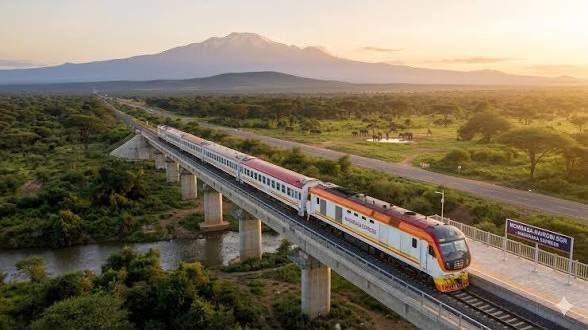
The SGR and the economics of a vendor loan
The SGR was financed largely through China’s Exim Bank under a commercial loan tied to a single EPC contractor, China Road and Bridge Corporation, which meant the lender, the engineer and the primary supplier of labour and materials were effectively the same counterparty. When financier and contractor collapse into one entity, the arm’s length pressure that would normally force local content, procurement and skills transfer into the contract disappears, because the party negotiating the terms has no commercial incentive to dilute its own scope of work. Steel, signalling systems, rolling stock and most skilled labour were sourced externally, and the project’s roughly 327 billion shilling price tag for the Mombasa to Nairobi phase produced a freight and passenger asset without a matching domestic steel, electrical or rolling stock industry beside it.
None of this is unique to Chinese finance. Tied lending has behaved this way since the Marshall Plan required recipient nations to spend dollars on American goods. What changes the outcome is whether the borrowing government negotiates local content, joint venture and technology transfer clauses into the contract before signature rather than leaving them to goodwill afterward. Ethiopia’s negotiation with Chinese contractors on the Addis Ababa light rail, and Morocco’s negotiation with Renault on its Tangier plant, both show governments treating the financing conversation and the industrial policy conversation as a single negotiation rather than two sequential ones. Kenya, on the available evidence, treated them as sequential, and the SGR is the resulting case study in value created without value captured.
Spain and the price of built industrial capacity
Spain offers the clearer counterfactual, not because its high speed rail programme was cheap (the AVE network cost more than sixty billion euros between 1989 and 2021, and has drawn real domestic criticism over that opportunity cost against social spending), but because construction, rolling stock manufacturing and long term maintenance were built as domestic industrial capacity from the outset. Talgo and CAF, Spain’s own rolling stock manufacturers, grew alongside the network rather than being replaced by it. Spain today operates the longest high speed rail network in Europe, roughly 3,100 kilometres, while exporting the manufacturing and engineering capability that built it.

The empirical literature on what this buys a country is worth stating precisely rather than gesturing at. A study of German high speed rail found a causal GDP effect of roughly 8.5 percent on average across counties with intermediate stops, with a one percent improvement in a region’s effective market access raising local output by roughly 12.5 percent. Research on French high speed rail construction found induced GDP effects of 18 to 25 percent tied to the construction phase itself, before a single line opened for service. Structural equation modelling across Spanish provinces between 1990 and 2010 found accessibility gains from HSR access raised local company formation and labour productivity, with the largest effects concentrated in newly connected stops rather than already dominant hubs: the growth was genuinely regional, not simply redistribution toward Madrid and Barcelona.
The mechanism behind these numbers is what economists call agglomeration: firms cluster where transport costs between them fall, generating efficiency gains that compound over time rather than arriving once at a ribbon cutting. A railway financed to build a domestic supply chain captures that effect twice, once through the transport asset itself and once through the manufacturing and engineering firms that grew to build and maintain it.
Japan and the compounding value of engineering sovereignty
Japan’s Tokaido Shinkansen cost roughly 1.3 billion dollars in 1959 prices, about one percent of the country’s entire GDP when it opened in 1964. That single corridor, connecting Tokyo, Nagoya and Osaka across only 24 percent of Japan’s land area, today carries around 60 percent of the national population within its economic catchment and accounts for something close to 65 percent of national GDP, by Central Japan Railway’s own figures. The line has never recorded a passenger fatality in six decades of operation at speeds up to 285 kilometres per hour, with average delays measured in seconds.
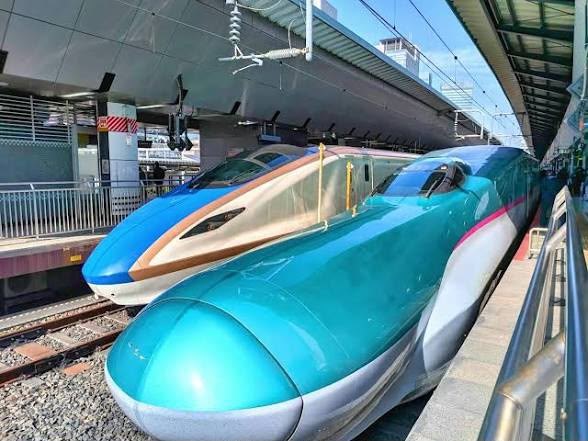
The engineering story matters as much as the financing story. When early Shinkansen designs pushed past 270 kilometres per hour, the train’s leading edge produced a sonic boom on tunnel exit. JR engineer Eiji Nakatsu, an amateur ornithologist, traced the problem to the same pressure differential a kingfisher solves diving from air into water at speed, and the nose cone redesign that followed, modelled on the kingfisher’s beak, cut both the noise problem and the train’s energy consumption at once. The point is not the biomimicry itself but what it reveals about institutional posture: Japan kept the engineering, the manufacturing and the R&D loop entirely domestic, so every problem the system produced became an occasion to deepen national capability rather than a service request to a foreign vendor.
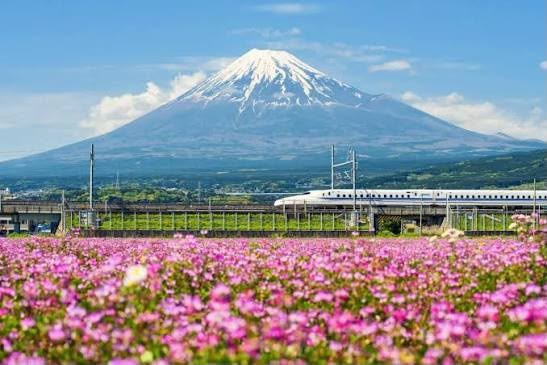
That is the structural difference between a country that imports infrastructure and a country that imports only the initial capital and builds the rest itself. Correlation is not proof of causation at that scale, but the buildout coincided with, and by most domestic accounts contributed meaningfully to, the period Japan itself remembers as its economic miracle.
Mrima Hill: the choice already in front of Kenya
Kenya now has a live test of whether it has learned the SGR’s lesson, sixty five kilometres southwest of Mombasa in Kwale County. The government’s own tender documents put the indicated resource at 5.8 million tonnes grading 1.41 percent Nb2O5 for niobium and 48.7 million tonnes grading 4.4 percent total rare earth oxides, with a larger inferred resource of 17.5 million tonnes at 1.41 percent Nb2O5 and 110.7 million tonnes at 5.61 percent TREO, all reported against stated cut-off grades. The deposit was first identified by Kenyan geologists in the 1930s, explored jointly with Anglo American in the 1950s, then left largely undeveloped for seventy years. Gross in-ground valuations range from 62 billion to over 100 billion dollars depending on the source, with niobium alone estimated at roughly 35 billion dollars of that total, though the Ministry of Mining has been explicit that no Economic Viability Report has yet been prepared, and every serious analyst attaches the same caveat: these are resource estimates, not proven mineable reserves. A sixty billion dollar headline is a geologist’s number, not an economist’s one, and a sovereign development agenda should be built on the second kind.
What makes this moment different from the SGR negotiation is that Kenya appears, at least on paper, to have internalised the lesson. The March 2026 tender explicitly requires bidders to demonstrate concrete plans for in-country beneficiation rather than raw ore export, alongside community engagement and state participation commitments, and American officials have reportedly pushed Nairobi toward a domestic refining model, in direct contrast to the export-the-ore arrangement China has historically preferred elsewhere on the continent. Kenya is, in effect, being courted by two competing models of what capital with a country attached should look like.
Niobium and rare earths are not interchangeable inputs. Niobium’s primary global use is as a steel alloying agent, since even small additions dramatically increase strength in pipeline steel, structural steel and jet engine components, making it a foundational industrial input rather than a high tech one, though its superconducting properties also make it essential in MRI magnets and specialized applications including some superconducting quantum computing hardware. The rare earths at Mrima Hill, including yttrium, lanthanum, thorium adjacent minerals and likely the neodymium and praseodymium family common to carbonatite deposits of this type, feed a different chain entirely: permanent magnets for electric vehicle motors and wind turbines, phosphors, specialty electronics. Silicon chip fabrication itself, the equipment controlled almost entirely by firms like ASML and the ten to twenty billion dollar fabs it takes the better part of a decade to build, is not what Mrima Hill’s mineralogy unlocks. What it unlocks is the tier below that: the magnets, alloys and specialty components feeding into the electronics, EV and defence supply chains, a tier China’s 85 to 90 percent share of global rare earth refining capacity has made strategically equivalent to chip fabrication in the eyes of Western governments. Kenya’s realistic near term play is to become a processing hub, not a chip fabricator.
What the value-addition ladder is actually worth
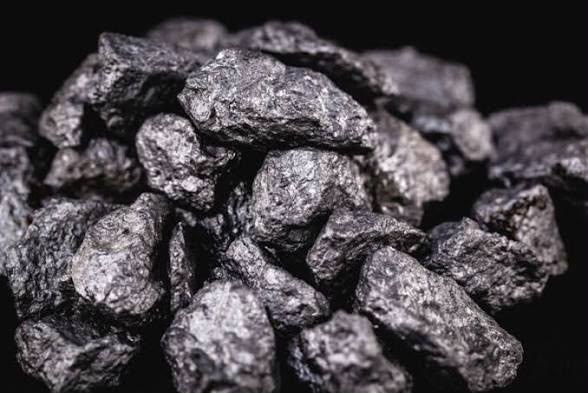
Industry pricing data gives a genuinely useful way to quantify the argument rather than leaving it as rhetoric. A comparable heavy rare earth project modelled against a twelve million tonne per year ore throughput, at a grade in the same range as Mrima Hill’s reported figures, produced roughly 1,024 tonnes a year of raw concentrate.
| Stage | Product | Price per tonne | Multiple over Stage 1 |
|---|---|---|---|
| 1 | Raw concentrate | $8,500 to $10,500 | 1x |
| 2 | Acid-leached, partially separated | ~$45,000 | ~4x |
| 3 | Refined rare earth oxides | ~$125,000 | ~12 to 15x |
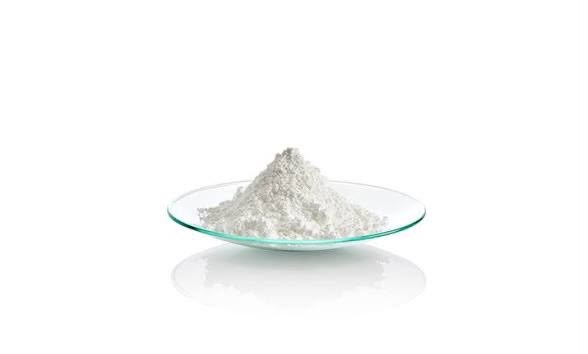
The capital cost of reaching Stage 3 is real: comparable projects estimate around 520 million dollars of additional capex to build separation and refining capacity. But the payback period has been modelled as fast as two years once a plant reaches full output, because the price uplift per tonne is so large relative to the incremental processing cost.
Scaled to an illustrative Mrima Hill operation, and treated explicitly as an order of magnitude exercise rather than an official production forecast, processing on the order of 20,000 tonnes of rare earth concentrate annually would generate approximately 200 million dollars a year sold raw. The same tonnage refined domestically to oxide form would generate somewhere between 2 and 2.5 billion dollars a year: a difference on the order of 1.8 to 2.3 billion dollars annually that either stays inside Kenya’s economy through processing jobs, chemical supply chains and tax revenue, or leaves the country embedded in someone else’s export invoice. Kenya’s GDP runs on the order of 130 billion dollars, so a value-addition gap of roughly 2 billion dollars from a single fully beneficiated mineral operation is not a rounding error. It is closer to 1.5 percent of current GDP, recurring every year the plant operates, before counting the downstream magnet, alloy and component manufacturing a mature processing hub would eventually attract, the way Talgo grew out of AVE construction and Kawasaki and Hitachi grew out of the Shinkansen. Niobium adds a second, parallel value chain on top of this: Kenya may hold the largest undeveloped niobium reserve globally, and niobium’s natural downstream industry is domestic or regional steel processing for construction, pipeline and eventually rail manufacturing, closing the loop back to the SGR’s original failure to build a domestic steel industry to support its own construction.
None of this happens on paper alone. Solvent extraction and electrometallurgical reduction are continuous processes that fail the moment power supply is interrupted, and a plant idling for lack of reliable baseload power destroys margin faster than any pricing assumption can rebuild it. A serious agenda pairs the mining concession with a dedicated power purchase agreement drawing geothermal capacity through the Mariakani substation, backed by a dedicated high voltage line into Kwale rather than a share of the general coastal grid, so the refinery is never competing with the town beside it for electricity at peak demand. Refining carbonate concentrate into isolated oxides also consumes large volumes of hydrochloric acid, sulfuric acid and sodium hydroxide, none of which Kenya currently produces at industrial scale, which means a processing plant built without a matching chemical supply chain simply trades a rare earth import dependency for a reagent import dependency. Co-locating a heavy chemical industrial park near the Dongo Kundu Special Economic Zone, built around imported sulfur feedstock through the adjacent port and domestic chlor-alkali production, would let Kenya capture a second industrial layer alongside the refinery itself rather than importing the inputs to processing the way it once imported the inputs to construction.
Pricing the minerals so the margin is actually captured
A beneficiation mandate Kenya cannot audit is a beneficiation mandate in name only, and the mechanism most likely to hollow it out is not smuggling but transfer pricing: a multinational operator selling its own output to its own offshore trading arm at a discount, before that arm resells the material at the real market price.
Royalty and tax liabilities should never rest on a self-declared invoice value from a related offshore entity, and should instead be pegged directly to independently published benchmark prices for refined oxides, so that Kenya taxes the world price rather than whatever price an operator’s own subsidiary chooses to write down. The contract regime should also cap intra-group management fees and intellectual property licensing charges, apply earnings stripping rules that limit how much interest on shareholder debt a foreign parent can deduct against EBITDA, and require an advance pricing agreement before commercial production begins, with full disclosure of beneficial ownership and any offshore marketing subsidiary. That converts a dispute Kenya would otherwise have to litigate years after the value has already left the country into a term settled before the first tonne ships.
The Kaya forests and the communities who live there
Mrima Hill is not an empty resource footprint, and any development agenda that treats it as one will eventually collide with the same legitimacy problem that has stalled Kenyan mining projects before. The hill sits inside forest that is both ecologically sensitive and, for the Mijikenda communities of the coast, home to sacred Kaya sites of the kind UNESCO has already recognised elsewhere on this coastline.
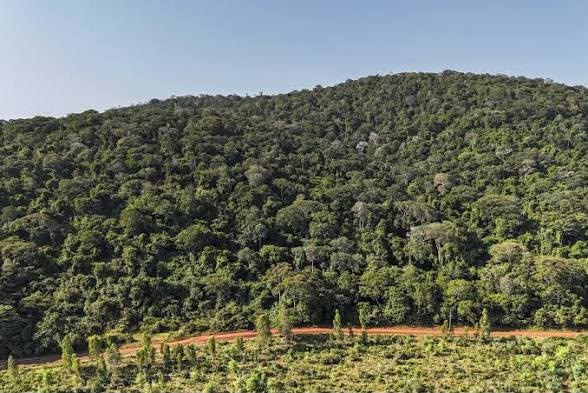
Article 71 of the Kenyan Constitution requires that any agreement for exploitation of a natural resource at this scale be ratified by the National Assembly, and treating that step as a formality is how earlier licences, including the one previously held by Cortec Mining, ended up revoked over inadequate environmental and community process. The Mining Act already provides the legal vehicle for the alternative: a binding Community Development Agreement negotiated and signed before operations begin rather than promised during the tender and renegotiated once the mine is producing. A workable structure would route a fixed share, on the order of ten percent of statutory mineral royalties, directly into a Kwale Community Development Trust jointly governed by county leadership, community representatives and national government. Thorium and uranium occur naturally alongside rare earth mineralisation of this kind, which means the agreement also needs to mandate closed loop water recycling and dry stack tailings handling from the outset, since a radiological or water contamination incident would be the fastest way to turn a beneficiation success story back into a second SGR-style controversy.
What a sovereign development agenda actually requires
None of this happens through tender language alone. A serious agenda converts the beneficiation requirement into enforceable contract mechanics: minimum local content percentages written into the mining licence with financial penalties for missed targets, phased disbursement of any associated financing tied to independently verified construction and employment milestones rather than routed as a lump sum to a single contractor, mandatory joint venture structures on the highest value processing stages so Kenyan firms hold equity and operational knowledge rather than only local labour, and a transparency regime modelled on the IMF and World Bank’s own debt transparency initiatives so capital flows can be audited against a sovereign account rather than netted invisibly against contractor invoices, the exact traceability problem that has recurred from Zambia to Sri Lanka to Kenya’s own SGR financing.

Nigeria’s Oil and Gas Industry Content Development Act offers an imperfect but real precedent: it forced international operators to meet local procurement and employment percentages or face contract penalties, and Nigerian oilfield services capacity is measurably deeper today for it. Two further mechanics are cheap relative to everything above and easy to skip under negotiating pressure. Training agreements for Kenyan metallurgists, process engineers and laboratory technicians need to begin well before the plant reaches commercial production, since a mine can be built faster than a generation of specialists can be trained. And government should publish an annual scorecard covering domestic procurement, Kenyan payroll and technical headcount, processing volumes, royalties and taxes actually collected against benchmark pricing, and downstream investment attracted, so local benefit becomes a published, auditable number rather than a phrase repeated at each groundbreaking.
UNGA, sideline diplomacy, and what it actually signs away
The United Nations General Assembly is not a contracting body. No mineral rights transfer, financing package or trade agreement is ever legally concluded inside it, since the Assembly’s own resolutions are recommendations to member states rather than binding instruments. What actually happens each September in New York, and each June at whichever country hosts the G7, is that a large number of heads of state and their delegations are in the same city for a single week, and that proximity lowers the coordination cost of reaching an informal political understanding far below what a normal bilateral visit would require.
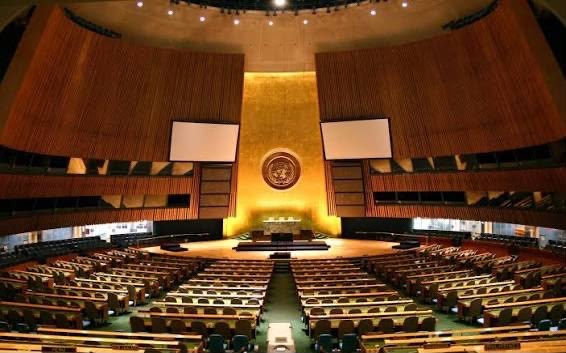
Kenya’s own recent history with Mrima Hill shows exactly how this works. In June 2026, President Ruto used the sidelines of the G7 summit in France, not the UNGA, to announce a preliminary minerals framework with the United States covering Mrima Hill, telling Reuters the two countries had reached an understanding that processing would happen inside Kenya rather than through raw export. That announcement remains, by the account of Kenyan and international reporting, a preliminary and largely non-binding framework, with no independently verified resource estimate yet attached and a High Court petition already challenging the process on transparency grounds. Three months later, as Kenya’s delegation departed for the 81st UNGA session, former Deputy President Rigathi Gachagua publicly alleged that the trip’s real purpose was to finalise the niobium negotiations with Washington rather than the diplomatic agenda on the president’s published itinerary, an allegation the president’s office has not confirmed and the itinerary does not support on its face.
Whether that specific allegation is accurate is almost beside the point, since the fact that it is a plausible and politically damaging claim at all is the real lesson. Sideline diplomacy produces exactly the combination of high visibility and low verifiability that makes an accusation like Gachagua’s impossible for an outside observer to confirm or dismiss with confidence, and that is precisely why a citizen or investor should treat a sideline announcement as a signal of direction, not the transaction itself.
A Parliament’s ratification requirement and a competitive tender process exist specifically to slow that movement down until the terms can be scrutinised. Every major economy uses sideline diplomacy this way, so the point is not that a G7 or UNGA announcement is illegitimate. The point is that it should be read as a stated intention rather than a concluded deal, and the gap between the announcement and the ratified agreement is exactly the space in which the SGR’s original mistake either gets corrected this time, or gets quietly repeated behind a more impressive backdrop.
The Sovereign Wealth Fund Kenya just built
The question of priority across Kenya’s development agenda, housing against roads against power against every other line competing for the same shilling, already has a partial institutional answer. On 8 July 2026, President Ruto signed the Sovereign Wealth Fund Act into law, established under Article 201 of the Constitution, creating three components: a Stabilisation Component to cushion the economy against external shocks, a Strategic Infrastructure Investment Component built to finance priority infrastructure projects nationally, and a Future Generations Component, popularly called the Urithi Fund, into which thirty percent of all mineral and petroleum revenue is mandatorily and permanently ring-fenced, locked from use as loan collateral or credit by whichever government is in office at the time. Mrima Hill did not create this architecture, but on the evidence available today, it is the single asset most likely to actually fill it.
| If Mrima Hill reaches mature scale | Raw export | Domestic refining |
|---|---|---|
| Annual revenue | ~$200 million | ~$2 to $2.5 billion |
| Locked into Future Generations Component (30%) | ~$60 million | ~$550 to $700 million |
| Available for Stabilisation and Infrastructure Investment (70%) | ~$140 million | ~$1.3 to $1.6 billion |
Routed through the Fund’s own allocation rule, the earlier value-addition math stops being abstract. Thirty percent of the mature-scale gap, on the order of 550 to 700 million dollars annually, would be locked permanently into the Future Generations Component, unavailable to any sitting government for spending, borrowing or collateral: exactly the discipline Norway used to turn oil wealth into an endowment rather than a spent windfall. The remaining seventy percent would sit inside the Stabilisation and Strategic Infrastructure Investment Components, the second of which exists for precisely this purpose, financing priority infrastructure construction across the country rather than only around the mine site itself.
What makes this a genuinely different category of capital access, rather than a larger number attached to the same old mechanism, is that it is earned, not borrowed. A Eurobond, a bilateral loan from China’s Exim Bank, or a public private partnership all carry an interest rate, a repayment schedule and, in the SGR’s case, a supplier relationship that quietly determined who actually built the asset. Beneficiated mineral revenue routed through the Strategic Infrastructure Investment Component carries none of that: every shilling of it spent on a road, a rail line or a power plant is a shilling Kenya did not have to borrow and will never have to service with interest across the following twenty years.
The caveat that has run through this entire piece applies here with unusual precision, because the beneficiation question and the Sovereign Wealth Fund question turn out to be the same question asked twice. A Mrima Hill that exports raw concentrate feeds the Fund at roughly a twelfth of the rate a Mrima Hill that refines to oxides domestically would. The local content, benchmark pricing and community legitimacy mechanics argued for above are not a separate governance concern sitting alongside the Fund. They are the switch that decides whether the Fund receives a transformative sum or a rounding error. Kenya built an excellent container in July 2026. Whether it is filled at anything close to its potential depends entirely on whether the mineral inside Mrima Hill is shipped out raw, or kept in the country long enough to be worth roughly twelve times more before it ever reaches the Fund’s books.
The definition of viable capital
Capital is viable for a nation not when its interest rate is lowest, but when the act of spending it leaves behind a domestic capability that can generate the next round of value without borrowing for it again. The SGR answered the interest rate question and left the capability question unasked. Spain and Japan both paid dearly for their railways, Spain’s AVE drawing real domestic criticism over its cost against social spending and Japan’s Shinkansen consuming a full percentage point of GDP at launch, but both nations converted that spending into manufacturing, engineering and export capability that has outlived the original debt by decades.
Mrima Hill is Kenya’s chance to make the second choice rather than repeat the first, and the tender language suggests the lesson has at least been heard. Whether it survives contact with the negotiating table, not the announcement in Paris, not the trip to Turtle Bay, but the quieter negotiation that follows both, is the only question that will actually determine whether this becomes Kenya’s Talgo or Kenya’s second SGR.