
On 17 August 2026, the entity once known as Twiga Foods One Limited, now renamed GT Flow Limited, went into administration under Kenya’s Insolvency Act. A company that raised $185.4 million, roughly KES 24 billion, and was once named by TIME among the world’s most influential companies, now sits under the control of an appointed administrator, with creditors given until 11 October to file claims. The collapse is not a single-company story. It is a readable dataset on where Kenya’s investment climate, regulatory architecture, climate exposure and regional cost structure converge to make certain business models structurally unviable, no matter how well capitalised or well intentioned they are.
This piece reads Twiga the way our intelligence platform would read a governance failure: not as a morality tale about one founder’s mistakes, but as a pattern sitting inside a larger system of incentives, frictions and gaps between what looked true on a pitch deck and what was true on the ground. That gap, between the perceived state of a business and its actual ground reality, is the same asymmetry that shows up in public delivery data across the world, and it deserves the same discipline here.
Why the Amazon comparison was always incomplete
Twiga’s founding thesis, farm to retailer through a single controlled chain, invited comparisons to Amazon almost from day one. The comparison was flattering and structurally misleading in equal measure. Amazon’s retail operation has run on thin margins for most of its history, and the group’s profitability has been carried by AWS and advertising, two businesses with gross margins between 60 and 80 percent sitting on top of a low-margin logistics backbone. Amazon needed to own the chain because the chain fed a high-margin services layer built afterward.

Twiga owned the chain and never built that layer. It stayed a capital-intensive trucking and warehousing operation selling fresh produce, one of the hardest categories in commerce to run profitably given spoilage, seasonality and thin retailer credit. An institutional investor trained to read capital allocation and free cash flow discipline before narrative would have flagged this early. Return on invested capital in vertically integrated perishables logistics is structurally low, working capital consumes cash faster than equity can replace it, and a growth story funded by equity rather than asset-appropriate debt is a warning sign, not a strength. Twiga financed inventory, trucks and warehouses largely with equity, the most expensive capital available, against a business whose margin structure could never service that cost of capital. The 2023 convertible bond used in part to clear supplier arrears was the clearest signal that the model had already run out of runway.
The regulatory bottleneck layer
Kenya’s own data on agricultural cess is unambiguous. Research using Treasury and county-level data found that a one percent increase in produce cess raises average distribution costs by 0.8 percent, and county governments apply cess inconsistently, using different units of measurement, different rates and different collection points, sometimes charging the same truckload multiple times as it crosses county lines. Kiambu’s 2025 Finance Act, currently under constitutional challenge, added transport permits and per-tonne charges on fruit and flowers moving through the county, and the petition against it argues explicitly that produce moving from the Rift Valley to Mombasa or Nairobi can now attract several separate levies before it reaches a buyer.
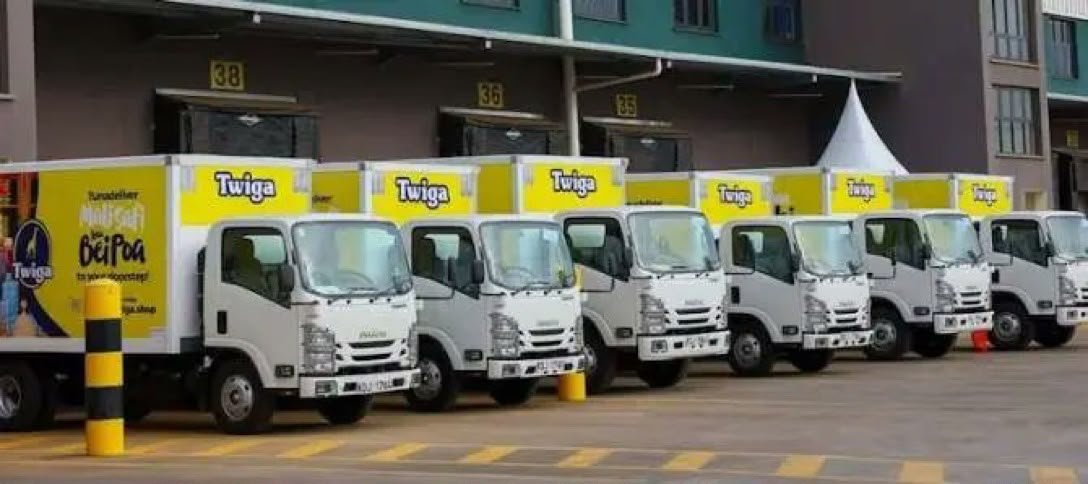
This is precisely the cost structure a company like Twiga had to absorb or pass on, and it sits on top of the company’s own logistics costs, not instead of them. Kenya’s constitution, under Article 209(5), bars county charges that disrupt economic activity, yet the absence of harmonised national legislation has let the practice persist for over a decade. A country trying to build a single national market for food has instead built forty-seven overlapping toll systems.
The investment climate layer
Kenya’s 2025 funding year looked exceptional on the surface. Startups raised close to a billion dollars, driven overwhelmingly by asset-backed clean energy deals in solar and off-grid power. The first half of 2026 told a different story: funding fell by roughly 44 percent year on year, deal counts for early-stage companies dropped by around 31 percent, and investors openly attributed the pullback to a demand for demonstrated unit economics following, in their words, the collapse of several high-profile startups.
| Figure | What it shows |
|---|---|
| ~44% | Year-on-year decline in Kenyan startup funding, H1 2026 |
| ~31% | Decline in early-stage deal counts over the same period |
| ~47% | Share of Kenyan pension assets held in government securities |
| ~1.36% | Share allocated to private equity |
| ~0.02% | Share allocated to infrastructure debt |
Pension assets in Kenya, a pool of genuinely long-term domestic capital, remain allocated almost entirely to government securities. Kenya has capital. It has chosen, structurally and through policy inertia, not to deploy much of it into patient growth financing for exactly the kind of asset-heavy, long-horizon businesses that agri-logistics requires. Twiga was left dependent on foreign equity investors whose return horizons and risk tolerance were never well matched to a business with a multi-year path to profitability in a thin-margin category.
Political instability and the cost of living channel
There is no public evidence that Twiga was targeted by direct political interference. The more important channel runs through the macro environment. The 2023 and 2024 cost of living protests across Kenya, tied to the Finance Bill and to food and fuel prices, were themselves downstream of the same food inflation that squeezed Twiga’s retailer customers and its own margins. A business modelled on thin markups sold to small retailers is exceptionally sensitive to consumer purchasing power, and political and economic instability that compresses household spending compresses exactly the transaction volumes a company like Twiga needed to reach scale economics. Instability does not have to target a company directly to undermine its model.
Climate change as a direct cost driver, not a background variable
Kenya endured its worst drought in forty years between 2020 and 2023, five consecutive failed rainy seasons, followed by destructive floods in 2024. Onion and tomato prices in Nairobi markets have swung by multiples of two to four times within single seasons as local supply from Kieni, Naivasha and Kajiado has failed and traders have turned to Tanzanian imports to fill the gap. Roughly half of Kenya’s onion supply has historically come from Tanzania for exactly this reason, alongside a market preference for Tanzanian onions because they cure and store better than the higher-moisture local crop.

For a company built around owning inventory of fresh produce, this volatility is not background noise, it is the single largest uncontrollable variable in the cost base, and it compounds directly with spoilage risk in a business already carrying thin margins.
Why Kenyan produce costs more than its neighbours
The regional comparison is genuinely instructive and more nuanced than a simple story of Kenya being expensive across the board. On fertiliser, Kenya’s average urea price per kilogram has historically been lower than Uganda’s or Tanzania’s, largely a function of port proximity and supply chain length. Kenyan farmers nonetheless apply fertiliser far more intensively, around 32 kilograms per hectare against roughly 2 kilograms per hectare in Uganda and 6 in Tanzania, which raises Kenya’s absolute input cost per farm even as its per-unit fertiliser price stays comparatively favourable.
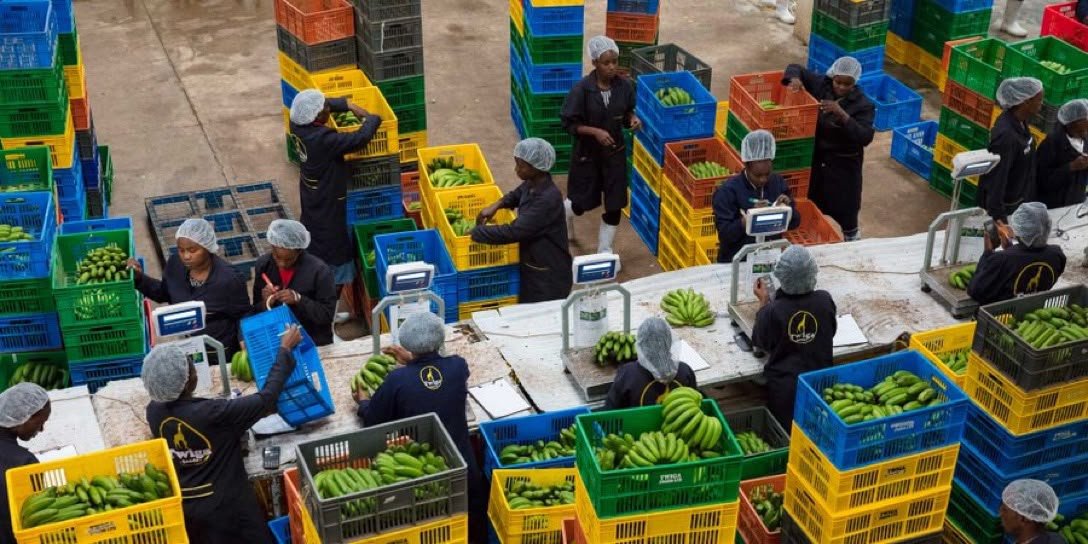
Layer onto that Kenya’s produce cess regime, its higher land and labour costs around the horticultural belt, its transport permit fees, and a food price monitor tracking the region found Kenya carrying the highest wholesale food prices in East Africa, ahead of Rwanda and well ahead of Tanzania. The result is a structural cost disadvantage against Tanzania and Uganda that has nothing to do with any individual company’s execution and everything to do with policy and infrastructure choices compounding at every stage between farm gate and market stall.
What concessions the government should have offered
A few interventions follow directly from the data rather than from ideology.
First, Kenya needs a genuinely harmonised, digitally collected produce cess, levied once at a single point rather than repeatedly at county borders, enforcing the constitutional bar on trade-disrupting county charges that has existed on paper since devolution began.
Second, horticultural input subsidy programmes need to extend beyond maize, where most subsidy effort has concentrated, into the fruit and vegetable value chains that actually drive retail food inflation and that companies like Twiga depended on.
Third, pension and insurance fund allocation rules deserve review. Unlocking even a modest shift out of government securities and into regulated private equity and infrastructure debt vehicles would create exactly the patient, shilling-denominated capital that asset-heavy agri-logistics businesses need and that foreign equity was never well suited to provide.
Fourth, cold chain and rural road infrastructure investment reduces spoilage and transport cost simultaneously, and does so for every operator in the sector at once rather than subsidising any single company’s balance sheet.
The investment lens, applied properly
An institutional investor lens reads a business by its capital discipline before its narrative. Larry Fink’s long-standing argument to corporate boards has been that durable value creation requires a clear, credible path to sustainable free cash flow, not growth funded indefinitely by successive equity rounds. Judged against that standard, Amazon earned its multi-year runway because its capital-intensive retail and logistics investment was always paired with a visible, quantifiable path to a high-margin services business that would eventually carry the group.
Twiga never presented investors with an equivalent second engine. Every dollar raised went back into the same low-margin, high-volatility core, and the convertible bond structure used late in its life to cover supplier arrears is precisely the kind of signal a disciplined analyst treats as a red line: debt raised to plug working capital gaps rather than to fund a return-generating asset.
The lesson for Kenyan founders, and for the local investors now being asked to fill the gap left by cautious foreign capital, is not that vertical integration is wrong. It is that vertical integration has to be paired with a genuine second profit pool, priced with capital that matches the cash conversion cycle of the underlying business, and stress-tested against the specific regulatory, climate and regional cost pressures that apply to that sector in that market, not against the assumptions embedded in a foreign comparable.
Five failures, one collapse
Twiga’s collapse is a single data point that happens to sit at the intersection of five separate systemic failures: a fragmented internal market, a capital base mismatched to the asset intensity of the business, a macro environment sensitive to political and economic shocks, a climate system growing more volatile by the season, and a regional cost structure that puts Kenyan produce at a persistent disadvantage against Uganda and Tanzania.
Treat any one of those in isolation and the Twiga story reads as a founder’s misjudgement. Read them together, the way our governance intelligence platform is built to do, and the story reads as a system that has not yet built the infrastructure, capital markets or policy coherence to support the kind of business it kept funding.
Full report
Read the full report
Tell us who you are and the complete The Twiga Ledger: What Kenya's Biggest Agri-Tech Collapse Tells Investors, Regulators and Founders report is yours to download.