
African economies have spent decades asking the wrong question. The habit has been to ask who owns the resource, when the sharper question is how much of the value that resource creates actually stays on the continent once it leaves the ground. That distinction is becoming the fault line running through some of Africa’s most consequential economic decisions today. From Kenya’s Lake Magadi to the cobalt mines of the Democratic Republic of Congo, from Nigeria’s new refining capacity to Botswana’s renegotiated diamond relationship with De Beers, governments across the continent are confronting the same uncomfortable reality: owning the resource has never been the same as controlling the value chain built around it. A country can hold the land, issue the mining licence and collect the royalties, and still capture only a fraction of the economic value generated by what lies beneath its soil.
The Magadi paradox
That contradiction became unusually visible in Kenya. The 2026 IMD World Competitiveness Ranking, which places institutional quality and economic efficiency at the centre of how nations perform in an increasingly fragmented global system, put Kenya at 55th globally out of seventy economies assessed, one place behind South Africa. At almost exactly the same moment, President William Ruto ordered Tata Chemicals Magadi to leave the country, arguing that more than a century of soda ash extraction at Lake Magadi had never produced the industrial ecosystem the resource should have supported. The government had already suspended the company’s mining operations in July while conducting a compliance review. Tata maintains that it submitted every document the Ministry of Mining requested and remains within the terms of its licence.
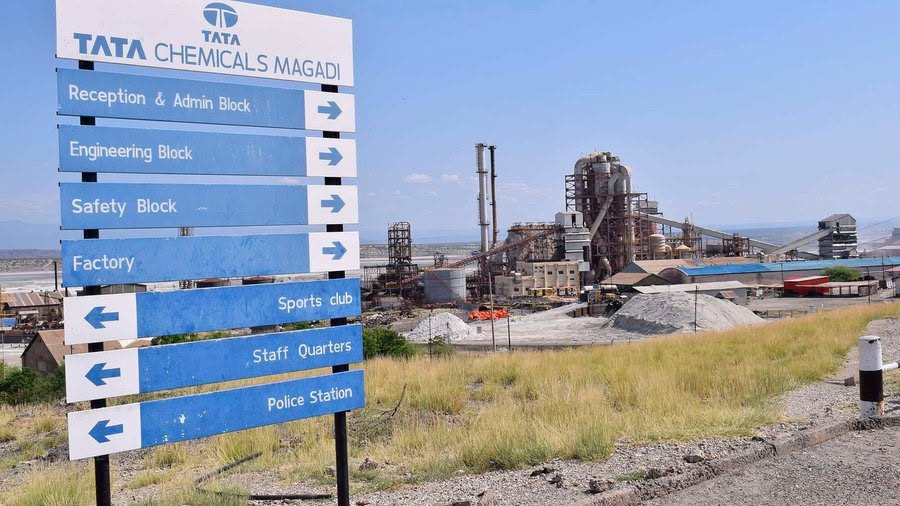
That specific dispute will be settled through law, regulation and evidence. But economically it exposes a much larger question than who is right about Magadi. Kenya is no longer asking only what it can earn from extracting soda ash. It is asking what else should exist in Kajiado precisely because soda ash is extracted there: a glass industry, chemical manufacturing, industrial employment, specialised logistics, engineering services, local suppliers, technical training, and the export industries that would follow from all of it.
Extraction on its own produces an income stream. An ecosystem produces an economy. The first can generate foreign exchange while only the second generates development. That is the real distance between resource ownership and value sovereignty, and it is the distance Kenya is now trying, however roughly, to close.
The value chain is the real battlefield
Africa’s problem has never really been a shortage of natural resources. The continent holds enormous deposits of cobalt, copper, lithium, manganese, graphite, rare earths, oil, gas and agricultural commodities. The deeper problem is that extraction and high value processing have historically sat on opposite sides of the planet from each other. The resource is African, but the processing, the financing, the technology, the intellectual property and often the final consumer sit elsewhere. The result is an uncomfortable asymmetry in which Africa supplies the inputs for industries whose most profitable activities happen somewhere else entirely.
The Democratic Republic of Congo illustrates the pattern with unusual clarity. The country supplied close to three quarters of the world’s mined cobalt in 2024, while China has continued to dominate the refining stage that turns raw cobalt into the battery-grade material manufacturers actually buy. UN Trade and Development has repeatedly flagged that concentration as one of the central structural problems facing mineral-rich developing economies, and its own figures make the stakes concrete rather than abstract.
| Figure | What it is |
|---|---|
| $5.80/kg | Congolese cobalt at the point of extraction, 2022 (UNCTAD) |
| $16.20/kg | The same mineral once processed locally |
| ~2.8x | The value multiple that stays in-country only because processing happens there |
| ~75% | The DRC’s share of the world’s mined cobalt in 2024 |
A near tripling in value, retained inside the country for no other reason than that the processing happened there. The strategic question was never simply how much cobalt Africa produces. It has always been how much of the cobalt value chain Africa actually controls, and that second question is both harder to answer and far more consequential.
From Magadi to Kolwezi
The same logic runs the length of the continent. Kenya’s soda ash leaves Lake Magadi largely unprocessed. The DRC’s cobalt enters global battery supply chains before it ever becomes a battery on Congolese soil. Agricultural commodities routinely leave African ports with most of their eventual value still uncreated.
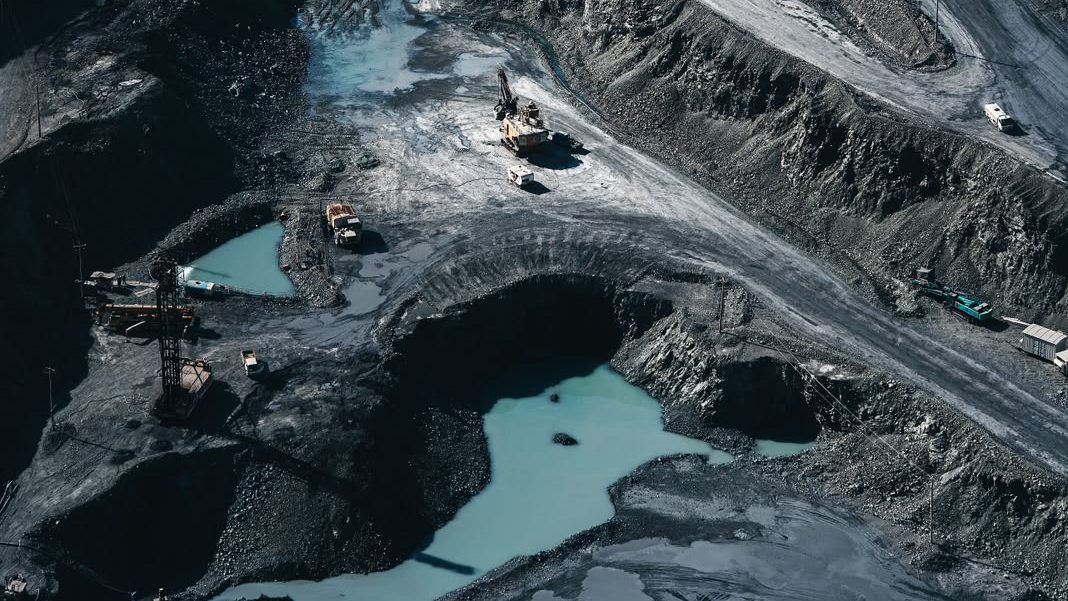
None of this means every raw material export is inherently a failure. Commodity exports still generate foreign exchange, government revenue and employment even in their rawest form. The problem begins when exporting the raw material becomes the endpoint of industrial policy rather than its starting point: when a mine is judged only by tonnes extracted, a refinery only by barrels processed, and a port only by containers moved, rather than judging a mineral deposit by the economic ecosystem it makes possible once the extraction is finished.
Answering the harder question means tracking what happens after extraction. Who does the processing. Who finances it. Who owns the technology and employs the engineers. Who manufactures the equipment. Who captures the tax base and owns the downstream companies. And where the profits get reinvested once they are made. Those are the questions that separate resource ownership from value sovereignty.
Nigeria offers a glimpse of what is possible
Nigeria’s Dangote refinery shows the other side of this equation working in practice. For decades the country exported crude while importing most of its refined fuel back at a markup, a structure that quietly moved value out of the country every single day it operated. The refinery has since reached its 650,000 barrel per day nameplate capacity and tested as high as 700,000 barrels a day, and the company is now preparing a public listing alongside plans for further expansion.
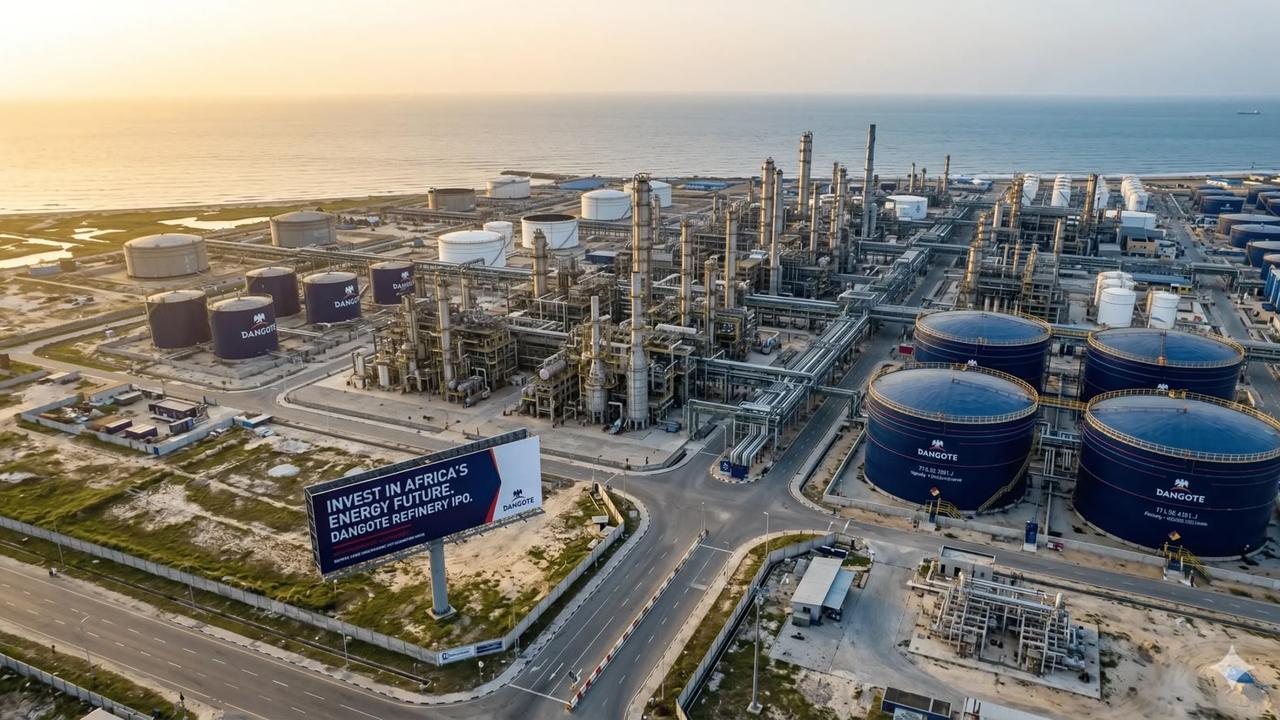
The real significance is not that Nigeria now owns a very large refinery. It is that refining inserts a whole new layer of economic activity between the oil well and the consumer. Crude becomes refined fuel. Refined fuel supports logistics. Logistics supports industry. Industry creates demand for engineering, maintenance, chemicals, finance and transport, each of which spins off new companies, new skills and new tax revenue as the ecosystem compounds on itself.
Even here the lesson comes with a warning attached. Dangote has at times had to source crude from outside Nigeria despite the country’s own enormous reserves, a friction that shows owning the resource does not automatically deliver control over the supply chain built to move it. Sovereignty cannot stop at ownership. It has to extend into infrastructure, logistics, finance, technology and the organisation of the market itself, or the same leakage that hollowed out the old crude-export model simply reappears one level downstream.
Lamu and the possibility of an East African refining hub
That same logic is now moving east. Dangote has set a groundbreaking date for a 700,000 barrel per day refinery at Lamu, designed to serve Kenya and the wider East African market, with Kenya’s own economic advisers projecting the regional crude supply that would feed it.
| Source | Projected contribution |
|---|---|
| South Sudan | ~350,000 barrels per day |
| Uganda | ~250,000 barrels per day |
| Kenya (Turkana) | ~120,000 barrels per day |
| Refinery nameplate | 700,000 barrels per day |
The project has been described publicly as a transformative regional investment, though its financing, timeline and the regional crude logistics behind it still need to be proven through actual construction rather than announcement. Africa has no shortage of megaprojects that exist mainly on paper.
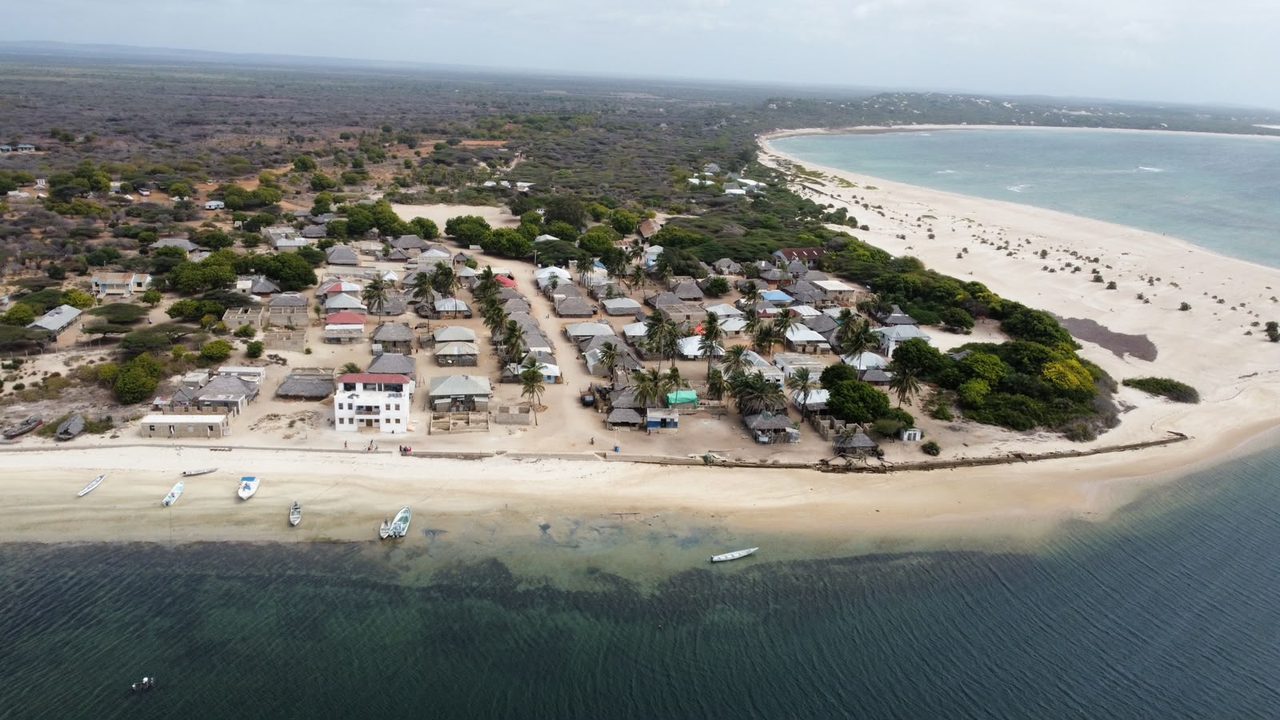
If it is built and reliably supplied, the significance would extend well past fuel prices. A refinery of that scale can anchor storage, petrochemicals, industrial logistics, engineering services, port activity and eventually the kind of energy-intensive manufacturing that never had a domestic home before. The right test for a project like this is not what it costs to build, but what economic system it makes possible once it is running. A refinery surrounded by petrochemicals, logistics and manufacturing is an industrial strategy in a way that a refinery standing alone is not.
Congo shows both the leverage and the danger
The DRC has already demonstrated what happens when a resource-rich country recognises that scarcity itself is a form of bargaining power. Cobalt is strategically vital to the global energy transition, the DRC supplies roughly three quarters of the mined total, and processing capacity remains heavily concentrated in China. That imbalance has given Kinshasa real leverage, first through an outright export suspension in 2025 and then through a managed quota system for 2026 and 2027.
But leverage of that kind is not the same thing as industrial capacity. An export restriction can shift a country’s negotiating position overnight while doing nothing to build the refineries, train the engineers or secure the reliable electricity that turning raw cobalt into battery-grade material actually requires. A country can successfully force the world to pay attention to its resource and still fail to build the ecosystem needed to capture the value behind it, which is exactly where resource nationalism becomes self-defeating: if it stops at the export restriction rather than using it to buy time for the harder industrial work. Bargaining power is useful precisely because it can be converted into something more durable, and productive capacity is what that conversion is supposed to produce.
Sudan represents the nightmare scenario
The same resource question turns considerably darker in Sudan, where gold has become deeply entangled with the country’s war economy. International monitors, including United Nations panels and human rights organisations, have documented that a large share of gold mined in territory held by the Rapid Support Forces flows through the United Arab Emirates, which has consistently and publicly denied financing or arming either side of the conflict even as Sudan has taken the allegation to the International Court of Justice.
The specific facts of who armed whom will keep being litigated, but the structural lesson does not depend on how that dispute resolves. A resource that should be capitalising schools, hospitals and industry in one of the world’s poorest and most conflict-scarred nations has instead become the currency financing its own destruction.
Natural resources do not automatically produce development on their own. They require institutions capable of governing extraction, taxing production and controlling trade. Without those institutions, resource wealth becomes fuel for instability just as easily as it becomes capital for growth. Sovereignty, in other words, cannot simply mean keeping foreign actors out. It has to mean building institutions strong enough to govern the resource once it is already inside the national economy.
Three African models
Different African governments are experimenting with different versions of this same problem, and the variation between them is instructive rather than merely descriptive.
Rwanda has pursued institutional sovereignty, treating administrative predictability and state capacity as its scarcest and most exportable resource in the absence of oil or cobalt.
South Africa has pursued a more negotiated sovereignty, welcoming international capital while insisting on domestic requirements around ownership, beneficiation and participation, a position that has not pleased every foreign partner but has given Pretoria a clearer negotiating floor than most of its peers.
Botswana offers the clearest example of bargaining sovereignty in action. Its renegotiated relationship with De Beers, signed in February 2025, will see the state-owned Okavango Diamond Company progressively increase the share of Debswana’s rough diamond production it sells through its own channels, reaching fifty percent in the 2035 to 2040 period, alongside a one billion pula upfront contribution to a new Diamonds for Development Fund and firm commitments on local diamond manufacturing and skills.
That is a genuine achievement, won through seven years of hard negotiation. But even Botswana’s example reveals the limit of this particular model, since a better deal on diamonds is not the same thing as an economy that no longer depends overwhelmingly on diamonds. Capturing more value from a single commodity is real progress. Building an economy that is not overwhelmingly defined by that commodity is the actual destination. The goal was never a better version of dependency. It has always been less dependency altogether.
Africa needs financial sovereignty too
None of this industrialisation happens without capital that African institutions actually control. Factories, refineries and processing plants all require long-term, patient financing that can survive political cycles and accept that meaningful returns may take years rather than quarters. That is exactly where Africa’s pension funds, development finance institutions, sovereign wealth funds, commercial banks and diaspora capital become strategically important rather than incidental.
The continent does not lack capital in any absolute sense. It lacks sufficient mechanisms for converting African savings into African productive assets at the scale industrialisation requires, and that is a problem of financial architecture rather than a problem of money. When African pension capital finances infrastructure abroad while African governments borrow expensively to build infrastructure at home, the shortfall is not really about how much capital exists. It is about who owns it, who earns the return on it, and where that return gets reinvested once it is made. Those questions matter as much as who owns the mine in the first place.
The honest counterargument
There is a real danger in letting resource sovereignty curdle into political theatre. A government that cancels contracts abruptly, changes the rules without warning, or threatens investors in public may win a round of applause in the short term while quietly destroying the confidence it needs for the following decade. The dispute at Magadi shows exactly why the line between assertiveness and arbitrariness matters as much as it does. Tata says it complied with every regulatory requirement and submitted the documentation the government asked for. The government holds a different view of the company’s economic contribution and legal position. That disagreement ought to be resolved through credible institutions rather than settled by decree, because a continent cannot simultaneously demand industrial investment and make its investment rules impossible to predict.
The strongest sovereignty strategy is not one where foreign investors simply leave. It is one where foreign investors keep coming precisely because the rules are clear, while understanding that those rules now require deeper participation in the domestic economy than extraction alone ever did. A serious industrial policy states its beneficiation targets, its local employment requirements and its technology transfer expectations openly, and enforces them consistently. That is a far more powerful position than improvising sovereignty one press conference at a time.
What Africa should now measure
The next phase of African economic policy should be organised around one measure above the rest: how much value the continent actually retains from what it produces, not merely tonnes extracted, exports recorded, or foreign direct investment attracted.
| Sector | The chain, from extraction to retained value |
|---|---|
| Minerals | Ore, concentrate, refined material, component, finished product |
| Oil and gas | Crude, refinery, petrochemicals, industrial products |
| Agriculture | Farm, processing, packaging, branded product in global distribution |
| Energy | Generation, grid, industrial consumption, manufacturing, exports |
The closer Africa moves toward the far end of each of those chains, the more of the wages, profits, taxes and technical knowledge it keeps for itself. That movement, more than any single deposit or deal, is the real industrial revolution underway on the continent right now.
From resource sovereignty to value sovereignty
Africa does not need to reject foreign capital. It needs to stop mistaking foreign capital for development in itself. Capital is a tool and productive capacity is the objective. The continent does not need fewer investors, it needs better investment structures. It does not need to stop exporting commodities, it needs to export more products that carry African processing, African engineering, African labour and African capital inside them. It does not need autarky, it needs bargaining power. And it does not need to build everything alone, it needs partnerships whose economics compound inside Africa rather than simply passing through on their way somewhere else.
This is why Magadi matters, why Kolwezi matters, why Nigeria’s refinery matters, why Lamu matters, and why Botswana’s renegotiation matters. The next phase of African economic development will be decided less by who possesses the continent’s resources, since the world already knows that answer, and more by who ends up controlling the value built around them.
The question worth asking is no longer what Africa has. It is what Africa keeps, and beyond that, what Africa chooses to build with what it keeps. That is the sovereignty moment now in front of the continent: not a retreat from the world, but an Africa finally entering the world economy on terms designed to compound value at home rather than abroad. The continent does not need an invitation. It needs the industrial, financial and institutional capacity to build the future itself, and that capacity, unlike an invitation, is not something anyone else can extend.