
Our Editorial Premise
Development isn’t exclusively about roads, electricity, manufacturing and investment. It is also about the preservation, production and commercialisation of culture. Music is one of Australia’s most powerful cultural assets and potential exports.
Every week, we discover the artists, sounds and stories shaping our cultural identity.
Sometimes, the introduction to a remarkable song has very little to do with the song itself. It is a moment, a gesture, an unexpected laugh that makes you curious enough to stop scrolling and listen. The finest discoveries rarely arrive with trumpets, and more often they slip in through a side door and wait quietly for us to notice.
That was how I found Jael.
I came across a TikTok of her sitting in a moving car with her siblings, the world sliding past the windows, singing what I didn’t know then was her song, The Air Belongs to Us. At some point, she taps her brother on the shoulder, and as the music plays, he unexpectedly delivers every ad lib with the precision of someone who has been rehearsing the song in secret. The reaction is immediate. Everyone breaks into laughter, and for a moment, the music becomes something more than a recording. It becomes a shared language between siblings, a little pocket of joy, affection and familiarity that needs no explanation. Four walls and a roof would have made that car a vehicle, but the song made it a home.
It was a beautiful moment, and one that made me seek out the song and listen to it properly. I went looking for a song and found a doorway.
The Air Belongs to Us, a bonus track on Jael’s recently released EP Mama Says, is the kind of record that makes you pause and reconsider what you thought you knew about the voice behind it.
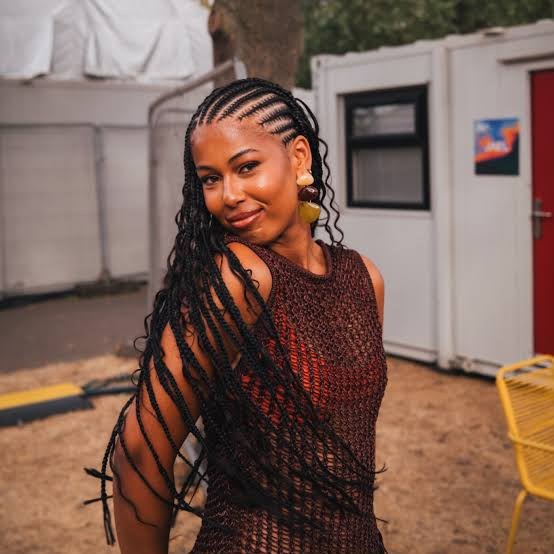
There is something immediately familiar about Jael’s vocal character. I hear shades of Emeli Sandé, Arlissa and Sia, particularly in the rasp, the strength of the delivery and that wonderful timbre that seems to carry its own weather system. There is a certain weight to her voice, a grain and texture that gives even its gentler passages a sense of conviction, like the grain in old wood that tells you how many seasons it has stood through. It does not simply occupy the music. It gives the music somewhere to live.
And yet, she does not come across as an imitation of any of these artists. Rather, she recalls the particular magic that made them compelling in the first place, which is the ability to make a voice feel unmistakably human, imperfect in all the right places, and powerful without constantly needing to announce its power.
There is something of the early Adele story here, too. I remember the feeling of hearing Rolling in the Deep and recognising that a voice had arrived with a presence that was difficult to ignore. The song’s appearance in I Am Number Four only added to that sense of discovery. With Jael, I get a similar feeling of encountering an artist whose voice seems to have arrived before the world has quite caught up with her, the way thunder arrives before the rain has made up its mind.
What fascinates me most, however, is the contrast between her age and the emotional maturity that seems to inhabit her music.
Jael is just 20, yet there is something about her delivery that makes her sound as though she has lived through the interior life of someone much older. Almost like a 36-year-old who has experienced enough love, disappointment, loss and uncertainty to understand that life does not always have to be wrestled into submission. Sometimes, you simply have to trust that it will work itself out, eventually. Youth and wisdom are usually imagined as travellers on opposite roads, and yet here they seem to share one car.
There is a quiet acceptance in that thought, but not resignation. It is the kind of wisdom that comes from having carried something heavy and deciding that you would rather not carry it forever.
This is exactly where the title becomes particularly beautiful.
The Air Belongs to Us feels like an appeal for room to breathe. For the freedom to step outside the things that have weighed us down, to let the wind through our hair, to lift our faces towards the open sky and remember that life is still happening beyond whatever moment has made it feel small.
I imagine someone emerging from a difficult season, taking that first deep breath, and realising that the world has not run out of possibilities. There is still love to experience, music to make, places to discover and a life waiting to be lived. The air is not a privilege to be rationed. It belongs to all of us. Breath is the first thing any of us does and the last, and so a song about air is really a song about being alive.
That is quite a remarkable emotional landscape for a 20-year-old artist to inhabit.
I would put Jael firmly on the list of artists to watch over the next few years. More than that, she strikes me as an artist whose voice deserves to be experienced in a live setting. Some voices are impressive through headphones, but become something else entirely when they occupy a room. Jael belongs in that category. While the official studio recording of The Air Belongs to Us was produced by Australian collaborator Kurisu (Chris), its stripped-back, open room texture made me think of this being recorded at Abbey Road Studios.
There is something rather fitting about this setting. A young artist with such a distinctive voice, working in one of the world’s most recognisable recording studios. Picture the hush before the first note, the walls themselves leaning in to listen. There is enough strength, texture and emotional character in Jael’s voice to make the prospect of seeing her perform particularly exciting.
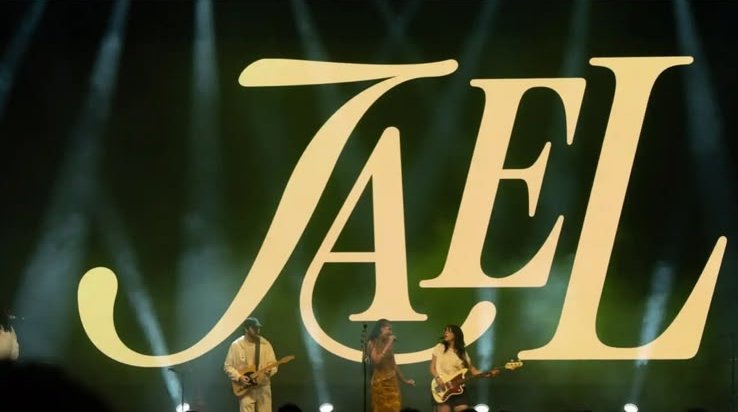
Perhaps the most encouraging thing about discovering an artist like this is that you are not just listening to what she has made, but also to what she might become. A seed is always a promise about a forest.
To understand a little more of what I hear in Jael’s voice, it is worth looking at where she comes from. Her story is as interesting as the music itself, and every river, after all, carries the taste of its source.
Jael was born in Melbourne, Australia, to a Congolese father, David, and an Australian mother, Rebekah. She could sing before she could talk. Music was not something she discovered later in life, it was the environment in which she grew up. Her musical journey helps explain the depth of her influences, her early confidence on stage and perhaps some of the qualities that first caught my attention.
Let’s take a closer look.
A Musical Household: Where It All Began
Before there was a stage, there was a living room, and before there was an audience, there was a family.
According to Jael’s official biography, her parents met while playing in a Melbourne church band, where her mother led worship and her father played and produced. Their home was immersed in music, with weekly Thursday rehearsals bringing live performance into her life from birth. By the age of four, she was already writing and singing her first song in church.
Her father’s own journey is particularly interesting. He moved to Australia from the Democratic Republic of the Congo on a music visa with his band, Vox Congo, carrying a continent’s rhythm in his luggage. Having taught himself piano by sneaking out at night to practise on a neighbour’s instrument, he eventually built a home recording studio. It was there that he taught Jael how to make beats, record and write songs alongside him.
Her mother played an equally important role, teaching her how to sing and encouraging her to take risks on big stages. That musical environment extended to her siblings, too. Her younger sisters, Esther and Shenae, and her brother, Israel, also became singers and musicians.
Looking back at that TikTok moment with her brother, it is rather lovely to discover that music has been a family language for as long as Jael can remember. What looked like an amusing moment between siblings was also a glimpse into the musical household that helped shape her. The car, it turns out, was only the latest in a lifetime of rooms filled with song.
From Talent Competitions to the World Stage
Jael’s early musical development was accompanied by a remarkable run through talent competitions, giving her opportunities to test her voice and build confidence from a very young age. If home was where the voice was planted, these stages were where it learned about weather.
- Fast Track Talent Showcase: Her father entered her into this Australian talent competition when she was young. She won it three years in a row by the age of nine, an achievement that helped spark her competitive drive and earned her a deal with YOYO Music.
- Junior Eurovision Song Contest (2018): At just 12 years old, Jael represented Australia in Minsk, Belarus, with her song Champion. She won the jury vote and placed third overall, tying Australia’s highest-ever finish in the contest.
- Australia’s Got Talent (2019): She competed in the show’s ninth season, advancing to the semi-finals after impressing the judges with powerhouse covers, including Celine Dion’s version of (You Make Me Feel Like) A Natural Woman.
- The Voice Generations and The Voice Australia (2022): As reported by Aussievision, Jael competed alongside her parents and siblings as a family band on The Voice Generations, reaching the Grand Final. Later that year, at 16, she returned as a solo contestant for Season 11 of The Voice Australia, joining Team Jessica Mauboy and making it to the semi-finals.
When you put these experiences together, a clearer picture begins to emerge. Jael grew up surrounded by music, learned the craft in a home recording studio, developed her voice in church and went on to test herself on some of Australia’s biggest talent stages. She has had years of musical exposure and performance experience, even though she is only 20. Each stage was a different sky, and she learned to sing beneath all of them.
That history does not make her journey complete. Far from it. She still has a great deal of room to grow, explore and define the artist she wants to become. But it does help explain why her voice carries a confidence and character that seem to reach well beyond her years.
Jael has given us a voice worth paying attention to. I am looking forward to hearing where she takes it, for somewhere ahead the air is waiting, wide and unclaimed, and a young woman from Melbourne is already walking towards it.
The Bigger Question: From a Kenyan, African and Global Perspective
Are we giving our young artists enough room to breathe?
The next generation of musicians is producing work that deserves more than a fleeting moment on our social media feeds, but discovery is only the beginning. How do we build the platforms, audiences, investment and professional structures that allow young artists to develop sustainable careers without losing the very originality that makes them special?
Is it about better live music circuits, stronger artist development, investment in production, more deliberate radio and streaming support, or an industry that understands how to turn a moment of discovery into a lasting career?
Jael’s journey is a reminder that talent can begin in a family home, develop through years of practice and find its way onto an international stage. The question is whether the music industry around that talent can provide the support, opportunity and commercial structures needed to sustain it. A song can ask for room to breathe, but only a whole industry can build the room.
As you listen to The Air Belongs to Us, we would like to hear your thoughts.
Find her everywhere @Jael.
Do you have an artist you believe we should all be paying attention to?