
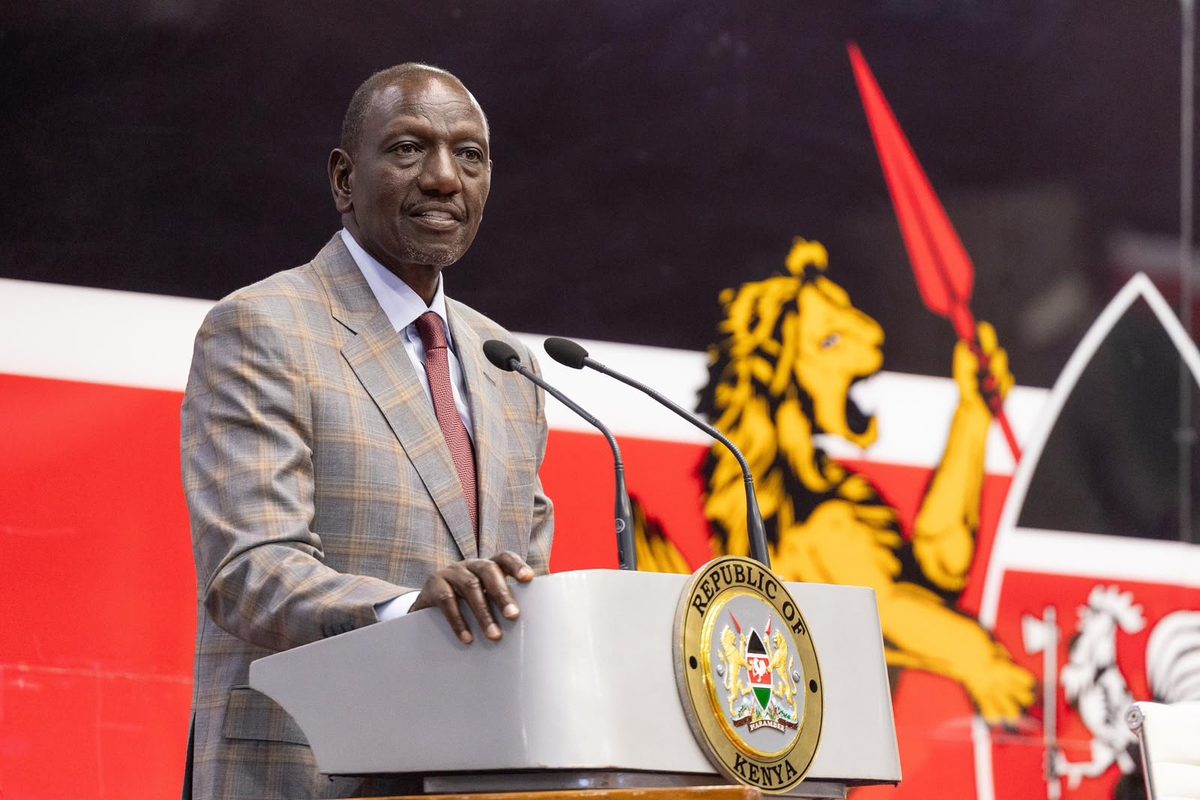
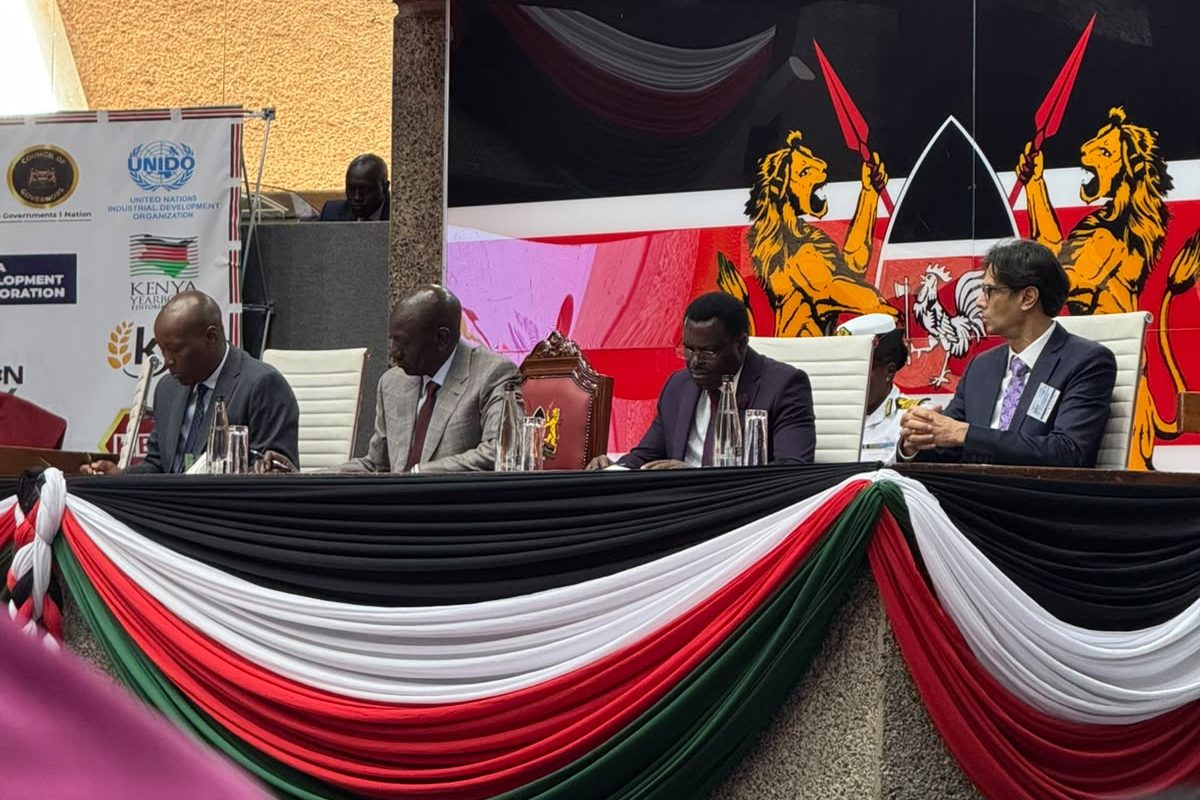
The Kenya Industrialisation Summit 2026 will be remembered for what it put on the record. The President, the Cabinet Secretary for Investments, Trade and Industry, the Principal Secretary for Industry, the Kenya Association of Manufacturers, the Council of Governors and a line-up of working entrepreneurs described one industrial agenda in the same room, with baselines, instruments and commitments that can be checked. A country that can be measured on its industrial promises can also be held to them, and that changes the nature of the national conversation.
The baseline is sobering. Manufacturing accounts for about 7.2 per cent of GDP, it grew about 2 per cent in 2025 while the wider economy grew 4.6 per cent, and the national ambition set in October 2022 is a 20 per cent share and one million jobs. The distance between those numbers is the real story of the summit, and early signs of a rebound, with manufacturing growth reported at 4.4 per cent in the first quarter of 2026 against 2.8 per cent a year earlier, show that the gap can narrow.
This paper reads the summit through four lenses. The first is policy, where Kenya has moved from vision to working instruments such as import levies, public procurement, concessional finance, skills pipelines and county industrial parks. The second is energy and infrastructure, where the President stated that a grid of about 3,300 MW is too small for an industrialising country and set out a plan to add 10,000 MW. The third is the testimony of the people who actually make and sell things, whose requests reveal where the system still leaks. The fourth is continuity, because industrial transformation spans several budget and electoral cycles.
Kenya has moved from announcing an industrial agenda to being accountable for it, and the next chapter is the conversion of announced capital into operating factories, delivered megawatts and sustained jobs.
We close with a ten-indicator scorecard that Uratibu will track, and with recommendations for government, investors, manufacturers, counties and citizens.
Why this summit matters
The Kenya Industrialisation Summit was introduced in 2023 as a national platform where government, manufacturers, investors, researchers and development partners examine policy, confront challenges and attract investment. Over the past three years the State Department for Industry and KAM have paired it with the Changamka Shopping Festival, which began in 2016 and has grown from about 20 exhibitors to 400, with some 3,000 participants expected before it closes on Sunday. The pairing is deliberate. The summit supplies ideas, policies and incentives, and the festival supplies products, customers and visible proof of what Kenyan industry can do.
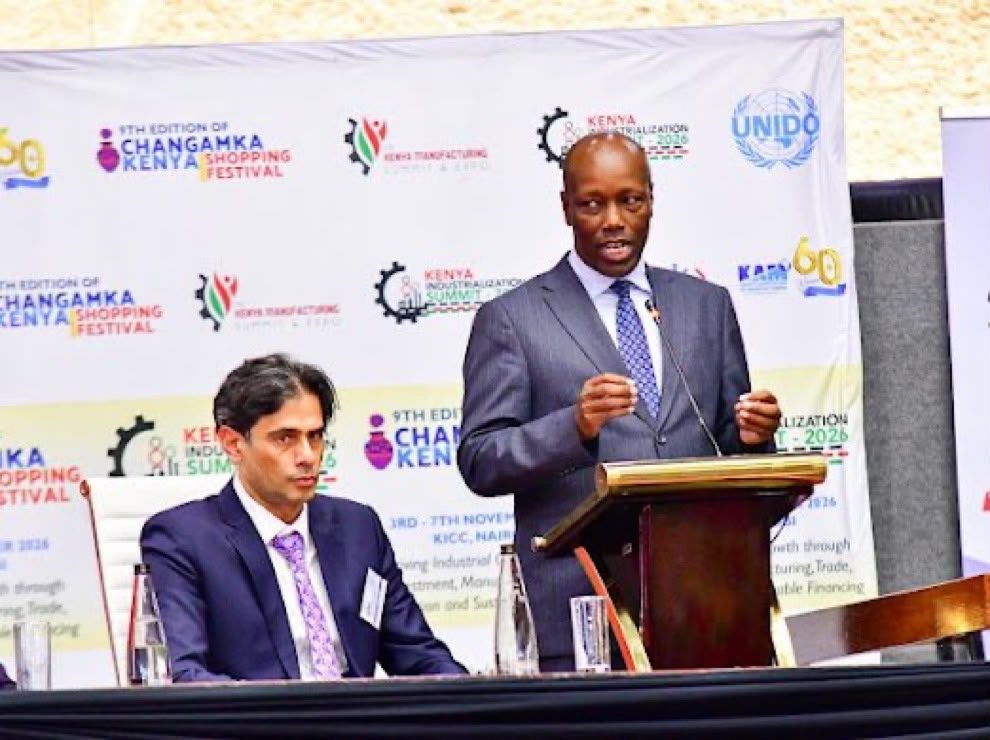
“A meeting place between those who make policies and those who make products.”
Dr Juma Mukhwana, Principal Secretary, State Department for Industry
That description captures why the event matters beyond its programme. Policy credibility rests on the experience of those who produce, and producers invest only when they trust policy. The Principal Secretary framed the moment for investors in direct terms: “Kenya is open for manufacturing investment.”
The President opened with a conviction that frames the whole agenda, namely that the prosperity of a nation is measured by “what its people are able to produce” and by the factories, enterprises and jobs that follow, and not only by what it consumes. He then explained why stabilisation came first. The shilling has held around Sh129 to the dollar for more than two years, foreign exchange reserves stand at $15.3 billion and cover close to 6.5 months of imports, and the Central Bank Rate has fallen from 13 per cent to 8.75 per cent after ten consecutive reductions. Average lending rates have eased to about 14 per cent, the value of companies listed on the Nairobi Securities Exchange has risen from Sh1.5 trillion at the end of 2024 to more than Sh4 trillion, and the economy grew 5.3 per cent in the first quarter of 2026 and 5.1 per cent in the second, against 4.9 per cent in both quarters of 2025.
“We stabilised the economy so that Kenyans could invest, produce, trade and create opportunity.”
President William Ruto, opening the Kenya Industrialisation Summit
He added that stabilisation was never an end in itself, which is the right way to read the sequencing. Stabilise first, build the instruments second, and now prove that the instruments produce factories. Few emerging economies complete the first step and fewer still complete the third.
The baseline that frames everything
Any honest reading of the summit starts with the numbers the leaders themselves put forward. Manufacturing grew about 2 per cent in 2025 against overall growth of 4.6 per cent. Formal manufacturing employment rose 5.2 per cent to 388,000 jobs. Manufacturing growth strengthened to 4.4 per cent in the first quarter of 2026, compared with 2.8 per cent in the corresponding quarter of 2025, which is encouraging but remains a single quarter.
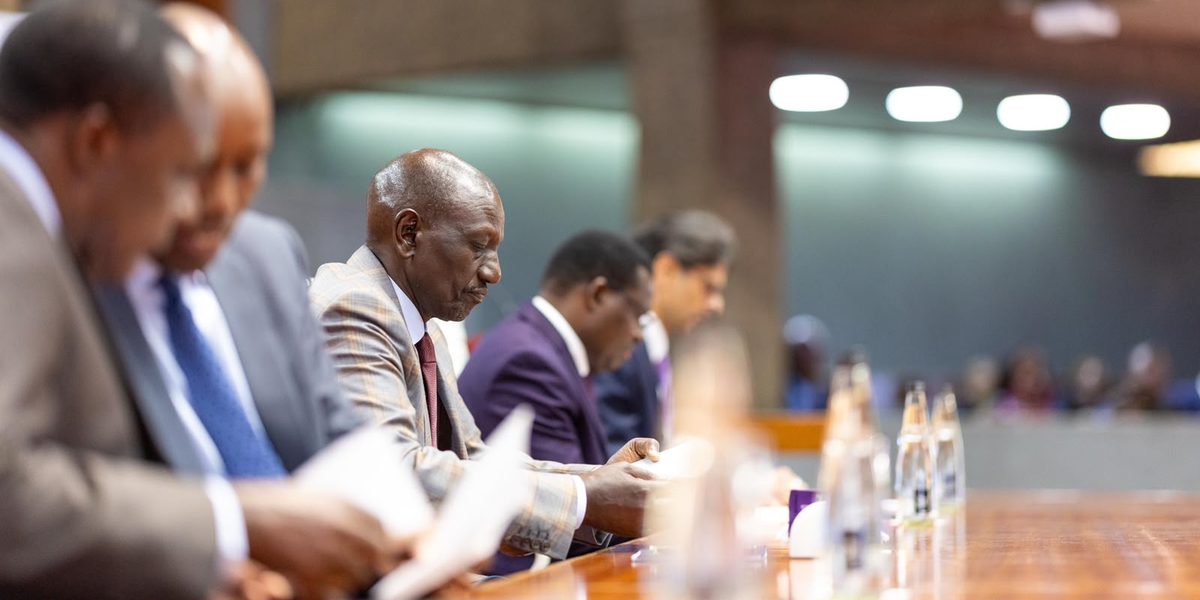
Hitesh Mediratta, the KAM chairperson, supplied the fiscal side of the picture.
“Manufacturing is the single largest contributor to tax collections.”
Hitesh Mediratta, Chairperson, Kenya Association of Manufacturers
The sector paid Sh462 billion last financial year while accounting for only 7.2 per cent of GDP, which means it carries a fiscal load far larger than its share of the economy. The President read the gap between ambition and outcome as a call to action, saying the country must “make deliberate choices to accelerate investment”, strengthen domestic production and create more opportunities.
The 20 per cent target deserves some arithmetic. Using Uratibu’s illustrative assumption that the wider economy grows 5 per cent a year, lifting manufacturing from about 7.2 per cent of GDP to 20 per cent over ten years would require manufacturing output to expand at roughly 16 per cent a year. Over five years the required pace approaches 29 per cent a year. The President reaffirmed the 20 per cent and one million jobs commitment within the next three years, which, if confirmed against the official text, would imply growth near 48 per cent a year on the same assumption. These figures are illustrative and not forecasts, because real outcomes depend on prices, composition and base effects. They show that the target demands a step change in investment and that a 2 per cent growth year must be treated as an alarm and not a footnote.
None of this diminishes the progress already visible. Cement production rose 18 per cent last year, construction recovered from a 0.7 per cent contraction to 6.8 per cent growth, and local furniture manufacturing grew 5.4 per cent. Export processing zones and special economic zones employed 104,000 people last year, up 16 per cent. The task is to widen these pockets of momentum until they carry the whole sector.
From vision to instruments
The most important shift in the summit is that industrial policy now has instruments, and each one can be assessed on its own terms.
Protection that pulls in capacity
The 17.5 per cent levy on imported clinker, introduced in 2023, has attracted four major investments worth nearly Sh180 billion that are expected to create 12,000 jobs. They include Bamburi Cement’s Sh32 billion clinker line, a Sh45 billion factory in West Pokot supplying western Kenya and Uganda, and a Sh70 billion factory in Kitui where the President broke ground last week. Cement production is on course to exceed last year’s level by almost another 20 per cent, with 7.6 million tonnes produced in the first eight months of 2026. A similar 17.5 per cent levy on steel inputs has drawn three major investments expected to create about 9,000 jobs, including a completed Sh25 billion plant in Taita Taveta that is due to start making steel directly from iron ore, and two previously closed factories have resumed production. Galvanised steel sheet output and steel bars and rods have both grown this year, by 19.7 per cent and 5 per cent respectively according to the figures cited. Furniture import duty was raised from 35 to 45 per cent with a 30 per cent excise duty on imports.
“Our objective is not protection for its own sake.”
President William Ruto, opening the Kenya Industrialisation Summit
That is the correct test, and it carries an advisory caveat. Protective levies raise input costs for downstream users, so the policy succeeds only if announced investments become operating plants and local supply becomes competitive in price and quality within a defined period. We will track both.
Public demand as industrial demand
The affordable housing programme has 303,910 units at various stages of completion, sources 97 per cent of its materials locally and has opened Sh61 billion in contracts to jua kali artisans. The President described what that means for the people who make hinges, doors and windows.
“That order finances new machinery. The machinery expands production, and expanded production creates jobs.”
President William Ruto, opening the Kenya Industrialisation Summit
He noted that it was once hard to talk about jua kali and billions in the same sentence, and that “we can now speak about jua kali and 61 billion in the same statement”. The same logic applies to leather, where security agencies are now required to buy boots only from Kenyan manufacturers, and where the next target is shoes for about 15 million schoolchildren. After early quality complaints, he said, the agencies now report that the footwear they buy from Kenya is better than any they have bought before. His message to shoemakers was practical, namely “I encourage you to buy more machines” so that they can meet the demand.
Finance, skills and procurement
The Hustler Fund has advanced Sh98 billion to small businesses without conventional collateral, with a further Sh5 billion planned over the next two months, and Sh10 billion in concessionary enterprise finance has been disbursed since July 2023. The government is in the final stages of creating an industrialisation fund that will lend to manufacturers at single-digit rates, starting between Sh5 million and Sh20 million and growing towards Sh100 million and Sh200 million. That fund is a commitment to watch and not yet a result.
On skills, technical institution enrolment has grown from 300,000 in 2022 to 1.2 million. Starting in January the government will fund one-year internships for at least 50,000 young people, with the potential to reach 150,000 if industry takes part, and firms that pay a stipend will be able to deduct it fully from taxable income. The President asked KAM to host a portal where manufacturers can list the interns they need. A separate government-funded programme will train 600,000 young people, rising to one million, to compete for public tenders under the Access to Government Procurement Opportunities scheme. That scheme is worth about Sh230 billion a year to youth, women and persons with disabilities, yet uptake has not reached 10 per cent, and graduates will receive free business registration, a financing package and payment within 60 days of verified delivery.
Value addition on the farm
The President argued that the same discipline applies to agriculture. The government wrote off close to Sh117 billion of sugar sector debt, leased the mills to private operators and will exit the COMESA sugar safeguards that have applied for about 24 years, while licensing five new sugar factories, two of which are already in production. The Coffee Cherry Fund has advanced close to Sh15 billion to nearly 680,000 farmers, and coffee prices have moved from about Sh60 a kilo to between Sh120 and Sh130, with some factories paying Sh150. Milk prices to farmers have risen from Sh30 to Sh35 a litre in 2022 to as much as Sh77, which he said has happened without a rise in the consumer price. Duties on tea packaging materials have been removed to encourage local value addition.
Industry beyond Nairobi
The County Aggregation and Industrial Parks are designed as complete ecosystems with space, water, electricity, roads and common-user facilities, so that small and micro manufacturers can produce without building their own premises or utilities. Fifteen of the parks are ready, and the government will install common-user facilities in each of them, including for leather. The President framed this as the answer to the concern, raised by the Council of Governors chairperson, that industry should not concentrate in one place.
Emerging industries are part of the same picture. Incentives introduced in 2023 for electric mobility have attracted about Sh24 billion of investment and supported the local assembly of 38,000 electric bicycles, motorcycles and buses. The President also pointed to renewable energy technologies, digital infrastructure at Konza, geothermal-powered data centres, artificial intelligence and advanced manufacturing as areas where industry, universities and technical institutions must work together.
Energy and infrastructure are the binding constraints
Every other part of the agenda depends on power and logistics. The President was candid about the starting point, observing that “we have 3,300 megawatts of energy” and that this is not enough to industrialise. The plan is to develop another 10,000 MW in the shortest time possible, with contracts for additional geothermal generation to be signed shortly. If delivered in full, that would lift the grid to roughly four times its present size. The National Infrastructure Fund, announced in last year’s State of the Nation address, is intended to backstop the programme and crowd in private, development and philanthropic capital.
Energy shapes the economy at three levels. At the micro level it determines the running cost and reliability of an SME trying to meet international standards. At the macro level it determines competitiveness, investor confidence and where regional capital locates. At the absolute level it sets the ceiling on how large the economy can become. Manufacturers in the special economic zones already access electricity at about Sh5 per unit, which proves that competitive power is possible when the state prioritises it, and the question is how to extend that advantage beyond the zones.
Logistics received equal emphasis. About 6,000 kilometres of roads are under construction after the road maintenance levy was securitised and stalled contractors were paid, a further Sh120 billion is being raised to keep work moving over the next eight to nine months, and plans cover the dualling of about 2,500 kilometres including the Nairobi to Malaba corridor and the Mombasa to Nairobi road. Work is also under way on the expansion of the port of Mombasa and a new terminal at Jomo Kenyatta International Airport, which the President said would be ready in about 15 months. He described the country as “a construction site” and said of the roads, bridges, housing and markets going up that “that is how a country grows”.
The advisory lesson is that generation capacity must be planned ahead of the factories it will serve, with transmission, reliability and industrial tariffs treated as part of the same package. A factory that cannot count on stable supply will not be built, whatever incentives are on offer. For that reason Uratibu proposes that megawatts be reported with the same discipline as factories, covering megawatts contracted, megawatts commissioned, the share allocated to industrial zones, tariff competitiveness, supply reliability and the cost of outages to manufacturers.
Markets are where production earns its return
The President urged manufacturers to look first to the continent, a market of about 1.4 billion people. Exports to the East African Community rose from Sh226 billion to Sh351 billion, with Uganda alone accounting for Sh162 billion and trade with Uganda growing 55 per cent in the past year. Exports to COMESA reached Sh339 billion and exports to the African Continental Free Trade Area now stand at Sh453 billion. He acknowledged the friction that exporters face and asked for resolve.
“There will be bumps, there will be hiccups, but stay the course.”
President William Ruto, opening the Kenya Industrialisation Summit
The wider trade architecture is widening. AGOA has been renewed, which he said has revived the apparel and textile industry, and a bilateral agreement with the United States is under negotiation. Negotiations on the economic partnership agreement with the European Union are complete, the Comprehensive Economic Partnership Agreement with the United Arab Emirates has lifted trade from Sh44 billion to Sh78 billion, and an early harvest arrangement gives Kenyan goods zero-tariff access to China. He explained why the China arrangement mattered, since Kenyan exporters had been routed through Uganda, Tanzania or Rwanda, which enjoyed better terms as least developed countries. Responding to critics of his travel, he said simply “I’m the chief diplomat of the country.”
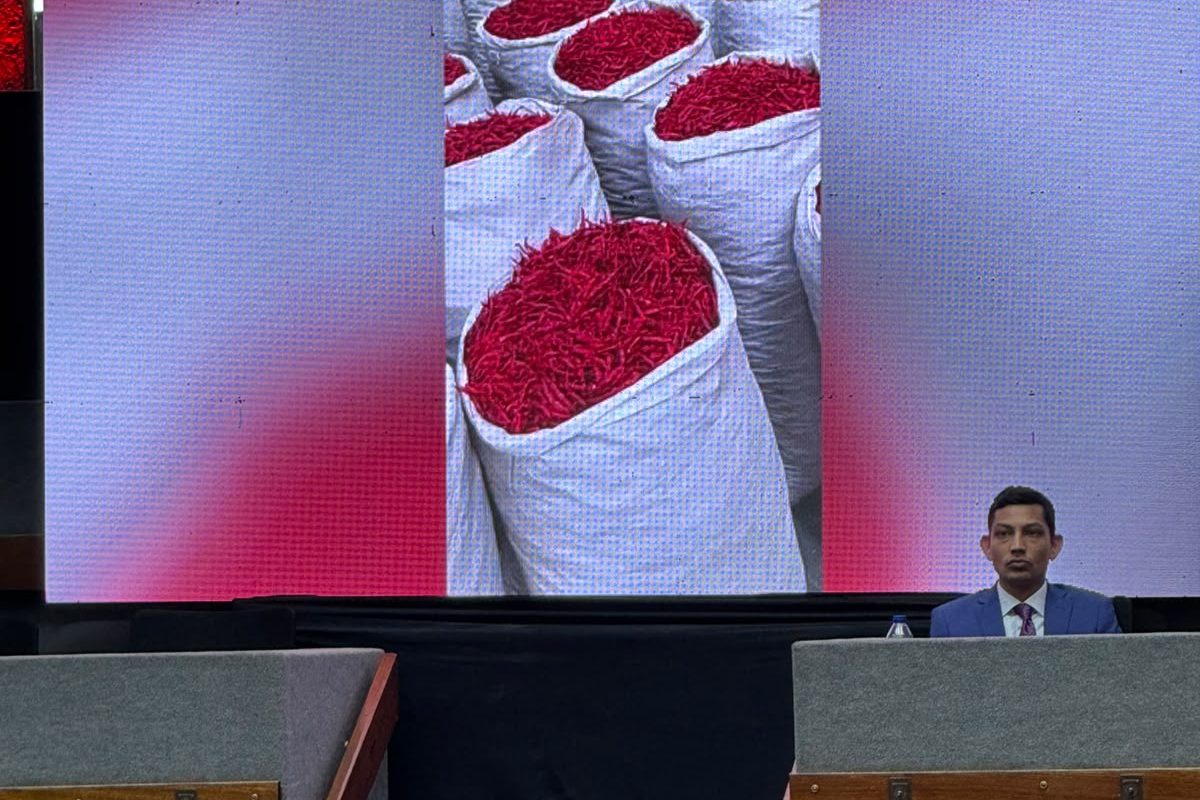
The commercial test of that diplomacy was supplied by an exporter in the room. Ken Ng’ang’a, a chilli exporter, described how the old rules shaped his business.
“We were forced to go to Rwanda.”
Ken Ng’ang’a, chilli exporter
He now holds an order for 2,500 containers over two years, and the President noted that he no longer has to route his chillies through a neighbouring country. Orders, containers and factory shifts, and not signatures, are what will show whether market access is converting.
The view from the factory floor
The most valuable moments of the session came from entrepreneurs who described what the system looks like from the inside. Their testimony points to where policy is working and where it still leaks.
Digital retail and the cost of dependency
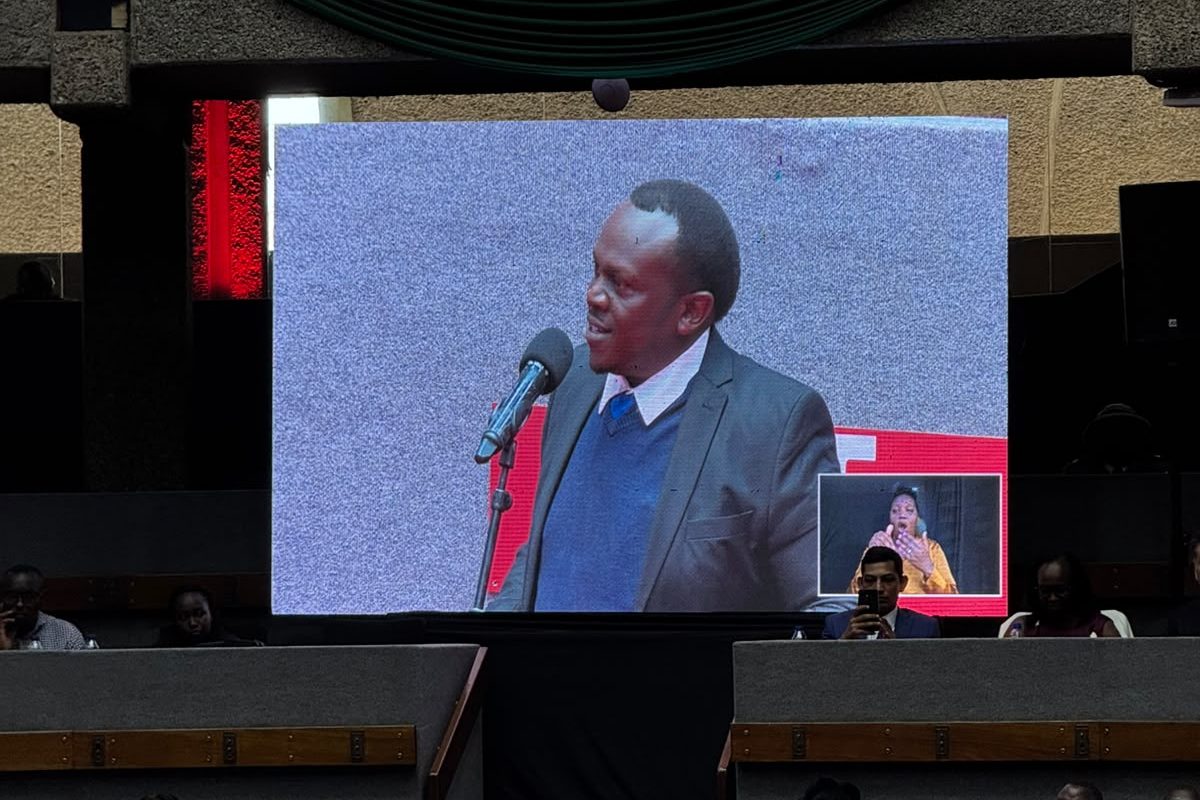
Willy Kimani, founder and CEO of Jaza Supermarket, has grown the business to 34 stores in about two and a half years by moving fully onto the cloud and integrating payment systems from M-Pesa to bank transfers. He praised eTIMS for letting him track every transaction, and then named the other side of the coin.
“We have a dependency on technology.”
Willy Kimani, founder and CEO, Jaza Supermarket
His request was that the digitised economy be protected if the internet has to be switched off for any reason, because a supermarket whose systems live in the cloud cannot trade without connectivity. He also asked for a mentorship programme for small retailers, on the view that the most valuable assistance is not money alone but, in his words, “giving them the financial planning ability”.
Agro-processing and the credit cycle
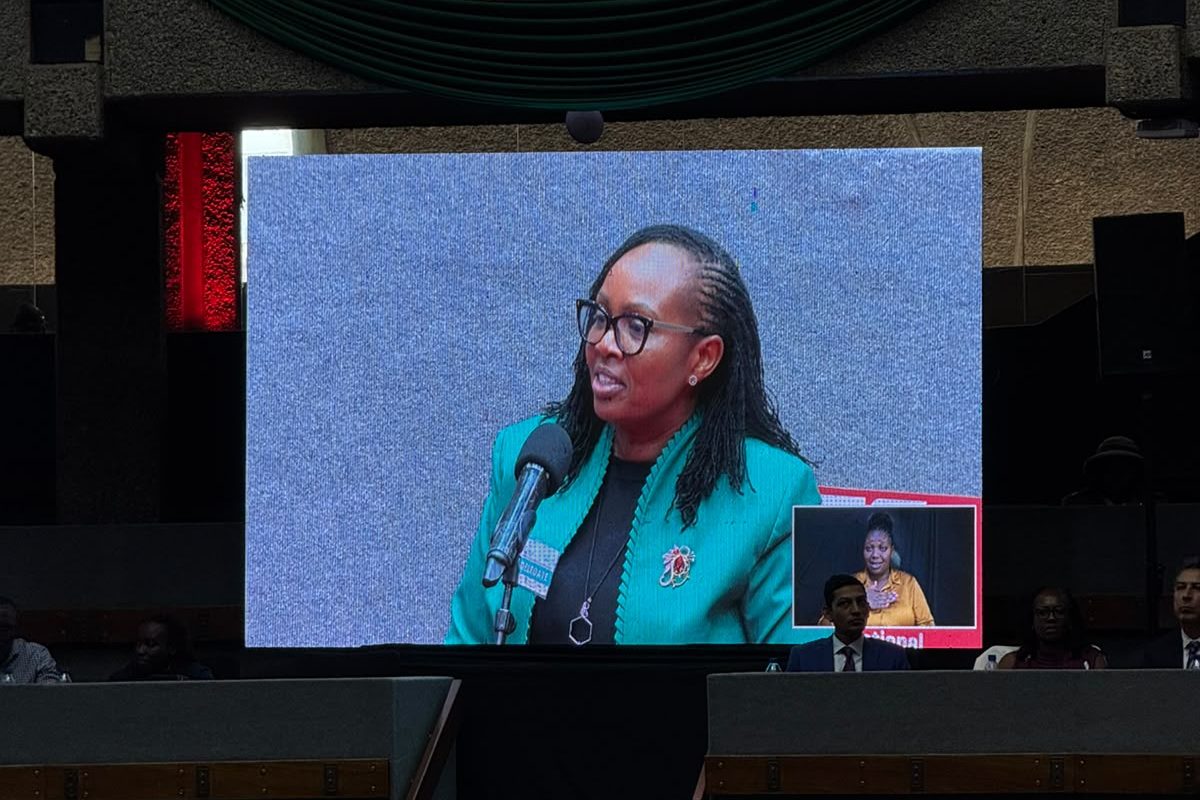
Jane Maigua, CEO and managing director of Exotic EPZ, runs what she describes as the first fully woman-owned processor and exporter of macadamia nuts in Kenya. Her business is moving from selling a commodity to selling a consumer brand, with 10 flavours aimed at the European Union and United States markets. She credited policy for protecting local processing and commended the economic partnership agreement with the European Union and the County Aggregation and Industrial Parks. “We believe in value addition,” she said.
Her requests were specific and instructive. Macadamia is harvested mainly between February and June, so she asked for working capital aligned to the season, ideally through the commodity fund. She asked for credit guarantees to support machinery investment, noting that foreign borrowing has been expensive. And she flagged a compliance problem that policymakers may not see, which is that farmers are often unwilling to present the tax credentials needed under eTIMS.
“70 to 80 per cent of our costs are from the raw materials that we buy from the farmer.”
Jane Maigua, CEO and managing director, Exotic EPZ
The implication is that formalisation rules need practical pathways for smallholder suppliers, or processors will be caught between the tax authority and the farm gate.
Electric mobility and the need for predictability
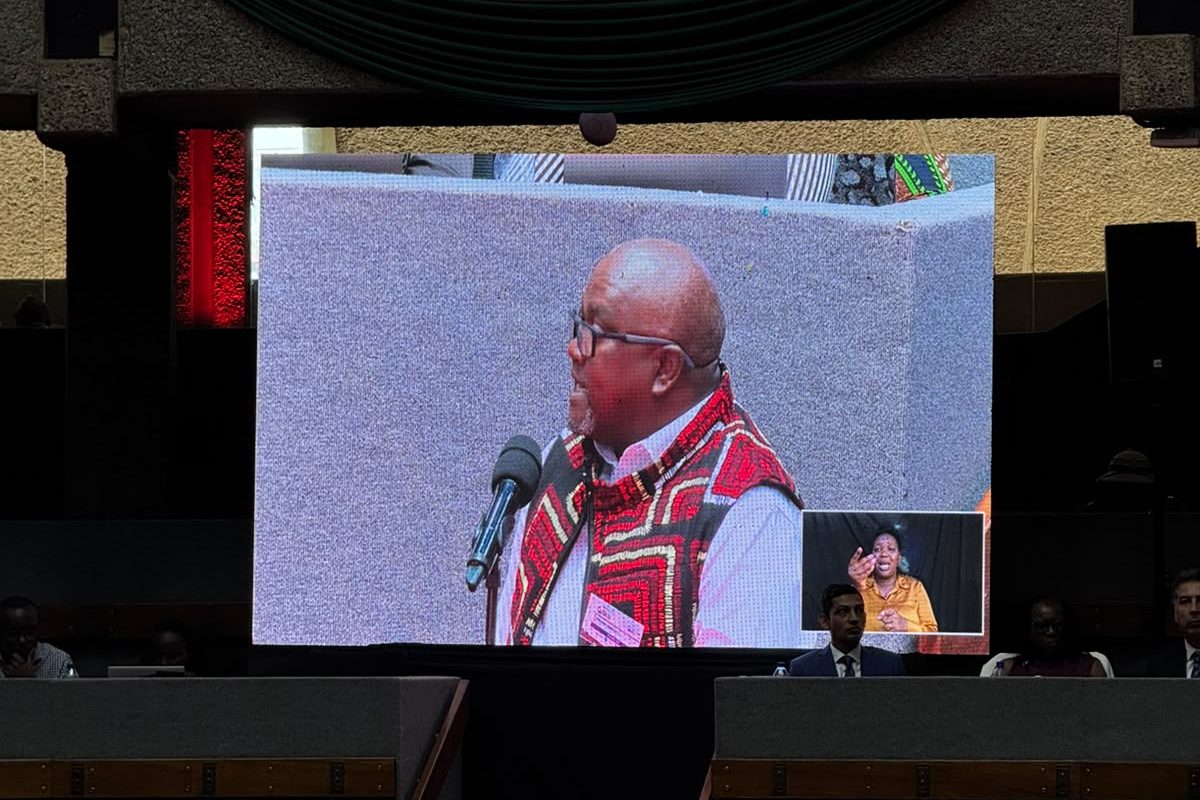
Moses Nderitu, speaking for the e-mobility sector, said registered electric motorcycles have grown from about 475 to 25,000, that he estimates 47,000 electric boda bodas are now operating, and that incentives introduced in 2023 drove the shift. He said about 50,000 riders each save roughly Sh500 a day on cheaper, locally produced electricity, which he estimated at some Sh25 million a day, and that the sector has created over 1,000 direct jobs. Two asks stood out. The incentives left out heavy, medium and light commercial trucks, and he asked that they be made long-term so that firms are not returning to Parliament each year and “can plan ahead for two or three years”.
Isaac Kalua, the sector’s green champion, added a sharper point about evidence. He observed that registrations of electric vehicles have grown from 65 in 2018 and 2,616 in 2023 to about 34,000, and then noted that sources report conflicting figures, with some citing 64,000. He said the 100,000 electric vehicle pledge announced in May has never been agreed between industry and the ministry on what it covers, and he asked for financing support for motorcycle buyers, most of whom he said borrow on microfinance terms at monthly rates of 3 to 7 per cent.
The lesson for national industrial policy is that sectors cannot plan investment around pledges that lack a shared definition or a shared dataset. A common baseline is a precondition for accountability.
Counties and one national market
Muthomi Njuki, chairperson of the Council of Governors, delivered the most operational set of commitments of the session. Every county will publish an investment profile and a land bank and offer one-stop digital licensing within weeks. Counties will make land available in the 47 industrial parks, harmonise permits, cess and levies, remove barriers to the movement of goods between counties, clear pending bills for supplies, reserve 30 per cent of procurement for youth, women and persons with disabilities, prioritise local content, and prepare bankable projects for development finance institutions and private capital. He explained the cost of the status quo with a simple image.
“It makes no sense to move across six counties, and each county levies you.”
Muthomi Njuki, Chairperson, Council of Governors
He also warned of a different risk, that the work of young entrepreneurs seen at the exhibition could end up centralised in Nairobi, and he asked that counties provide the platform where cottage industries can find domestic markets. The most notable commitment for an intelligence firm is the promise of transparency: “an annual county investment scorecard that will be published and shared with the public”.
That commitment aligns directly with the measurement agenda in this paper, because it gives investors a basis for choosing where to locate. He also asked that national levies touching devolved functions be handled with early consultation, so that investors face a “predictable rulebook” and not two governments that appear to compete, and he closed with a line that deserves to travel.
“Devolution is not a cost to the national market. It is a growth strategy.”
Muthomi Njuki, Chairperson, Council of Governors
He thanked the Treasury for releasing county funds before the 15th of each month for the past four months, and he expressed the hope that this reliability will hold as the country approaches elections. We return to that point in the tensions below.
Buy Kenya, Build Kenya and the anchor investment moment
The Buy Kenya, Build Kenya principle gives the summit a coherent economic philosophy, and the President invoked the strategy by name when he spoke about expanding the market for locally manufactured footwear. In PS Mukhwana’s keynote the model rests on moving from a consumption-based economy to a production-based one, decentralising industry from Nairobi to the counties with Naivasha as a leading example, incentivising Kenyans to produce and consume local goods, and standardising SMEs so they can grow from local to international standards and access Global Value Chains. The Sh6 billion government investment anchored on the Naivasha Special Economic Zone shows that the state is putting capital behind the message.
Domestic demand is the foundation of industrial growth, because factories need buyers who trust and prefer local products. Other economies, Ethiopia among them, have pursued domestic demand as part of their industrial strategies with uneven results, which is a reminder that demand, quality and enforcement must be built together. Cabinet Secretary Lee Kinyanjui put the stakes plainly when he spoke about imports.
“We are actually exporting our jobs.”
Lee Kinyanjui, Cabinet Secretary for Investments, Trade and Industry
He tied the point to young graduates who cannot find work that matches their training, and he noted that government had taken local manufacturers on trade missions to more than ten countries in the past year. He also offered a view of enterprise that should reassure small producers.
“Industry does not happen when all the conditions are perfect. It happens when you decide to move with what you have.”
Lee Kinyanjui, Cabinet Secretary for Investments, Trade and Industry
Anchor investment adds a further dimension. The groundbreaking of the Dangote refinery in Lamu on 30 September 2026, a project reported at about $16 billion, is the largest single signal that Kenya is being treated as an industrial destination. An anchor investor can begin a renaissance but cannot complete one, because the ecosystem around the anchor is built by policy. The questions for Kenya are whether local suppliers and SMEs are inside the supply chains from the start, whether technical training translates into local skills, and whether the project’s legal, environmental and public participation processes are handled transparently. The project has attracted legal challenges and public debate, and the way those are resolved will say as much to investors as the capital itself. Lamu should be judged by the same scorecard as every other flagship.
The tensions leaders must manage
- Protection against competitiveness. Levies must be paired with clear expectations on quality and price so that downstream manufacturers and consumers benefit from local supply over time.
- Announcement against delivery. Even flagship projects face schedule risk, and the President acknowledged that the new airport terminal is a month or two behind. Investors will price the credibility of delivery timelines, and delays that are disclosed candidly are easier to price than delays that are discovered.
- Continuity against the electoral cycle. Industrial strategies rarely fail on vision but often fail on continuity. The Council of Governors chairperson asked that on-time county funding continue as elections approach, and Nderitu asked for incentives that last two or three years. Both requests are direct appeals for predictability, and the 100,000 vehicle pledge shows how a commitment without a shared definition can stall.
- Hard decisions against public patience. Cabinet Secretary Kinyanjui recalled the decisions on sugar cartels and cement and said that growth in industry will not come without hard decisions. Reforms of that kind carry costs for some groups in the short term, which is why they need clear communication and visible results.
- Formalisation against informality. Requirements such as eTIMS compliance can be a barrier for smallholder suppliers, and AGPO uptake remains below 10 per cent of a roughly Sh230 billion opportunity. The system must make compliance easier and payment faster, with the 60-day payment pledge as a test.
- Digital dependence against connectivity risk. Kimani’s point about dependence on technology is a reminder that modern industrial and retail ecosystems rely on reliable connectivity.
- Pledges against data. Kalua’s observation that sources report conflicting figures on electric vehicle numbers shows that shared definitions and shared datasets are part of industrial infrastructure.
What this means for each stakeholder
Government
The government should publish a single industrial scorecard, updated quarterly, covering manufacturing share of GDP, formal jobs, levy-linked investment realised, megawatts delivered, county park utilisation and the cost of credit. It should lock in incentive horizons of several years, report progress on the industrialisation fund and the internship scheme, give the 100,000 electric vehicle pledge a clear definition, and treat energy delivery as the first test of the whole agenda.
Investors
Investors should read the summit as a vote of confidence in the direction of policy and a call to look harder at delivery. The strongest opportunities sit in value addition tied to local raw materials, in energy and its enabling infrastructure, in supply chains created around anchor projects, and in the county parks as they come on stream. Due diligence should focus on policy continuity, power reliability, tariff trajectory and regulatory predictability.
Manufacturers and SMEs
Manufacturers should use the instruments now on offer, from concessional finance and common-user facilities to public procurement and internships, and should invest in standards and certification that unlock Global Value Chains. Maigua’s move from commodity to consumer brand shows the direction of travel, and the President’s advice to look first to the African market is sound provided firms secure reliable power and working capital.
Counties
Counties should deliver the commitments made at the summit, namely investment profiles, land banks, digital one-stop licensing, harmonised permits and cess, settlement of pending bills and the annual investment scorecard. The County Aggregation and Industrial Parks will succeed only if counties make them easy to use.
Citizens
Citizens are both the market and the workforce for Kenyan industry. Preference for quality local goods creates the demand that makes factories viable, and the internship and technical training schemes create pathways into work. Citizens also hold the power to ask the questions that matter, such as how many factories have opened, how many megawatts have been added and how many jobs have been created.
The Uratibu scorecard
The Cabinet Secretary offered a warning that fits the purpose of this paper.
“No nation can be run on slogans.”
Lee Kinyanjui, Cabinet Secretary for Investments, Trade and Industry
Industrialisation that cannot be measured cannot be steered. Uratibu will track the following indicators and report progress as an independent contribution to the national conversation.
| Indicator | Latest reference point | Direction Kenya needs |
|---|---|---|
| Manufacturing share of GDP | About 7.2 per cent according to KAM | A sustained climb towards the 20 per cent target |
| Manufacturing growth | About 2 per cent in 2025, with 4.4 per cent reported for the first quarter of 2026 | Consistently ahead of overall growth |
| Formal manufacturing jobs | 388,000 in 2025, up 5.2 per cent | Visible progress towards the one million jobs target |
| Levy-linked investment | Nearly Sh180 billion announced in clinker and three steel investments | Announced capital converted into operating plants and payrolls |
| Installed power capacity | About 3,300 MW | Contracted, commissioned and delivered megawatts against the 10,000 MW plan |
| Cost of credit | Central Bank Rate at 8.75 per cent, average lending near 14 per cent | Single-digit lending reaching manufacturers through the new fund |
| SEZ and EPZ performance | 104,000 jobs and EPZ exports of Sh136.8 billion in 2025 | Growth in jobs, exports and local procurement by zone |
| Regional exports | EAC exports up from Sh226 billion to Sh351 billion | Sustained growth with SMEs inside the supply chains |
| Local content in public projects | 97 per cent local materials in affordable housing, Sh61 billion in jua kali contracts | The same discipline extended to uniforms, footwear and other public demand |
| AGPO uptake | Below 10 per cent of a roughly Sh230 billion annual opportunity | Steadily rising uptake with payment inside 60 days |
Reference points are drawn from figures cited by the President, the KAM chairperson and other speakers at the summit, and should be refreshed against official releases from the Kenya National Bureau of Statistics, the Central Bank, the Treasury and the relevant authorities as they are published.
Beyond 2030
The conversation beyond 2030 will be shaped by what happens in the next few years. If anchor investments become operating plants, if the grid grows towards the 10,000 MW addition, if counties become genuine industrial locations and if SMEs reach international standards, Kenya will enter the next decade debating how far a production-led economy can go. If announcements stall, the debate will return to how to begin.
A country’s industrial policy is what makes it strong, resilient and hard to push around, because producing what you consume and selling what you make reduces exposure to external shocks and external interests. Kenya has long shone through strife, setbacks, taxation and a demanding political terrain, and industrial policy is how that resilience becomes structural strength.
The President closed with the standard against which this summit should be judged.
“We did not merely discuss industrialisation.”
President William Ruto, opening the Kenya Industrialisation Summit
He asked that it be said of this moment that “we built the factories”, grew enterprises, added value to resources, opened markets and created jobs. That is a commitment, a shared responsibility and a test, and Uratibu will measure it.
The summit set the agenda, and the scorecard will decide whether 2026 is remembered as a turning point or as one more well-attended gathering.
Note on sources and limitations
This paper draws on the opening session of the Changamka Shopping Festival and Kenya Industrialisation Summit, on the points of PS Mukhwana’s keynote and on public reporting of the Lamu refinery groundbreaking. Omitted items include foreign direct investment figures, clinker import volumes, the manufacturing share of GDP quoted by the President, European Union export figures, the KAM chairperson’s revenue share, the cap on the internship tax deduction, and passages on the Kenya Pipeline and National Infrastructure Fund balances. The quarter labels for the 2026 manufacturing and steel figures and the three-year timeframe for the 20 per cent target are marked uncertain in the source. The growth arithmetic in the baseline section is an illustrative calculation by Uratibu and not a forecast. Details of the Lamu project are reported figures and remain subject to legal and regulatory processes.